
Disaster Guide
Floods: What the River Taught Reno and Sparks
Floods can happen even in the high desert. Here's what the 1997 New Year's flood showed us, and what to do before, during and after high water.
New Year's Day, 1997
People who were here still talk about it. In late December 1996, a series of storms piled heavy snow in the Sierra. Then a warm, wet storm from the Pacific rolled in right behind them, the kind people call a Pineapple Express. Warm rain fell on all that fresh snow, and it all came down the Truckee River at once.
On New Year's Day the river went over its banks. Downtown Reno had up to four feet of water in some streets. Casinos closed, and some of the small ones never reopened. The airport shut down. In Sparks, the river crested higher than any flood on record, and the water spread across the industrial area east of town.
I had a business in that industrial section at the time. The water came right up to my doorstep and stopped. We were fortunate. A lot of my neighbors weren't. Businesses were destroyed and homes were damaged all through the valley. Two people lost their lives in the Truckee and Carson Rivers, and local officials put the damage at around $680 million.
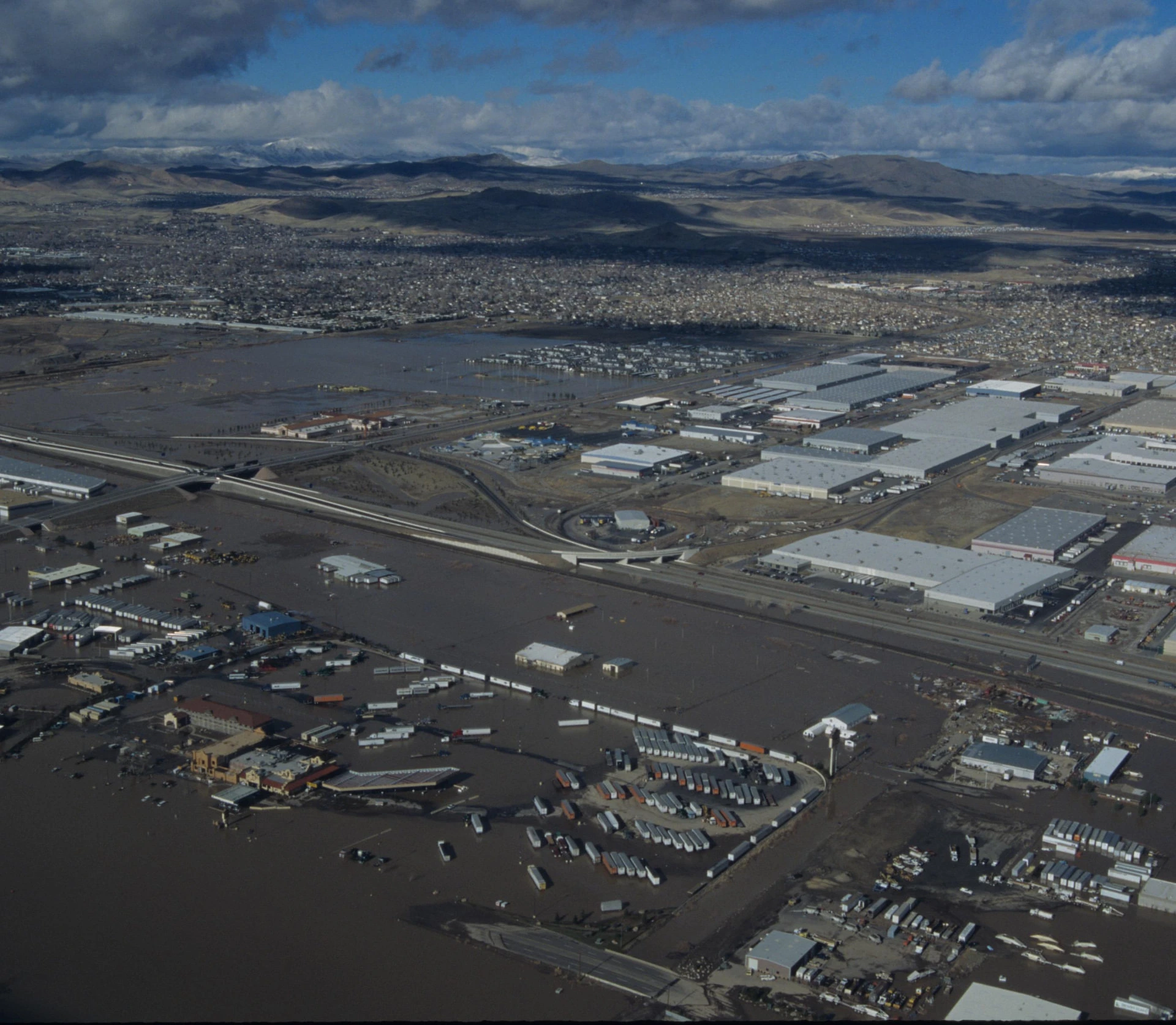
One of the strangest sights was out east of Sparks. There was a big gravel quarry there called the Helms pit. The city had planned to slowly fill it and turn it into a park. The flood did it in about two days. The water crossed the freeway and filled the pit, and today it's the Sparks Marina.
The flood changed downtown too. Some of the old arched bridges over the Truckee caught trees and debris and backed the water up behind them. Since then, bridges have been rebuilt, including the old Virginia Street Bridge, and the region has spent years on flood projects along the river.
It's easy to think floods are something that happen somewhere else. We live in a desert, after all. But 1997 proved that the right storm at the wrong time can put a river right through the middle of town.
Know your risk
- Find out if you're in a flood zone. You can look up your address on FEMA's flood map. Even if you're not in a mapped flood zone, low spots, washes and anything near a river or creek can flood.
- Know the two kinds of floods we get here. Winter river floods, like 1997, come from heavy rain on snow, and usually give a day or two of warning. Summer flash floods come from thunderstorms and can turn a dry wash into a raging creek in minutes, with almost no warning at all.
- Learn the warnings. A Flood Watch means flooding is possible, so be ready to move. A Flood Warning means flooding is happening or about to, so act now. A Flash Flood Warning means get to higher ground immediately.
Before a flood
- Check your insurance. Regular homeowner's and renter's insurance does not cover flood damage. Only flood insurance does, and it usually takes 30 days to kick in. Don't wait until the river is rising.
- Sign up for local emergency alerts on your phone.
- Plan your way out. Know at least two routes to higher ground from home and work, in case one is underwater.
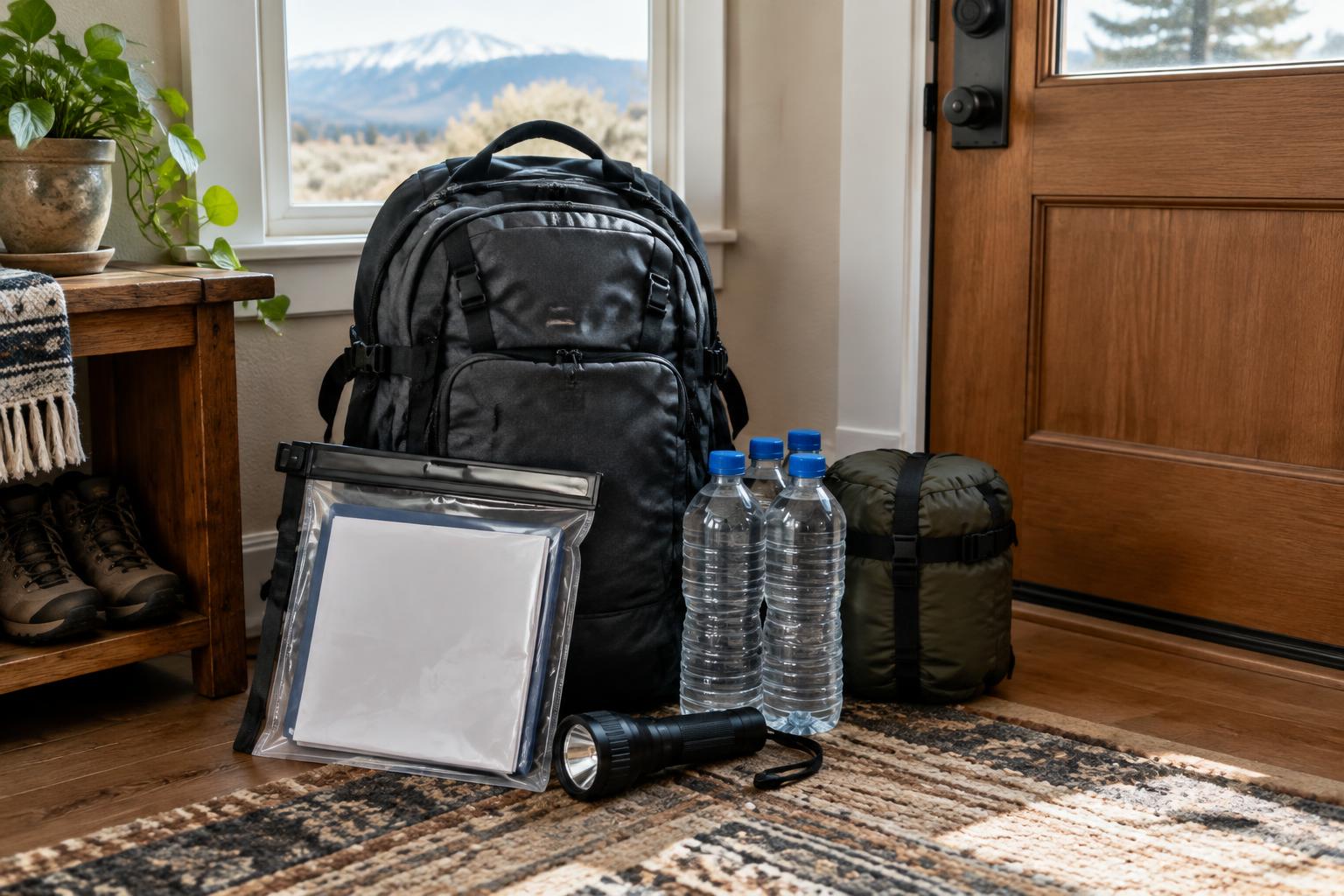
- Have a grab-and-go bag ready for every person and pet. My Bug Out page walks through what to put in it.
- Keep important papers safe and portable. Keep copies of insurance policies, IDs, deeds and medical records in a waterproof bag, plus a digital copy somewhere off-site.
- Move valuables up. Keep important things off the floor in basements and garages, and know which items you'd carry upstairs first.
- Know how to shut off your power, gas and water, and only do it if officials tell you to.
- Store drinking water. Floods can contaminate the water supply. One gallon per person per day, and a water filter as backup.
During a flood
- Turn around, don't drown. This is the most important rule in this whole guide. Never walk or drive into floodwater. Six inches of moving water can knock you off your feet. About a foot of water can float a car, and two feet can sweep it away. More people die in their cars in floods than anywhere else.
- Get to higher ground. If you're told to evacuate, go right away. Don't wait to see how bad it gets.
- If water rises around your car and it isn't moving, get out and get to higher ground. If the water is moving, stay in the car, and if water starts filling it, get on the roof.
- Stay away from rivers, creeks and washes, even if you just want a look. Banks can give way, and the water moves faster than it looks.
- Don't touch electrical equipment if you're wet or standing in water.
- Keep your radio on for updates.
After a flood
- Go home only when officials say it's safe.
- Stay out of floodwater and standing water. It can carry sewage, chemicals and debris, and it can be electrified by downed or underground power lines.
- Watch for weakened roads, walkways and floors.
- Take photos of everything before you clean up, for your insurance claim.
- Throw out food and water that touched floodwater. Follow any boil-water notice until it's lifted.
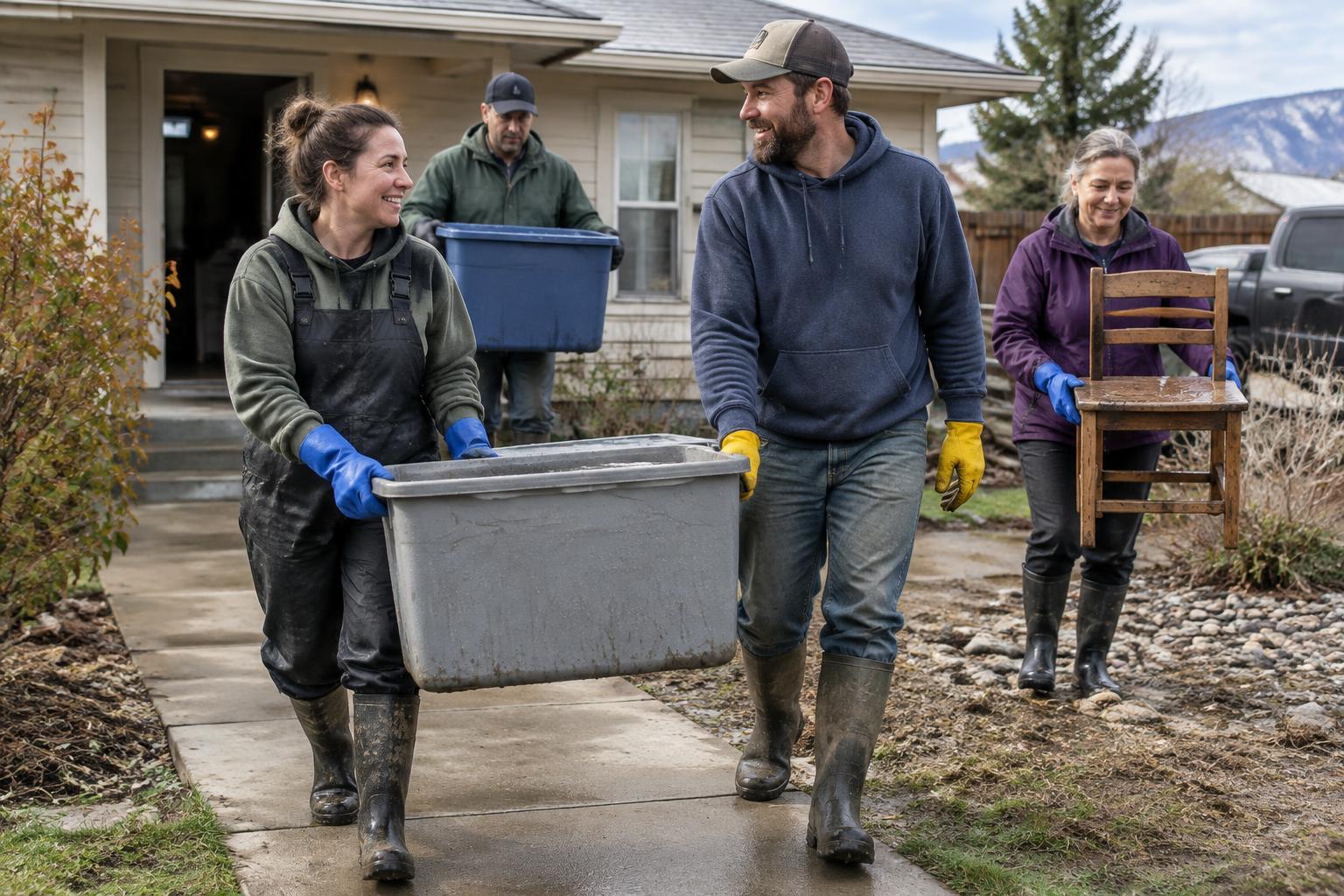
- Wear gloves and boots when you clean up, and dry things out quickly to keep mold from setting in.
- Check on your neighbors, especially anyone older or living alone.
Printable checklist
Flood Checklist
- Look up your address on FEMA's flood map
- Flood insurance in place (it takes 30 days to start)
- Local emergency alerts on your phone
- Two routes to higher ground from home and work
- Grab-and-go bag for every person and pet
- Copies of important documents in a waterproof bag, plus a digital copy
- Valuables moved up off the floor
- Know where your power, gas and water shutoffs are
- Stored drinking water and a water filter
- Battery or hand-crank radio
- Rubber boots and gloves for cleanup
- Remember: Turn around, don't drown
Official sources
Everything in this guide follows the official guidance below. When in doubt, check these:
Keep going
- New to all this? Start with my Start Here page.
- My Bug Out page covers what to grab if you have to leave fast.
- My Water Storage page shows how to keep safe drinking water on hand.
- Use the Family Emergency Planner to put your own plan on paper.