

Start Here
New to Preparedness? Start Here.
A plain, step-by-step way to get your family ready, a little at a time, without fear and without spending a fortune.
Where I'd start if I were starting over
When I was 18, I spent three weeks in the desert of southern Utah with a blanket, a knife and the clothes I was wearing. That was it. I came home a different person. I'd learned how little a person really needs to get by, and how much better things go when you've thought ahead.
That course started something in me that never really stopped. Today I serve as an emergency preparedness specialist in my church, helping about 5,000 people in my area get ready for whatever comes. The question I hear more than any other is a simple one: where do I even begin?
So picture this. You wake up tomorrow and the power is out. Nothing comes out of the faucet. The stores are closed and your phone has no signal. Do you have water for your family? Food you can eat without cooking? A way to stay warm, and a way to find out what's going on?
I don't ask that to scare you. Earthquakes, wildfires, winter storms and long power outages happen every year, and most of them are over in a few hours or a few days. Some last a lot longer, though, and the families who thought about it ahead of time have a much easier go of it.
You don't need a bunker, and you don't need a year of freeze-dried food to get started. You need to take one step this week and another one next week. That's what this page is for.
1. Water, food and a roof over your head
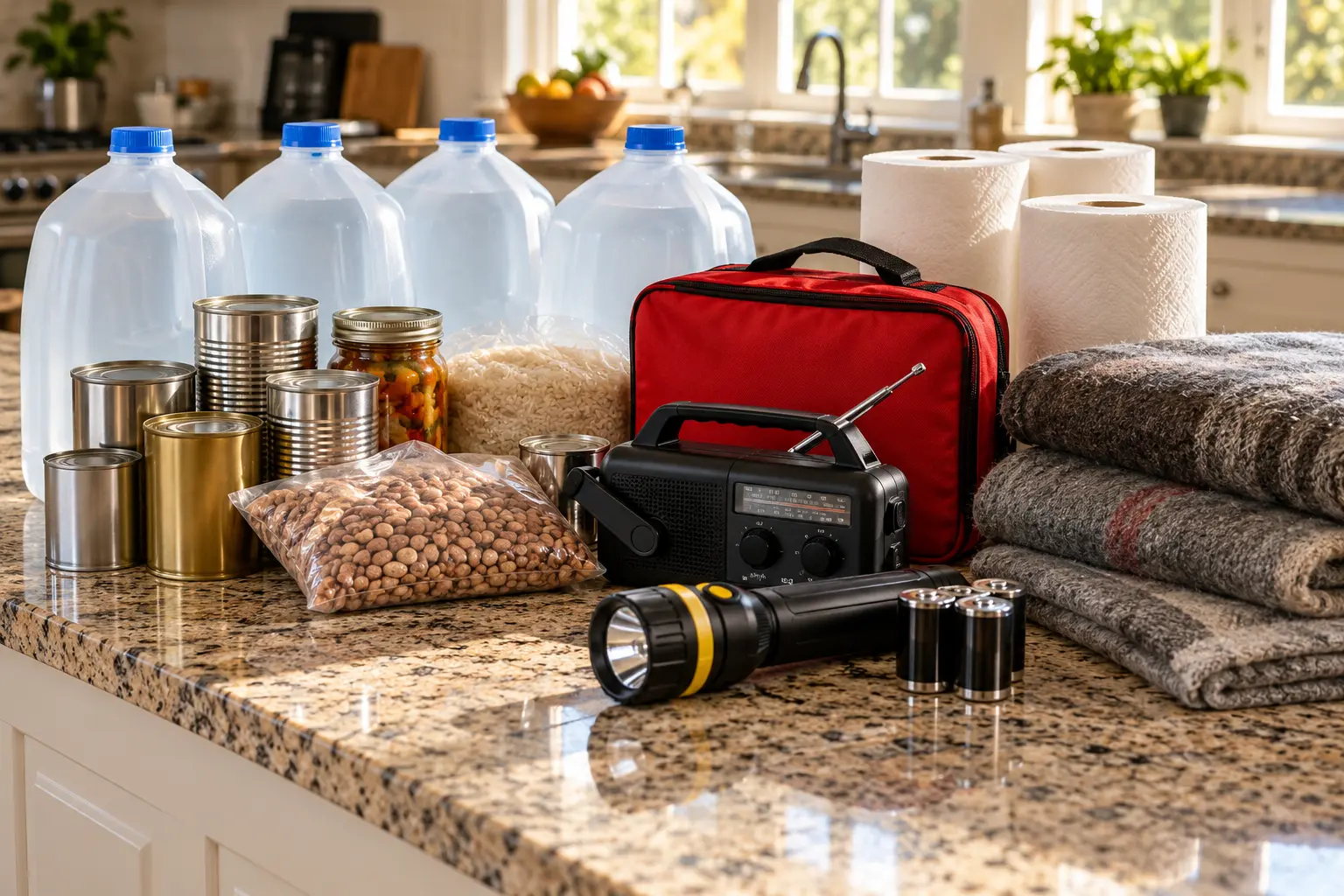
It's easy to get pulled toward the fun stuff: the gadgets, the tactical backpacks, the gear videos. I'd start with the basics instead.
Water comes first
You can go weeks without food but only a few days without water, so this is where I'd put your first effort. The CDC recommends at least one gallon per person per day, starting with three days and working up to two weeks.
For a family of four, that looks like this:
| Goal | Water needed |
|---|---|
| 3 days | 12 gallons |
| 1 week | 28 gallons |
| 2 weeks | 56 gallons |
| 1 month | 120 gallons |
Think of those as minimums. Hot weather, nursing mothers, someone who's sick, and pets all push the number up.
Use store-bought bottled water or clean, food-grade containers. If you fill your own from the tap, swap it out every six months. My Water Storage page goes into containers, treatment and where to keep it all.
Food your family already eats
You don't have to start with expensive kits. Start with what's already in your cupboard and buy a little extra each time you shop: canned meat, beans, fruit and vegetables; rice, pasta and oatmeal; peanut butter; crackers; shelf-stable milk; and anything special a baby or someone with a food allergy needs.
The old rule still holds: store what you eat, and eat what you store. Use the oldest cans first and put the new ones in the back. Keep some food on hand that doesn't need water or heat, too, because there may be days you can't cook. My Food Storage page picks it up from here.
Staying put, or getting out
In most emergencies, home is the safest place to be. Think through how you'd get by without power, heat, air conditioning or running water. Blankets, warm clothes, good shoes and a radio go a long way.
Other times, like a wildfire coming over the ridge or water rising in the street, you have to leave right now. So every household needs two things: supplies for staying home and a plan for leaving. My Bug Out page covers the leaving part.
2. Put together your first 72-hour kit
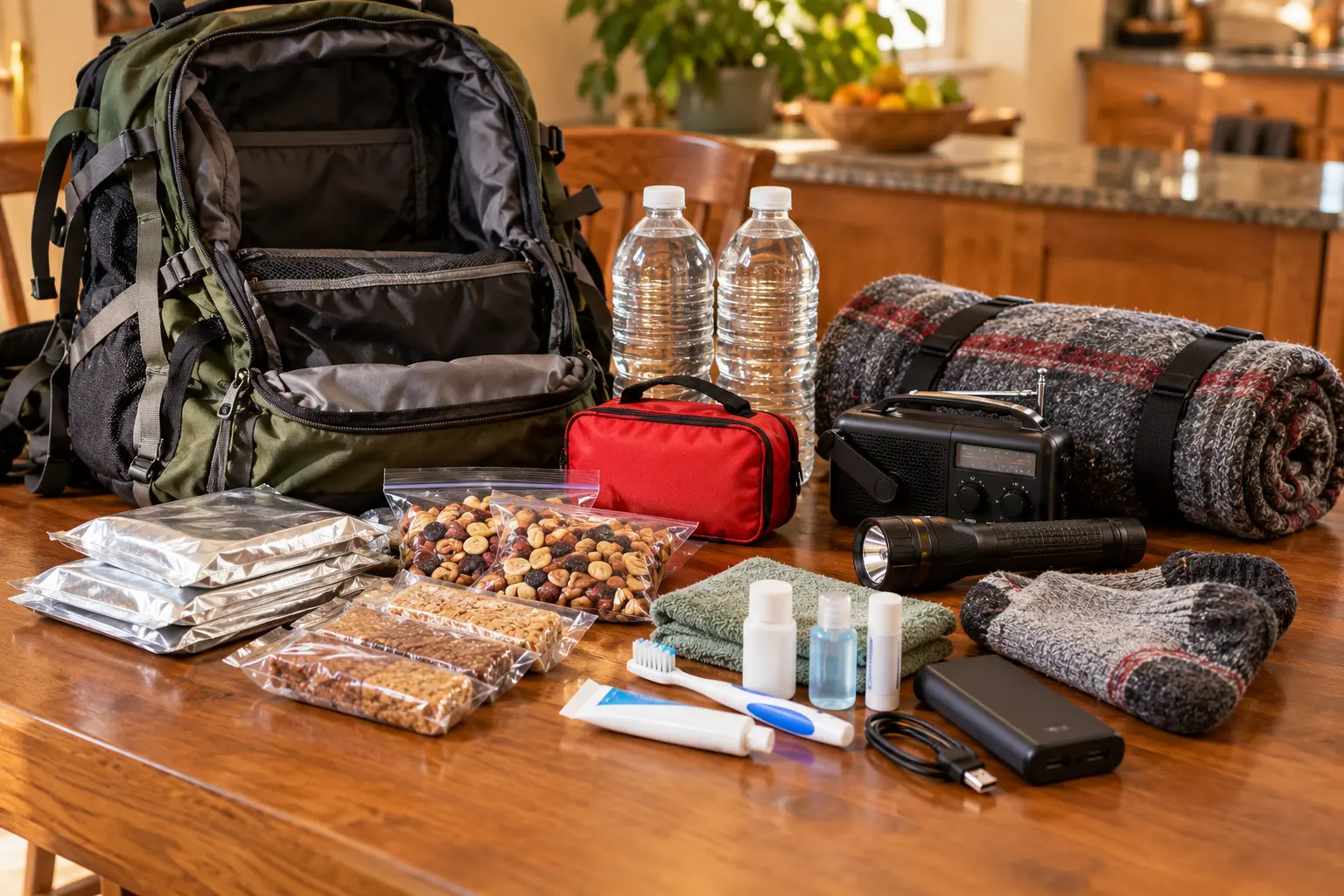
If you only do one thing this month, make it this. A 72-hour kit carries your family through the first three days, when power, roads, stores and emergency services may all be stretched thin.
A basic kit holds:
- Water and three days of food that won't spoil
- A flashlight and extra batteries
- A battery-powered or hand-crank radio
- First-aid supplies
- Medications and any medical equipment someone depends on
- Toothbrushes, soap and other hygiene items
- A way to charge your phone
- Emergency contact numbers written on paper
- Copies of important documents
- A change of clothes and a blanket for each person
- Some cash in small bills
- A manual can opener
- Whatever your kids and pets need
Don't run out and buy it all at once. Walk through your house first. You probably own half of it already. Keep a grab-and-go bag near the door and a bigger stash of supplies at home.
Your first goal: be able to take care of everyone in your home for 72 hours without a trip to the store.
3. Grow it in stages
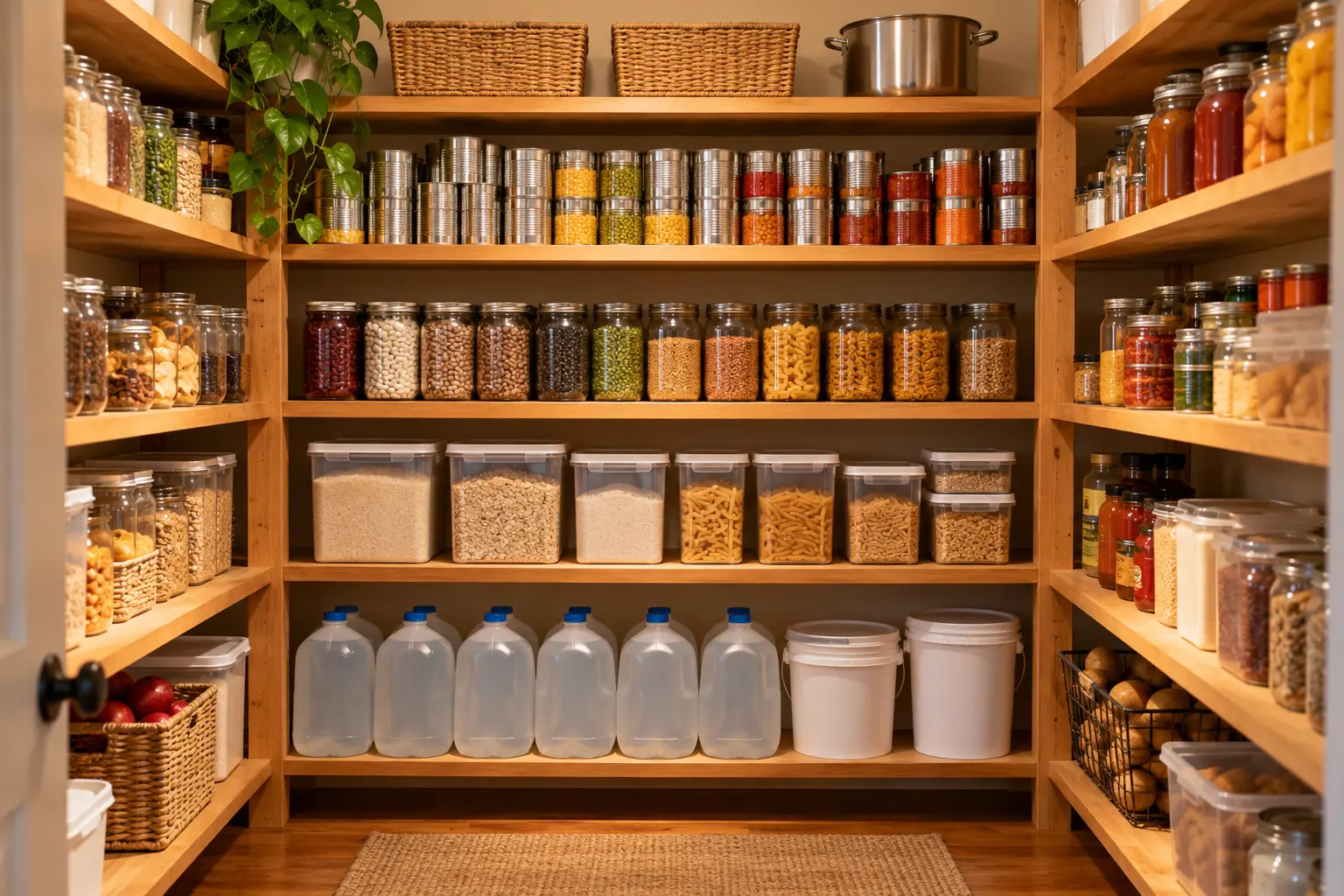
Three days is a great start, but a big disaster can shut things down a lot longer than that. Rather than trying to build a year's supply all at once, work through it in stages:
- 72 hours. The basics to get through the first three days.
- One week. More food and water, and a plan for seven days without power or running water.
- Two weeks. Enough to stay home about 14 days without shopping.
- One month. More food, water and hygiene supplies, plus a backup way to cook and a plan for sanitation.
- Three months. A real pantry built from the foods you eat every day.
- Six months to a year. Longer-term staples like wheat, rice and beans, more water, more skills and some money set aside.
I've been preparing for a long time, and I can tell you it's not something anyone does overnight. It comes together a shelf at a time. Pick the goal that fits your space, your budget and your situation. Nobody's keeping score, and the only person you're trying to beat is the version of you from last week.
When you're ready for the longer-term supply, my Food Storage Calculator will tell you how much your family needs and about what it will cost.
4. Start with $10 a week
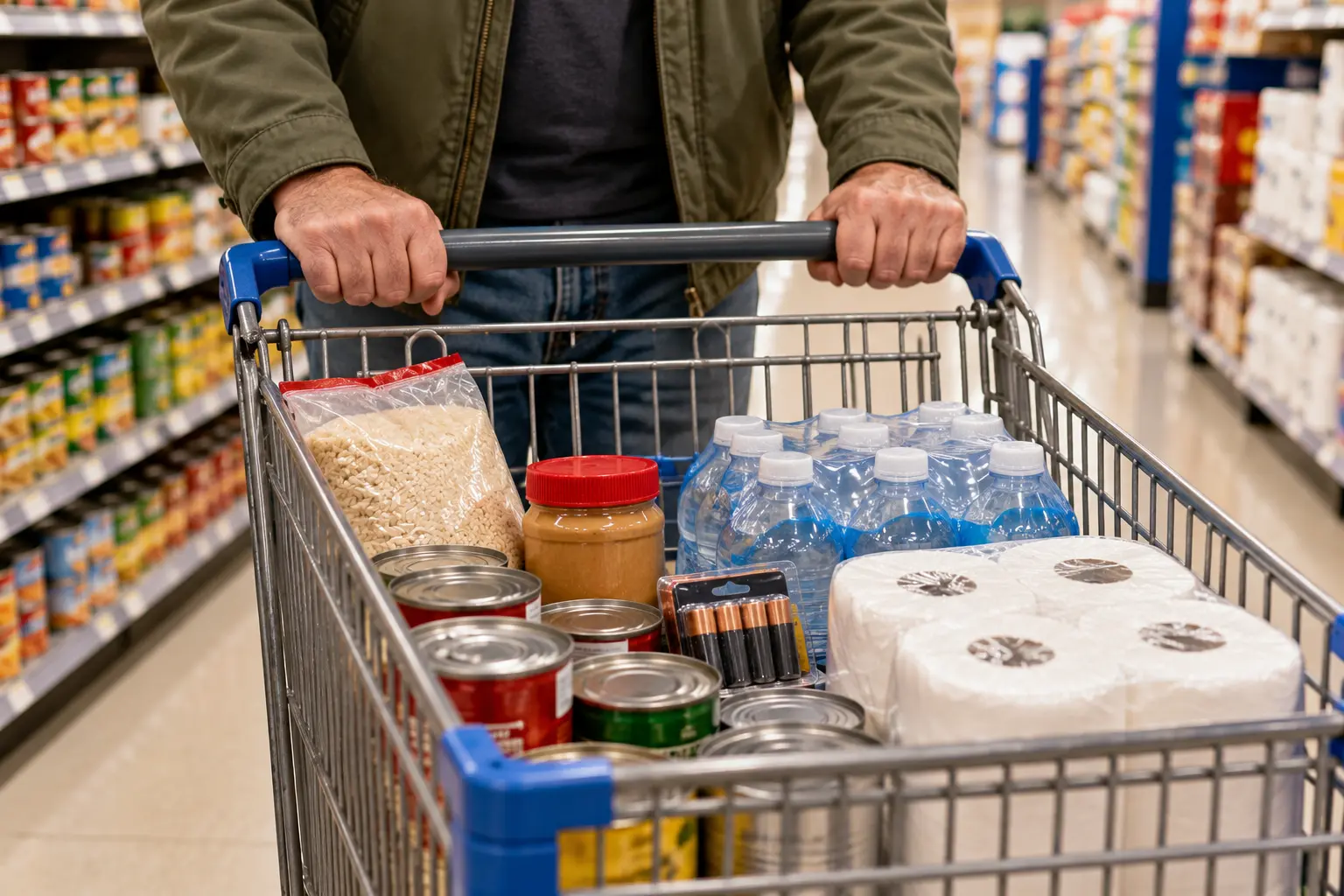
A lot of people think preparedness takes a big pile of money. It doesn't. Ten dollars a week at the grocery store will get you farther than you'd think. Here's what the first eight weeks might look like:
| Week | What to pick up |
|---|---|
| 1 | Start storing drinking water |
| 2 | Add some shelf-stable food |
| 3 | A flashlight and batteries |
| 4 | More water and some ready-to-eat meals |
| 5 | Basic first-aid supplies |
| 6 | Toilet paper, soap and garbage bags |
| 7 | More food |
| 8 | A little cash or a portable phone charger |
That's about $80 over two months. By then you've also built a habit, and the habit is worth more than anything in the cart.
If even $10 is tight right now, there's still plenty to do for free. Make your family plan, take stock of what you already have, figure out two ways out of your neighborhood, and learn a skill or two. Being ready has a lot more to do with what you know than what you bought.
5. Make a family plan
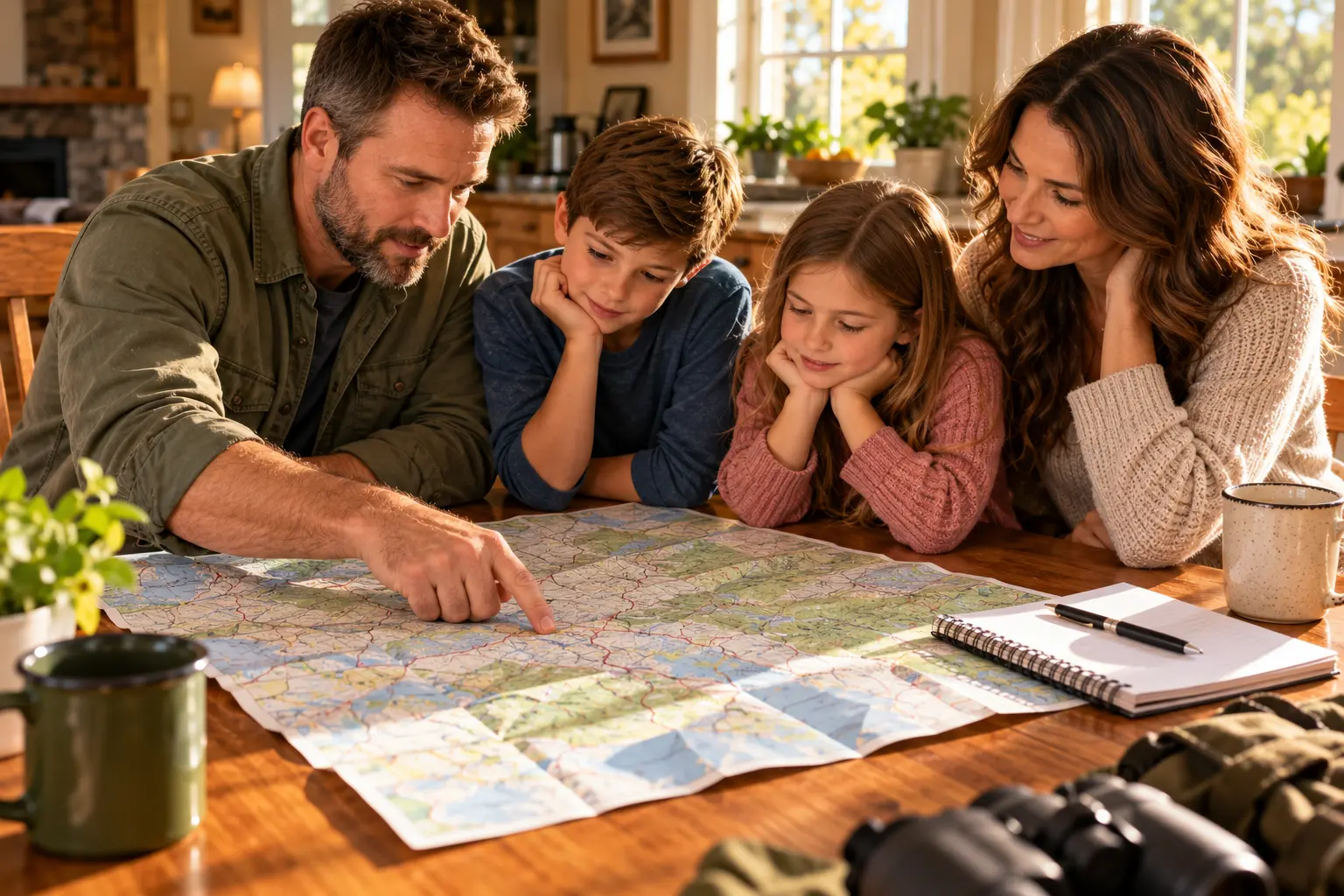
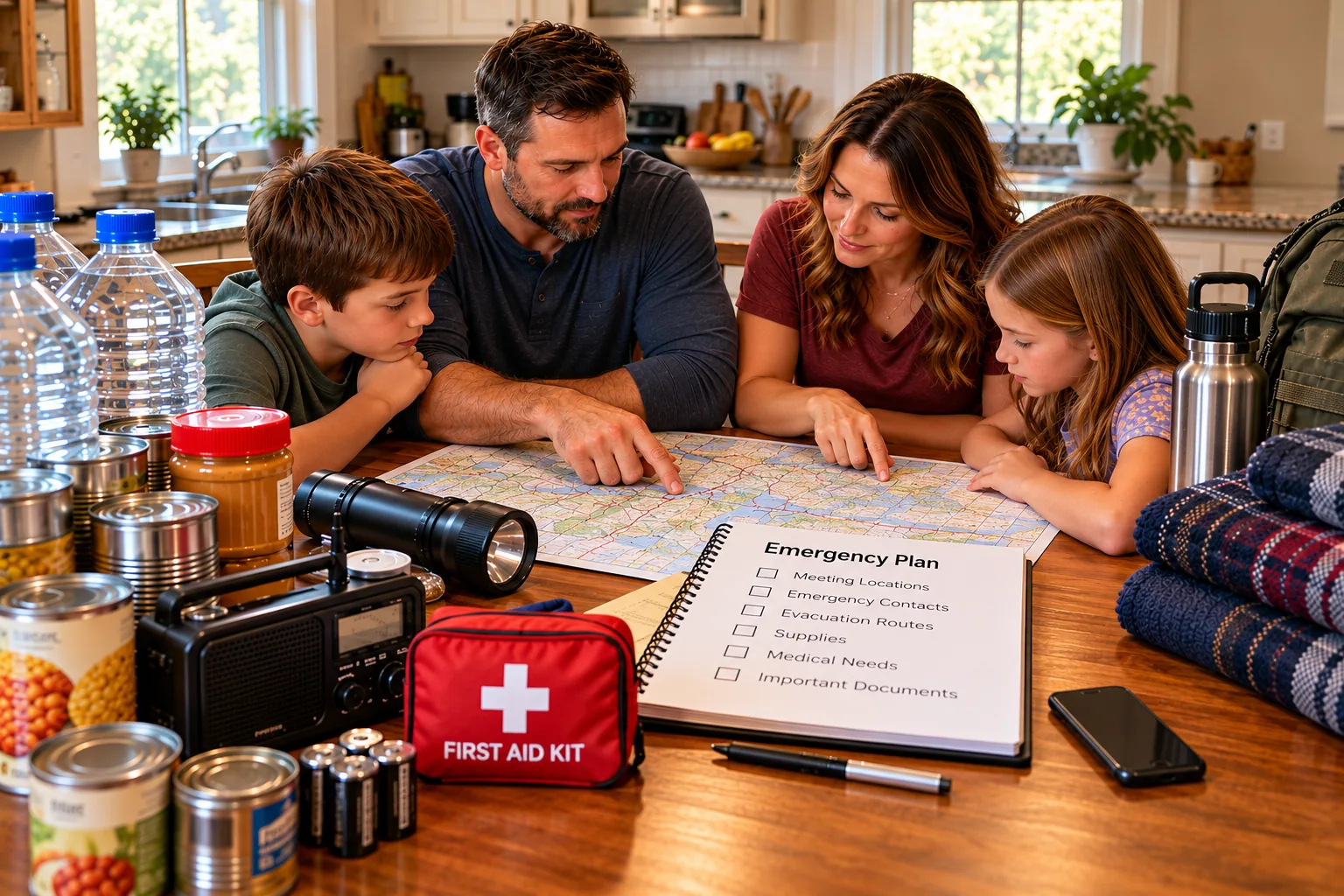
Say something happens at two in the afternoon on a Tuesday. One of you is at work, the kids are at school, and someone else is at the store. How does everyone know what to do? Where do you meet? How do you reach each other if the cell towers are jammed?
Sit down together and answer those questions. Pick two meeting spots, one close to home and one outside your neighborhood. Choose a relative or friend out of state that everyone checks in with, since a long-distance call or text will often go through when a local one won't. Make sure everybody knows the important numbers, the routes out of town, and where the supplies are kept. Sign up for your county's emergency alerts while you're at it.
Then practice once in a while. Kids can learn what to do without being frightened by it, especially when it's just a normal thing your family does.
My Family Emergency Planner walks you through the whole thing and gives you something to print and hang on the fridge.
6. Get ready to go without power

Almost everything in a modern home runs on electricity: the lights, the fridge, the furnace, your phone, and sometimes even your water. What would you do if it went out for three days? What about three weeks?
Start small. Get flashlights or lanterns, extra batteries, a couple of charged power banks, and a battery or hand-crank radio. Then think about how you'd keep food cold, keep medicine at the right temperature, and keep everyone safe when it's very hot or very cold.
Down the road, you might look at a solar generator. I have a Grid Doctor 300, and honestly it gets more use on camping trips than in emergencies, which is part of why I like it. It's quiet, there's no fuel to store, and I know it works because I use it all the time.
One serious warning: a gas generator runs outside only, well away from doors, windows and vents. Never bring a camp stove or grill into the house or garage. Carbon monoxide has no smell, and it takes lives every winter. If someone in your home depends on powered medical equipment, make backup power and an evacuation plan your top priority.
My Fuel, Heat, Cooking & Light page goes deeper on all of this.
7. Don't forget the bathroom
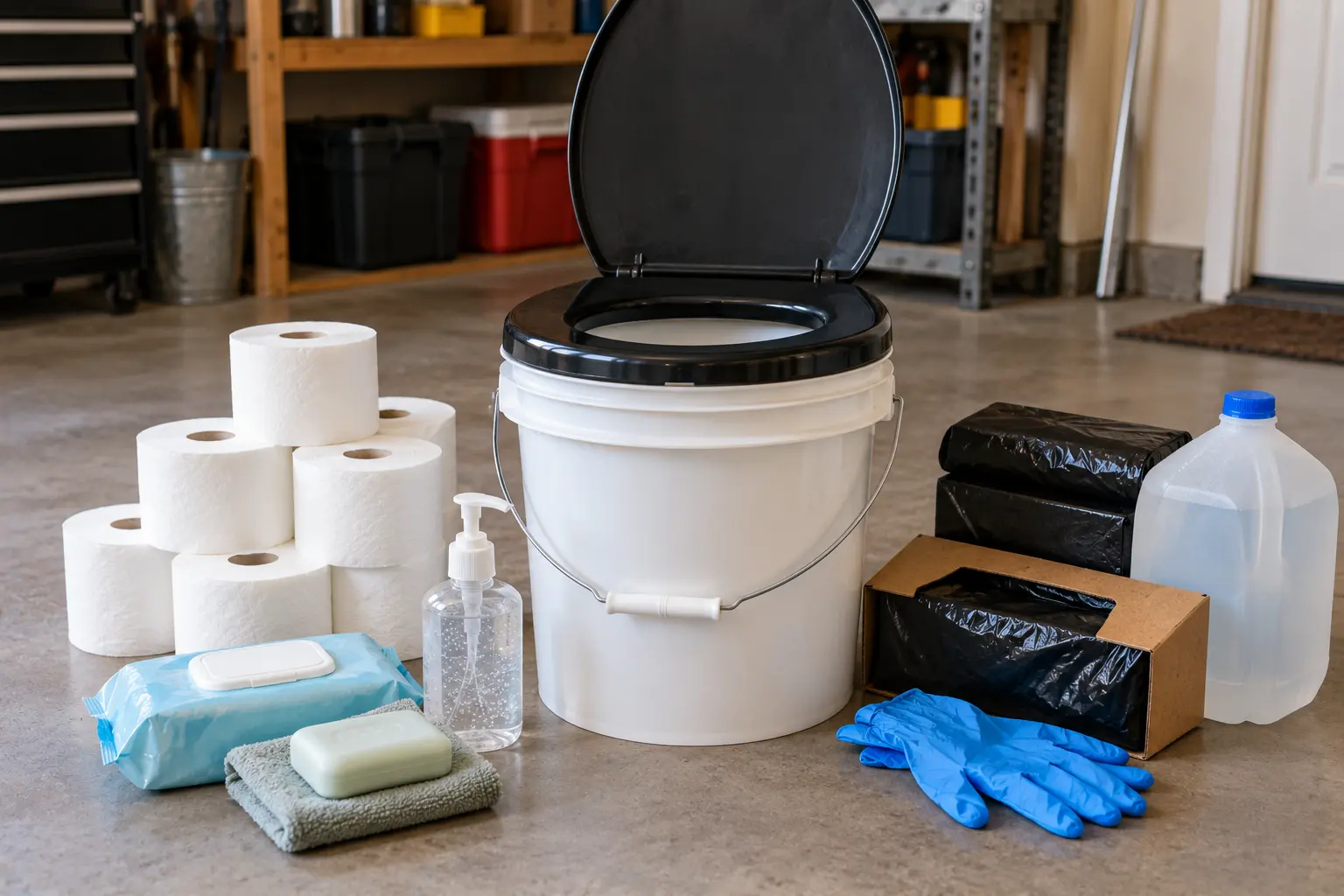
Nobody gets into preparedness because they're excited about toilets. But this is the one most people skip, and it's the one that makes people sick after a disaster.
What happens when the toilet won't flush? How do you wash your hands with no running water? Where does two weeks of trash go when nobody's picking it up?
Stock up on soap, toilet paper, heavy-duty garbage bags, disposable gloves, hand sanitizer and cleaning supplies. For a longer outage, set up an emergency toilet (a bucket with liners and a lid works fine) and follow your local health department's guidance for getting rid of waste. Keep all of it well away from your food and drinking water.
It isn't glamorous, but a little planning here makes a hard week a lot easier to live through.
8. Have more than one way to communicate
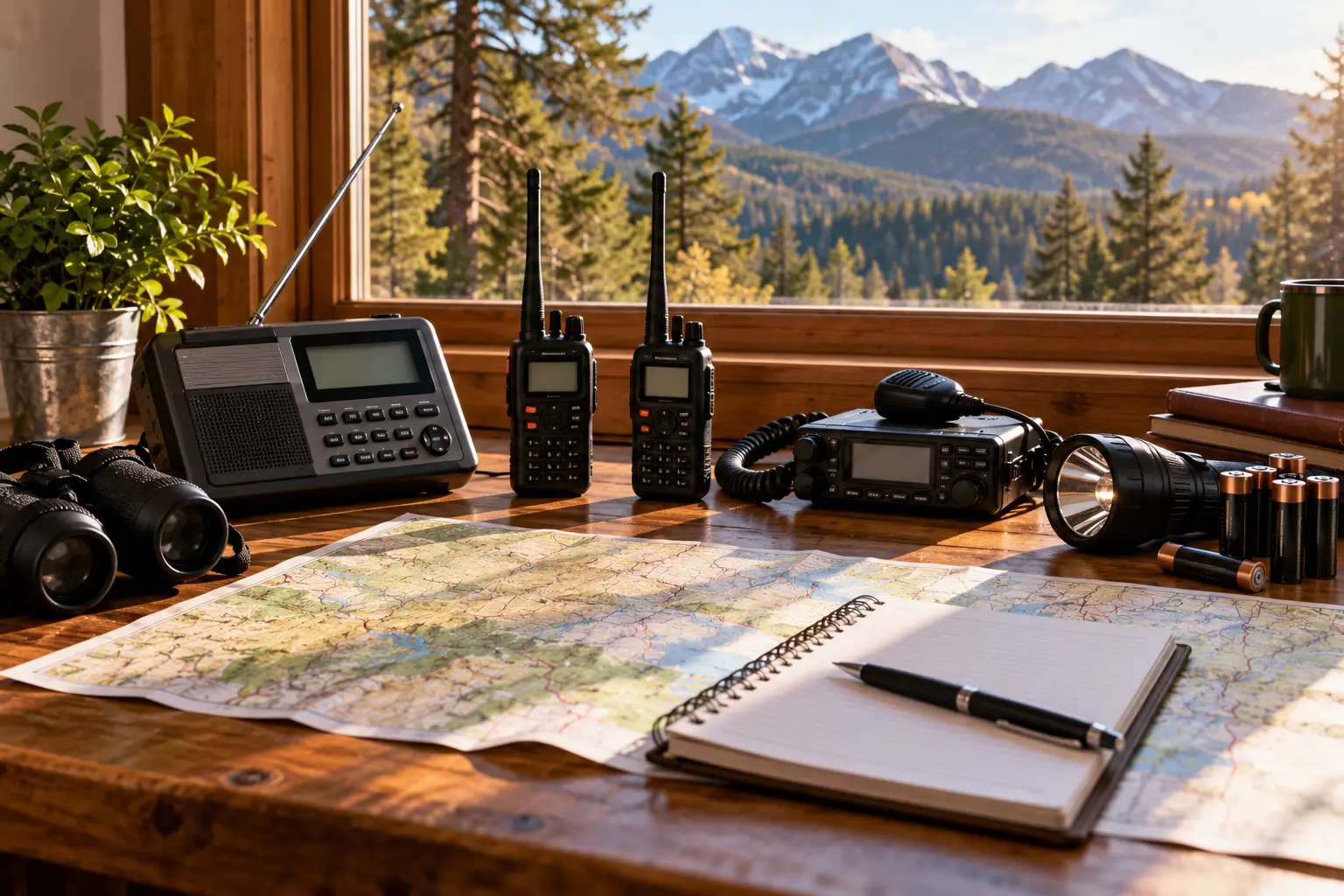
In an emergency, good information can matter as much as food and water. Cell towers get overloaded or lose power. The internet goes down. The TV goes dark.
I'm a licensed ham radio operator, and every Monday night I check into a local radio net with other operators. We do it on ordinary nights so we know it works on the bad ones. You don't have to go that far, but every home should have more than one way to hear what's going on.
A battery or hand-crank emergency radio is the place to start. A NOAA Weather Radio will give you warnings wherever there's coverage. After that, look at two-way radios. FRS radios need no license. GMRS needs a license from the FCC but no test, and one license covers your family. Ham radio takes a test, but it gives you by far the most reach.
For now, just make sure you can get emergency alerts and reach your family more than one way.
9. Money, emotions and faith

Supplies are only part of it.
Money
A layoff, a medical bill, a blown transmission or a sudden evacuation can put a family under real strain. A little savings, less debt, the right insurance and some cash at home all make a big difference. My Financial & Medical page also covers getting your important papers together.
Emotions
Emergencies are stressful. When normal life gets turned upside down, people get scared, short-tempered and worn out. Having a plan, knowing a few skills and talking things through as a family takes a lot of that edge off. Teach your kids that getting ready is just something responsible families do, not something to be afraid of.
Faith
I'm a Latter-day Saint, and my faith is a big part of why I prepare. You don't need to share my beliefs to get something out of this, though. For families of every background, prayer, gratitude and serving others bring a steadiness no pile of supplies can.
The best reason I know to prepare is so that when hard times come, you're in a position to help your neighbors and not just yourself. My Spiritual Preparation page is where I talk about this more.
10. Your first seven days
You don't have to do everything on this page today. Here's one small assignment for each day of the week:
- Day 1: Count heads. Count the people and pets in your home. Note any medical needs, food allergies or anything else special.
- Day 2: Take inventory. Go through your cupboards, closets and garage. You'll find more than you expect.
- Day 3: Start on water. Work toward three days' worth for everyone.
- Day 4: Look at your food. Figure out what meals your family could eat if the power went out tonight.
- Day 5: Make your plan. Pick meeting spots, choose an out-of-state contact, and talk about how you'd leave.
- Day 6: Pick a spot. Choose one place for your supplies and start your 72-hour kit there.
- Day 7: Choose what's next. More water, more food, sanitation, a radio? Pick one.
At the end of the week you won't have everything. But you'll have started, and that puts you ahead of most people.
Two free tools to help
Every household is different. Someone in an apartment needs different things than a big family out in the country, so I built two free tools to help you figure out what yours needs.
Family Emergency Planner
Enter your household, your pets and your situation, and get a plan you can print and put on the fridge.
Food Storage Calculator
See how much of each basic food your family needs for a longer-term supply, and about what it will cost. It works in English and Spanish.

One step at a time
You don't have to become an expert overnight or buy everything at once, and you certainly don't have to spend your life worrying about tomorrow. Start with water. Add some food. Put a kit together. Make a plan. Learn a skill. Then keep going, a little at a time.
Every small step makes you better able to take care of yourself and the people who count on you. Give it a year or two and those steps add up to more than you'd guess.
If you'd like a short tip in your inbox each week to keep you moving, sign up for my newsletter below.
— Kelly