

Disaster Guide
Emergency Sanitation: What to Do When Your Toilets Stop Working
Food and water may be your first priorities during a disaster. But what happens when the toilets stop flushing? A little preparation today can prevent a dangerous sanitation problem tomorrow.
The Emergency Nobody Wants to Talk About
Imagine that a major earthquake strikes your community.
The electricity goes out. Water pressure disappears. Underground sewer pipes are damaged.
You have food stored, drinking water available, flashlights ready, and perhaps even a generator.
But then someone in the family asks a simple question:
"Where am I supposed to go to the bathroom?"
It's a question every family should answer before a disaster.
Most of us have spent our entire lives taking indoor plumbing for granted. We push a handle, the toilet flushes, and everything disappears.
But what happens if the sewer system is damaged for two weeks?
Or a month?
What if flushing your toilet causes sewage to back up into your home?
Human waste contains microorganisms that can spread serious gastrointestinal illnesses. Without a sanitation plan, a household can quickly face contamination, unpleasant odors, insects, and unsafe living conditions.
The good news is that a basic emergency toilet system is inexpensive and easy to assemble.
Every family should have a way to safely use the bathroom for at least 14 days without depending on normal plumbing.
1. First, Determine Whether Your Toilet Is Actually Unusable
A power outage doesn't necessarily mean your toilet has stopped working.
Many homes use gravity-fed sewer systems that may continue functioning without household electricity.
If your home has an operating municipal sewer connection and a reliable supply of suitable flushing water, you may be able to continue using your existing toilet.
However, don't assume this is always safe.
Situations That May Make Flushing Unsafe
- A major earthquake damages underground sewer pipes.
- Municipal wastewater pumping stations stop operating.
- Floodwaters overwhelm the sewer system.
- A septic system becomes flooded or damaged.
- Your home uses an electrically powered sewage ejector or grinder pump.
- Sewer water begins backing up into drains, showers, or toilets.
- Local officials instruct residents not to flush toilets.
Important: If the sewer system may be damaged, do not pour stored water into the toilet and attempt to flush until you know it is safe.
Flushing into a damaged or blocked system can cause sewage to back up into your home or neighboring properties.
If only your household water supply is interrupted and the sewer system is confirmed functional, manually flushing with suitable nonpotable water may be an option.
Keep that water separate from drinking water, and never use water contaminated with sewage for household handling.
2. The Simplest Solution: A Five-Gallon Bucket Toilet
One of the easiest emergency sanitation solutions costs relatively little and requires no electricity or running water.
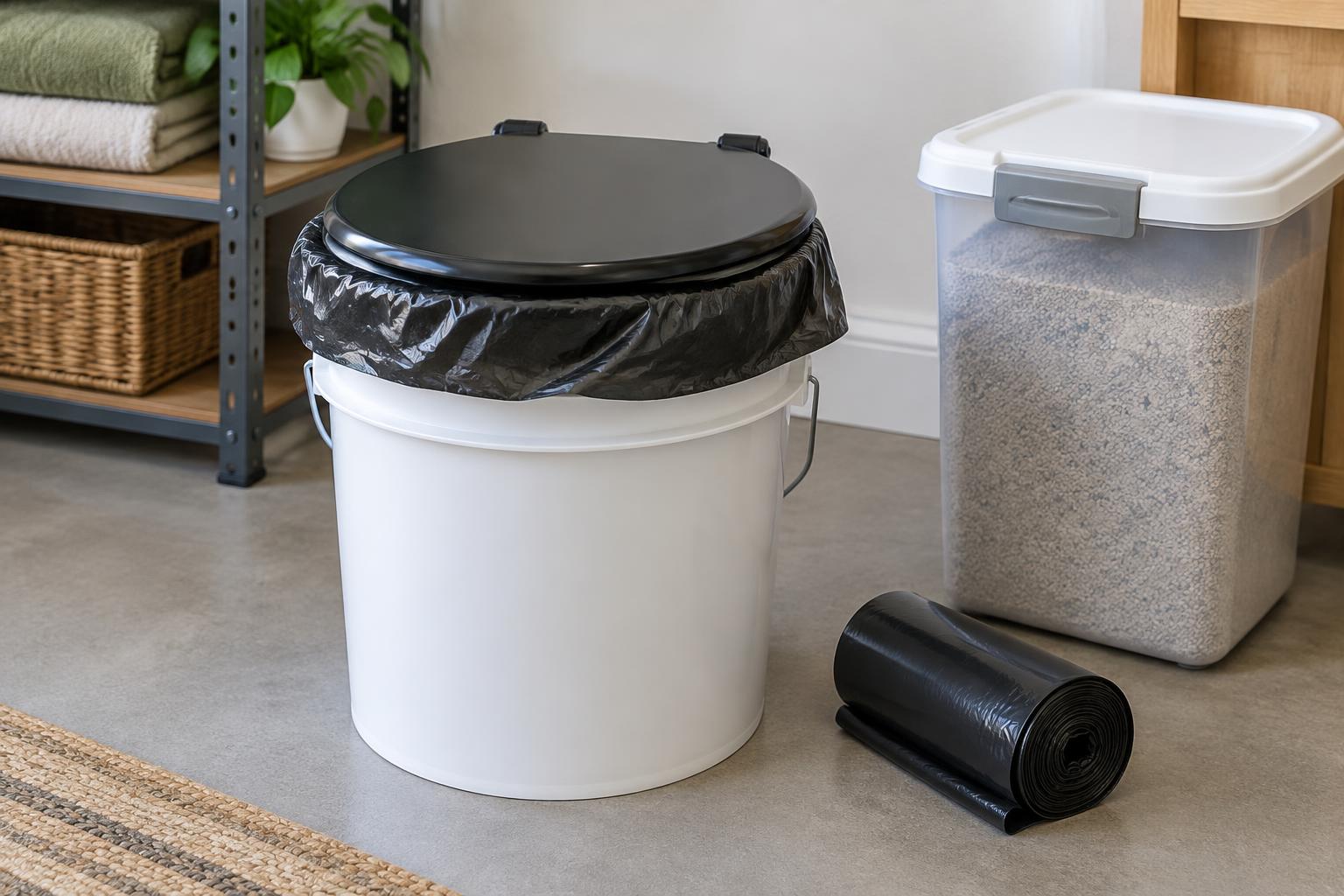
All you need is a sturdy bucket, heavy-duty plastic bags, absorbent material, and a suitable seat.
Supplies
- One sturdy five-gallon bucket
- A fitted bucket toilet seat or secure seat attachment
- Heavy-duty plastic garbage bags
- Extra bags for double-lining
- Unscented cat litter, sawdust, shredded paper, or wood shavings
- Toilet paper
- Disposable gloves
- A secure lid
- Soap and a handwashing station
How to Assemble It
- Place the bucket on a stable, level surface.
- Line it with two heavy-duty plastic bags.
- Fold the tops of the bags over the rim.
- Secure the bags so they cannot slip into the bucket.
- Add a layer of absorbent material to the bottom.
- Install the toilet seat.
- After each bowel movement, cover the waste completely with additional absorbent material.
- Keep the toilet covered between uses.
- Replace the liner before it becomes heavy or more than approximately half full.
- Tie the inner bag securely, close the outer bag, and place the waste in a protected storage container.
Do not try to fill a five-gallon bucket completely with human waste.
The bags can become too heavy, tear, or spill during removal.
Why Use Cat Litter or Sawdust?
Absorbent materials help control moisture, reduce odors, and discourage flies.
Useful options include:
- Unscented clay cat litter
- Untreated sawdust
- Wood shavings
- Shredded newspaper
- Dry leaves or other clean, dry plant material
Avoid heavily scented products that may irritate users.
Do not depend on cat litter or sawdust to disinfect human waste. These materials help manage moisture and odor; they do not make feces harmless.
3. A Better Solution for Two Weeks: The Two-Bucket System
If you're preparing for a prolonged emergency, consider using two buckets instead of one.
This is a method recommended by several public-health and emergency-preparedness organizations.
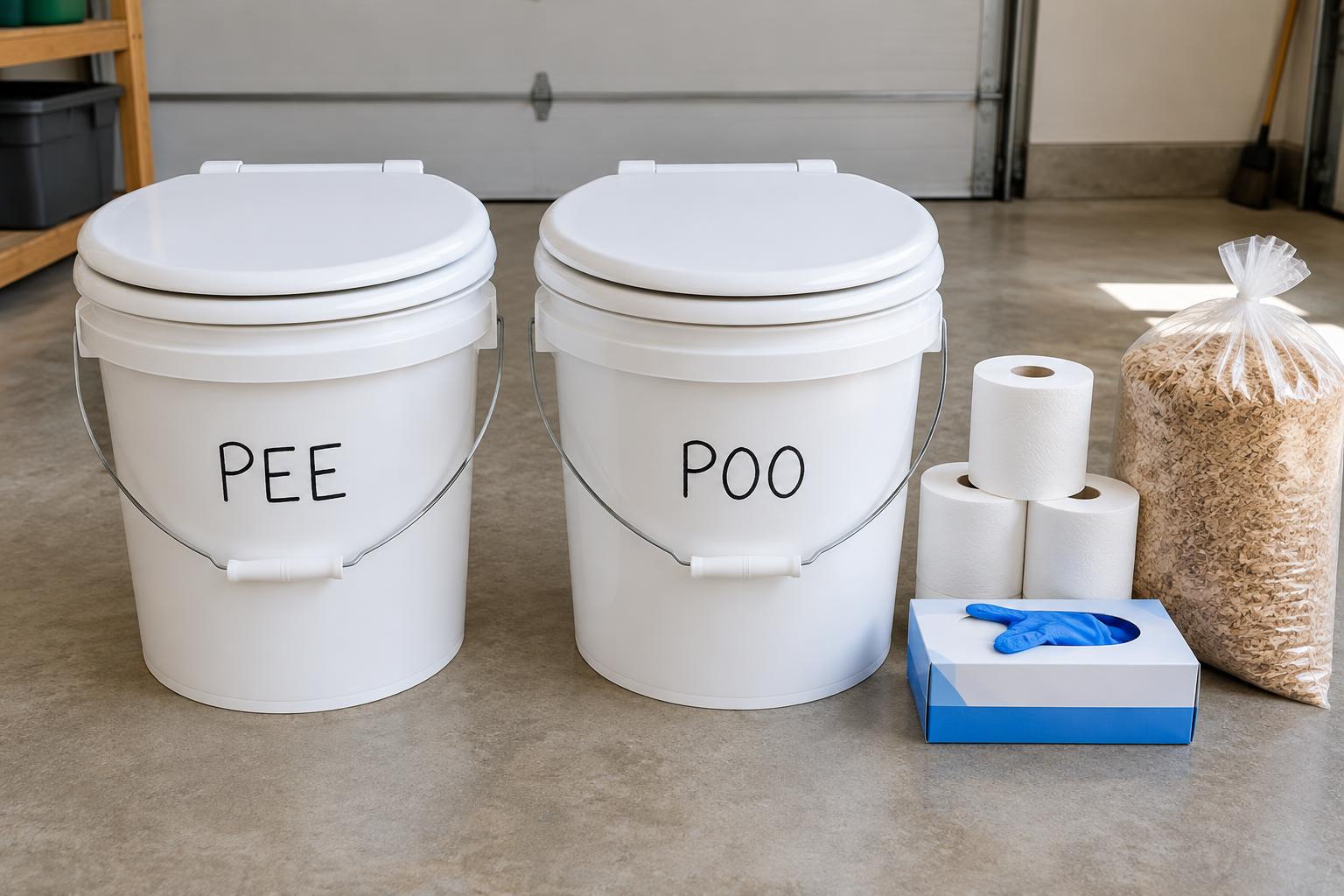
One bucket is used for urine.
The other is used for bowel movements.
Label them clearly:
PEE — Liquid Waste
POO — Solid Waste
Separating the two makes a surprisingly large difference.
Urine accounts for much of the liquid volume produced by a household.
When urine and feces are combined, the resulting waste becomes heavier, wetter, smellier, and more difficult to manage.
Separating them reduces the volume of bagged solid waste and the amount of absorbent material needed.
Setting Up the Solid-Waste Bucket
Use a sturdy five-gallon bucket with a secure toilet seat.
Double-line it with heavy-duty bags.
Place absorbent material in the bottom.
After each bowel movement, add enough dry material to cover the waste.
Keep the bucket covered between uses.
Remove the bags before they become too heavy.
Setting Up the Urine Bucket
Use a second bucket or another stable, easy-to-clean container.
Provide a lid to reduce spills and odors.
Keep the urine separate from the solid waste.
Some emergency sanitation programs permit carefully dispersing urine over a sufficiently large area of soil, away from wells, surface water, food crops, and public spaces.
However, this is not appropriate in every location. Local public-health instructions, property conditions, flooding, groundwater, and municipal rules take precedence.
Do not pour urine into storm drains, streams, or drinking-water sources.
Where safe outdoor dispersal is not permitted or feasible, keep urine in secure, leakproof containers pending authorized disposal instructions.
Urine should not be considered sterile, and the container and its contents must be handled hygienically.
Why I Recommend Two Buckets
For a family expecting to remain at home for 14 days or longer, this is one of the most practical low-cost systems available.
It's simple enough to assemble in advance and requires no electrical power.
4. You May Be Able to Use Your Existing Toilet Seat
Here's a method many people overlook.
If your home's plumbing cannot be used but the toilet itself is structurally sound, you may be able to turn the existing toilet into an emergency waste-collection toilet.
The toilet bowl provides a familiar and comfortable seat.
How to Do It
- Confirm that the toilet is not overflowing or contaminated by active sewage backup.
- Shut off the toilet's water supply valve.
- Empty the bowl if this can be done safely.
- Place two heavy-duty garbage bags inside the bowl, underneath the toilet seat.
- Secure the bags to prevent slipping.
- Add absorbent material.
- Use the toilet without flushing.
- Replace and securely store the bags as needed.
Never flush the bags or their contents.
This option may be especially helpful for older adults, children, and anyone who has difficulty sitting on a bucket.
However, if sewage is actively backing up into the toilet, don't use it as a bag-lined toilet. Use a separate bucket system in a clean, safe location instead.
5. Other Emergency Toilet Options
There are several alternatives worth considering.
| Toilet option | Advantages | Limitations |
|---|---|---|
| Single five-gallon bucket | Inexpensive, simple, portable | More liquid waste and odor |
| Two-bucket system | Separates urine and feces, reduces bagged waste volume | Requires space and managing two containers |
| Bag-lined household toilet | Familiar seat and height | Not usable during active sewage backup |
| Portable camping toilet | Comfortable, often has a sealed holding tank | Tank must be emptied at an approved location |
| Folding toilet with waste bags | Compact and easy to store | Requires bags and safe waste storage |
| Commercial waste-bag toilet | Purpose-made bags, sometimes with gelling agents | Replacement bags may be expensive |
| Composting toilet | Potentially useful for established off-grid systems | Requires correct operation and approved waste management |
| Outdoor latrine | Can serve larger groups in appropriate locations | Often unsuitable or prohibited in residential areas |
Portable Camping Toilets
A portable camping toilet often has a seat, a small flushing-water reservoir, and a detachable waste tank.
These can be comfortable and convenient, particularly for people with mobility limitations.
But they have an important drawback: the waste tank must eventually be emptied at an approved disposal location.
If the sewer system is not functioning, you may have nowhere to empty it.
Plan for that possibility before purchasing one.
Commercial Waste-Bag Toilets
Some emergency toilet systems use specially designed bags containing absorbent or gelling materials.
These may be particularly useful in apartments, vehicles, and evacuation situations.
Follow the product's directions for containment and disposal. Do not assume a bag is safe for ordinary trash disposal unless local rules allow it.
Composting Toilets
Composting toilets may be useful for long-term off-grid living when properly designed and operated.
However, simply putting human waste into a bucket with sawdust does not produce safe compost.
Human waste can contain pathogens that survive inadequate composting.
Do not use untreated or improperly composted human waste on vegetable gardens or food crops.
Outdoor Latrines
An outdoor latrine may be appropriate in some rural settings when permitted by local authorities and when soil, groundwater, flooding, and property conditions allow it.
It is generally a poor choice for densely populated neighborhoods or areas with high groundwater.
Never dig a latrine near wells, streams, floodwater, or drainage routes.
Follow local public-health guidance rather than assuming that burying waste is always acceptable.
6. What Do You Do With the Bags of Human Waste?
This may be the most important question of all.
A five-gallon bucket solves the immediate bathroom problem.
But the waste doesn't disappear.
After two weeks, a family could have accumulated a substantial number of bags requiring secure storage and eventual disposal.
Safe Temporary Storage
- Tie waste bags securely without overfilling them.
- Use a second bag to reduce leakage.
- Place the bags inside a rigid, lidded container.
- Keep containers protected from children, pets, rodents, and wildlife.
- Store away from food preparation and drinking-water supplies.
- Use a cool, shaded, secure location where possible.
- Keep waste containers separate from ordinary household supplies.
- Follow public-health instructions for collection or disposal.
Do not leave bags exposed in the yard.
Do not burn bags containing human waste.
Do not put human waste into recycling containers.
Do not dump it into storm drains or waterways.
Do not assume you can bury it in your backyard.
What About Regular Trash Collection?
During some emergencies, local governments may authorize specially bagged human waste to be collected with household trash.
In other situations, they may establish special collection locations or procedures.
Wait for local instructions before placing human waste in ordinary garbage.
The appropriate method depends on the disaster, the waste system, and local regulations.
7. How Much Waste Will a Family Produce in 14 Days?
Consider a family of four.
Each person might urinate several times per day and have approximately one bowel movement daily, although individual habits vary.
Over 14 days, that could mean approximately:
- 56 bowel movements
- Hundreds of urinations
- Numerous used wipes or pieces of toilet paper
- Many bag changes
- A considerable amount of absorbent material
This is why separating urine and feces can be so useful.
You don't want to fill every waste bag with unnecessary liquid.
A household should prepare for both the number of toilet uses and the practical problem of storing waste safely until disposal services resume.
8. How Much Sanitation Equipment Should You Store?
For a family of four preparing for two weeks, consider this starter supply list.
| Supply | Suggested starting amount |
|---|---|
| Five-gallon buckets | 2 |
| Bucket toilet seats | 1–2 |
| Heavy-duty waste bags | 30–60 |
| Absorbent material | Approximately 3–6 gallons to start |
| Toilet paper | 12–24 rolls, adjusted for household use |
| Disposable gloves | 1 box |
| Soap | Enough for frequent handwashing |
| Hand sanitizer | Several bottles |
| Handwashing water | Separate allowance beyond drinking water |
| Rigid waste storage containers | 1–2 or more as needed |
| Disinfectant and cleaning supplies | According to product instructions |
| Privacy screen or tent | 1 if needed |
These are planning estimates, not universal consumption requirements.
Bag usage and absorbent material needs vary considerably depending on household size, the toilet system, individual needs, and local disposal arrangements.
If the entire family uses one combined-waste bucket, expect more bags and absorbent material.
A two-bucket system may significantly reduce solid-waste storage requirements.
Emergency Sanitation Supply Estimator
- Estimated bowel movements
- 56 (planning assumption: 1 per person per day)
- Solid-waste bag changes
- 14
- Heavy-duty bags (2 per change, plus reserve)
- 34
- Five-gallon buckets
- 2
- Absorbent material (rough estimate)
- About 4.2 gallons
These are rough planning estimates, not a medical or public-health standard, and they don't guarantee you'll have enough waste storage. Real bag use and waste volume vary a lot. Toilet paper, handwashing water, gloves and storage space depend on your household. Test your setup and add more supplies if you need them.
9. Handwashing Is Just as Important as the Toilet
A properly managed emergency toilet is only one part of sanitation.
People can spread disease by touching contaminated surfaces and then handling food or touching their mouths.
Handwashing is essential.
The CDC recommends washing hands with soap and clean water for at least 20 seconds.
This is particularly important:
- After using the toilet
- After handling waste bags
- After changing diapers
- Before preparing food
- Before eating
- After cleaning contaminated surfaces
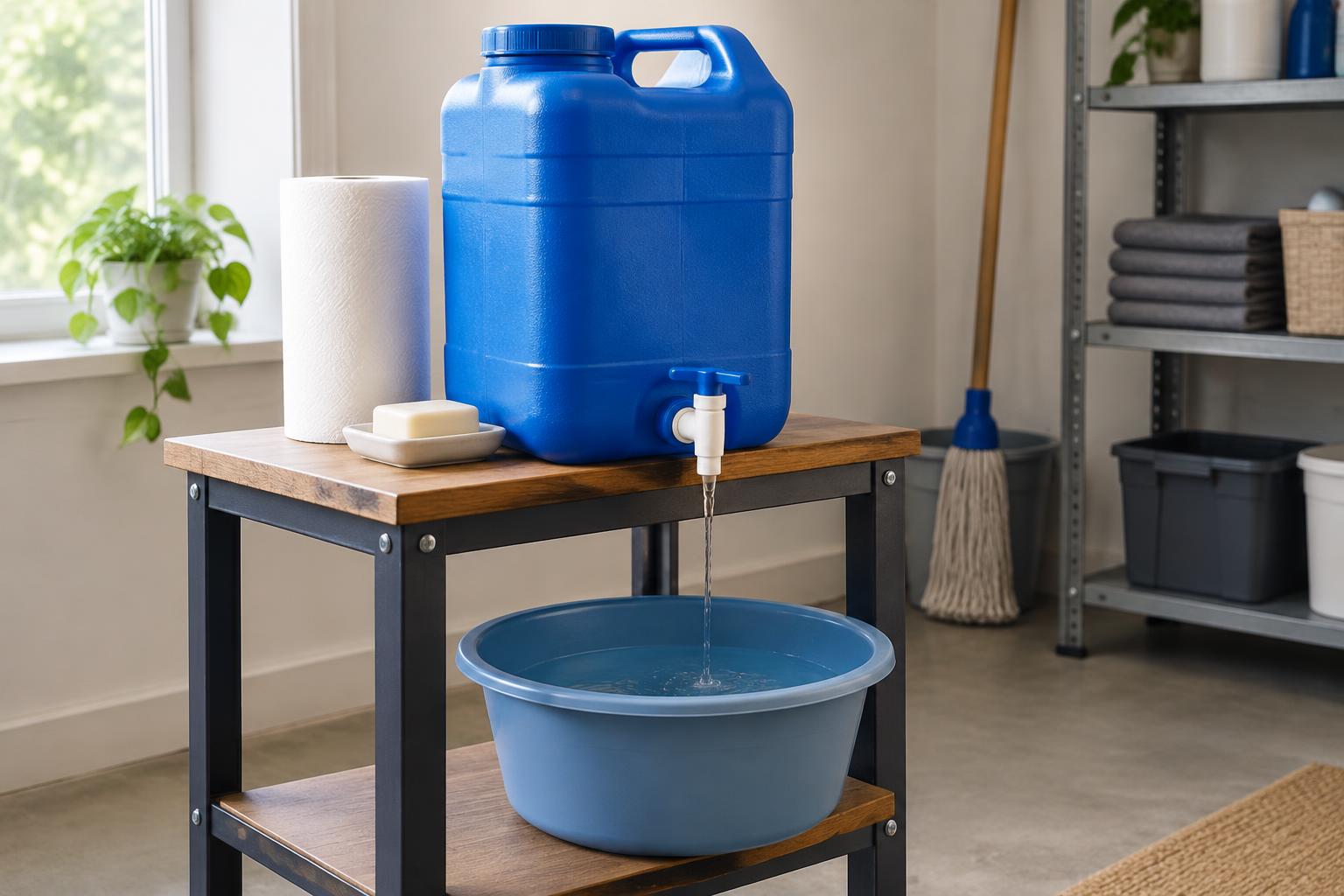
Build a Simple Emergency Handwashing Station
You need:
- A water container with a spigot
- Safe water
- Soap
- A basin or catch bucket
- Disposable paper towels or clean towels
- A way to collect and dispose of used water safely
Position the station near the emergency toilet but away from food preparation.
If soap and water are unavailable, alcohol-based hand sanitizer containing at least 60% alcohol can be useful.
However, sanitizer is not a complete substitute for handwashing, particularly when hands are visibly dirty or when certain gastrointestinal pathogens are involved.
10. Cleaning and Disinfecting the Emergency Toilet Area
Keep the area clean and dry.
Wear disposable gloves when handling contaminated materials.
Clean visible dirt and waste from surfaces before applying disinfectant.
Use an EPA-registered disinfectant according to its label, including required contact time.
If household bleach is used, follow current public-health guidance and the manufacturer's instructions for dilution and use.
Never mix bleach with ammonia, vinegar, toilet cleaners, or other chemicals.
Do not routinely pour bleach into bags of human waste. This does not reliably make the waste safe and can create additional handling hazards.
The goal is to contain waste, prevent contamination, and disinfect affected surfaces.
11. What About Babies, Young Children, and Older Adults?
A good sanitation plan needs to work for everyone in the household.
Babies and Toddlers
Store additional:
- Diapers
- Baby wipes
- Disposable changing pads
- Heavy-duty disposal bags
- Handwashing supplies
- Diaper rash cream
Dispose of diapers in securely tied bags and keep them separate from food and clean supplies.
Older Adults
Consider:
- A raised toilet seat
- A sturdy portable commode
- Grab bars or stable supports
- Adequate lighting
- A private, accessible location
- A caregiver assistance plan
A bucket placed directly on the floor may be difficult or unsafe for someone with limited mobility.
People With Disabilities
A portable bedside commode may be preferable to a bucket toilet.
Ensure the equipment is stable and suitable for the person's weight, mobility, and support needs.
Plan for caregiver assistance and safe cleaning procedures.
People Who Are Ill
If someone develops diarrhea or vomiting, waste handling becomes even more important.
Use extra precautions to prevent contamination of shared surfaces.
Wash hands thoroughly with soap and water.
Use separate cleaning supplies when possible.
Severe dehydration, bloody diarrhea, persistent vomiting, or signs of serious illness require prompt medical attention.
12. Where Should You Set Up Your Emergency Toilet?
Location matters.
If your home is structurally safe, a bathroom may be the most practical location.
It already provides privacy, ventilation, and an appropriate place to wash.
Other possibilities include:
- A utility room
- A screened-off area
- A sturdy outdoor privacy tent
- A detached outbuilding, if safe and accessible
Choose a location that is:
- Private
- Stable and easy to access
- Protected from weather
- Away from food and drinking water
- Easy to clean
- Well ventilated
- Accessible at night
For outdoor arrangements, consider cold weather, strong winds, flooding, and security.
Never place an emergency toilet in a location where floodwater can carry waste into the surrounding environment.
13. What Happens During a Winter Emergency?
Cold weather creates additional problems.
A portable toilet placed outside may become difficult or dangerous to use during snow, ice, or freezing temperatures.
For households in northern Nevada and other cold regions, indoor sanitation arrangements may be preferable when the building is safe.
Keep waste securely contained and separated from living and food areas.
Avoid placing waste containers near heaters or other sources of excessive heat.
If an outdoor toilet is used, provide safe access, traction, lighting, and weather protection.
14. Emergency Sanitation for Apartments
Apartment residents may have fewer options for outdoor storage and disposal.
A two-bucket toilet can still work indoors when properly contained and managed.
However, residents should plan for:
- Limited storage space
- Shared plumbing systems
- Possible sewer backups
- Building management instructions
- Safe temporary waste storage
- Accessibility for household members
- Building-specific collection arrangements
Never dispose of waste from a balcony, window, stairwell, or shared hallway.
An apartment sanitation plan should be developed before a disaster, not after sewage services fail.
15. The Sanitation Mistakes You Must Avoid
Mistake 1: Assuming you can always flush with stored water.
If the sewer is damaged, flushing may cause sewage to back up.
Mistake 2: Storing only a bucket without bags or absorbent material.
The bucket is just the container. You need a complete system.
Mistake 3: Allowing waste bags to become too full.
Overfilled bags are difficult to lift and more likely to rupture.
Mistake 4: Combining urine and feces unnecessarily.
This increases liquid volume, odor, and storage demands.
Mistake 5: Leaving human waste exposed outdoors.
Flies, animals, and runoff can spread contamination.
Mistake 6: Assuming sawdust or kitty litter disinfects waste.
It does not.
Mistake 7: Neglecting handwashing.
This creates a direct route for disease transmission.
Mistake 8: Dumping waste wherever it seems convenient.
Improper disposal can contaminate water and violate public-health rules.
Mistake 9: Forgetting family members with special needs.
Your system must be usable by everyone in the household.
Mistake 10: Never practicing.
A system you've assembled and tested in advance is far more useful than supplies you've never opened.
16. Build Your Family's Emergency Sanitation Kit This Week
You don't need an expensive system.
Start with two five-gallon buckets.
Add a toilet seat, heavy-duty bags, absorbent material, gloves, soap, and toilet paper.
Place everything together in a clearly labeled storage container.
If possible, keep the buckets stacked together with the smaller supplies stored inside.
Include printed instructions.
Then practice assembling the system without actually using it.
Make sure everyone knows where the supplies are stored.
If you have children, explain how the system works in a calm, age-appropriate way.
If you care for older adults, make sure the arrangement is comfortable and accessible.
A few dollars spent preparing now can prevent a major sanitation problem during a disaster.
17. Printable Emergency Sanitation Checklist
Emergency Sanitation Checklist
Toilet Equipment
Hygiene Supplies
Family-Specific Supplies
Family Practice
Final Thoughts: Sanitation Is a Basic Survival Necessity
When people think about emergency preparedness, they naturally focus on food, water, shelter, and electricity.
But sanitation deserves just as much attention.
A family can endure several days without electricity.
They can prepare meals without a conventional stove.
They can even manage without running water if they've stored enough.
But everyone still needs a safe way to use the bathroom.
If the toilets stop working for two weeks, sanitation quickly becomes a major household responsibility.
Fortunately, the solution doesn't have to be complicated.
Two buckets, heavy-duty bags, absorbent material, a safe handwashing station, and a plan for secure waste storage can make an enormous difference.
Prepare your emergency toilet before you need it. Your family's health may depend on it.
Official sources
Everything in this guide follows the public-health guidance below. When in doubt, check these and your local health department:
- Washington State Department of Health: Toilet Use During an Emergency
- Oregon State University Extension: Survival Basics: Sanitation and Waste Management
- Regional Disaster Preparedness Organization: Emergency Toilet Project
- King County Public Health: How to Create an Emergency Toilet
- CDC: Guidelines for Personal Hygiene During an Emergency
- Washington County, Oregon: Disaster Sanitation
Keep going
- My Earthquakes guide covers the kind of disaster most likely to break sewer lines here in northern Nevada.
- My Floods guide covers what to do when high water overwhelms sewers and septic systems.
- My Power Outages guide covers staying safe when the lights go out.
- My Winter Storms guide covers getting through cold-weather emergencies at home.
- My Water Storage page shows how to store enough water for drinking and handwashing.
- Use the Family Emergency Planner to put your sanitation plan on paper with the rest of your plan.