
Prepare
Nuclear Fallout Is Survivable: How to Prepare Your Family Without Spending a Fortune
Understanding nuclear radiation, preparing your home and obtaining a few inexpensive supplies could save your family's lives.
By Kelly Smith · November 24, 2026
There are few subjects in emergency preparedness that frighten people more than the possibility of a nuclear attack. The very thought of a nuclear explosion causes many people to conclude that there is little point in preparing. They assume that if it happens, there is nothing they can do.
That assumption could be one of the most dangerous mistakes they ever make.
Over the years, I have taught numerous classes on emergency preparedness. Interestingly, the most heavily attended class I ever held was on surviving a nuclear event.
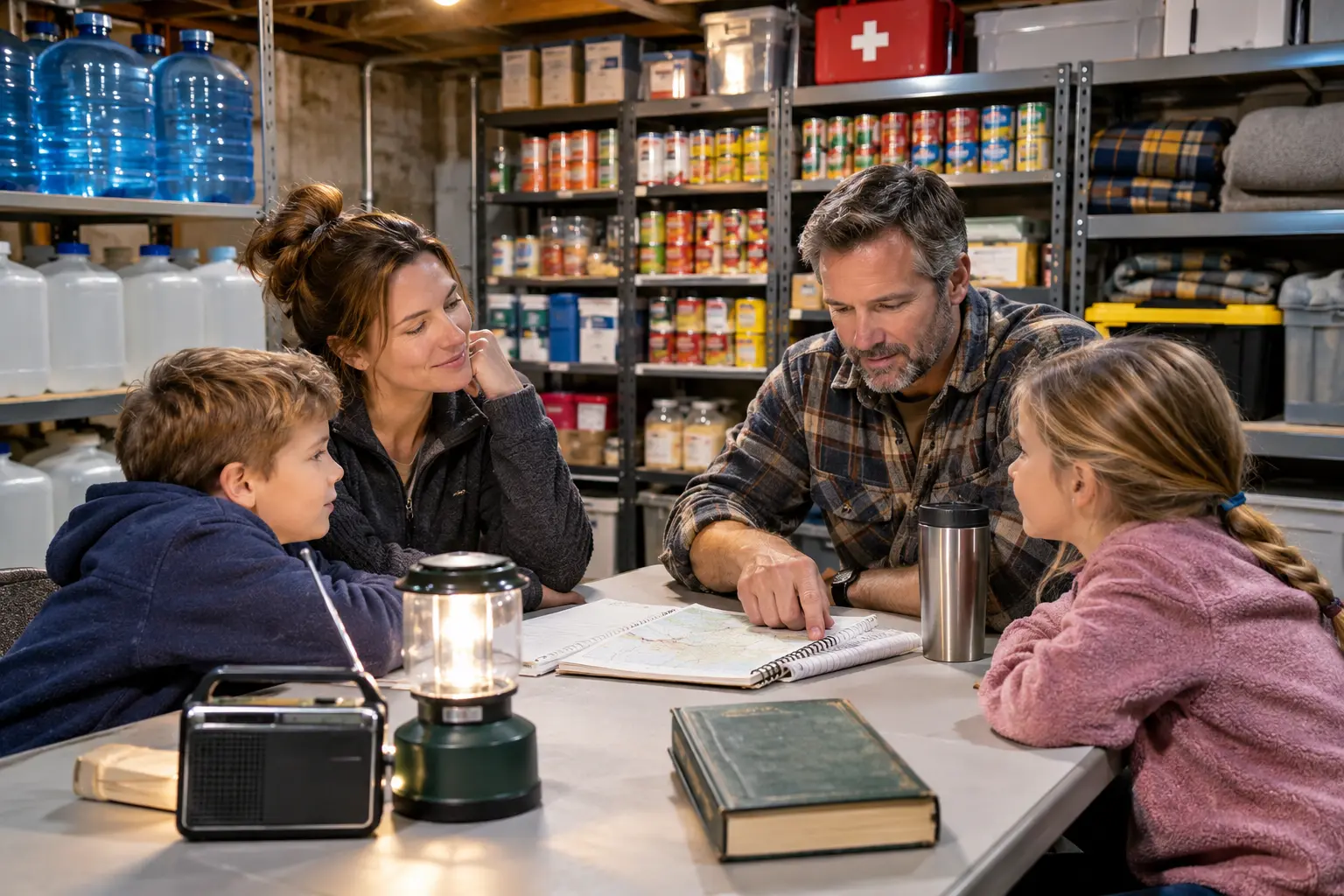
I invited Eric Won, a retired U.S. Navy submarine officer who was qualified in nuclear power plant operations, to teach the class. What he shared changed the way many of us looked at nuclear preparedness.
One of the most encouraging things we learned was that surviving nuclear fallout does not necessarily require an elaborate underground bunker costing hundreds of thousands of dollars. There are several relatively simple and inexpensive things ordinary families can do to significantly improve their chances of survival.
The purpose of this article is not to frighten you or suggest that a nuclear war is imminent. It is to help you understand what you can do today so that, should such an event ever occur, you will know how to protect yourself and your family.
Why Should We Be Concerned About Nuclear Preparedness?
I live in the Reno-Sparks area of Northern Nevada. A relatively short distance east of our community, along USA Parkway, is the Tahoe-Reno Industrial Center.
This region has become home to significant technological, manufacturing and data center infrastructure, including facilities associated with some of the world's largest companies.

While we cannot know whether any particular location would become a military target, the concentration of important infrastructure in our region provides another reason to understand emergency preparedness.
However, you do not have to live near a major city, military installation or industrial center to be affected by radioactive fallout.
Radioactive material can be carried considerable distances by the wind. Depending on atmospheric conditions and the nature of the event, communities far removed from an explosion could experience radioactive contamination.
You could be well outside the area of immediate destruction and still face a potentially life-threatening situation.
The encouraging news is that there are things you can do about it.
Understanding the Difference Between a Nuclear Explosion and Nuclear Fallout
A nuclear explosion produces several immediate dangers, including:
- An extremely powerful blast.
- Intense heat and light.
- Initial nuclear radiation.
- Potential damage to electrical and communication infrastructure.
- Fires and structural damage.
For those outside the areas of severe immediate damage, radioactive fallout may become one of the most significant subsequent dangers.
When a nuclear explosion occurs, radioactive material can be carried into the atmosphere. Particularly when an explosion occurs near the ground, soil, dust and debris can become contaminated with radioactive material and subsequently fall back to earth.
This is what we commonly call nuclear fallout.
These particles can settle on rooftops, roads, vehicles, lawns, clothing, food and water supplies.

You cannot reliably determine whether radiation is present simply by looking, smelling or tasting.
But understanding how radiation behaves gives us several important advantages.
The Three Principles of Radiation Protection
There are three fundamental principles used by people who work around radiation.
1. Time
The less time you spend exposed to radiation, the lower your accumulated radiation dose will generally be.
Radiation from fresh nuclear fallout also tends to decrease substantially over the first several hours and days.
This is one reason why immediately getting into a protective shelter is so important.
2. Distance
The farther you are from radioactive material, the less radiation you will generally receive.
If radioactive particles are accumulating outside your home, moving away from exterior walls, windows and the roof can reduce your exposure.
This is why the center of a large building or a basement can provide considerably better protection than a room immediately adjacent to an outside wall.
3. Shielding
Dense materials can reduce the amount of radiation that reaches you.
Some effective shielding materials include:
- Concrete
- Compacted earth
- Sand
- Solid masonry
- Water
The effectiveness of these materials depends on their thickness, density, placement and the type of radiation involved.
The more suitable material you can safely place between yourself and radioactive contamination, the better protected you may be.
These three principles — time, distance and shielding — form the foundation of nuclear fallout preparedness.
The First 48 Hours Are Especially Important
One of the most encouraging things to understand about nuclear fallout is that its radiation intensity generally decreases rapidly during the initial hours and days.
Emergency planners sometimes use an approximation known as the 7-10 rule.
For every sevenfold increase in elapsed time after a nuclear detonation, the radiation dose rate from fresh fallout decreases approximately tenfold.
The following table illustrates this principle.
| Time After Explosion | Approximate Relative Radiation Level |
|---|---|
| 1 hour | 100% — reference level |
| 7 hours | 10% |
| 24 hours | 2.3% |
| 49 hours | 1% |
| 14 days | 0.1% |
These figures are approximations, assuming no additional fallout deposition. They do not indicate when it is safe to go outside.
Even one percent of an extremely dangerous radiation level could remain hazardous.
Nevertheless, this rapid decrease illustrates why having a place where you can remain sheltered during those initial hours and days is so valuable.
Emergency officials generally recommend remaining sheltered for at least 24 hours unless other instructions are provided or your shelter becomes unsafe.
I personally encourage families to prepare for the possibility of remaining indoors for two weeks or longer, not because everyone will necessarily need to shelter that long, but because surrounding infrastructure, transportation, electricity and water services could remain disrupted.
You May Already Have a Fallout Shelter
When people hear the term fallout shelter, they often envision an elaborate underground bunker equipped with air filtration systems, generators, sleeping quarters and months of supplies.
While such facilities can provide substantial protection when properly designed, most families cannot afford one.
That does not mean you are helpless.
If You Have a Basement
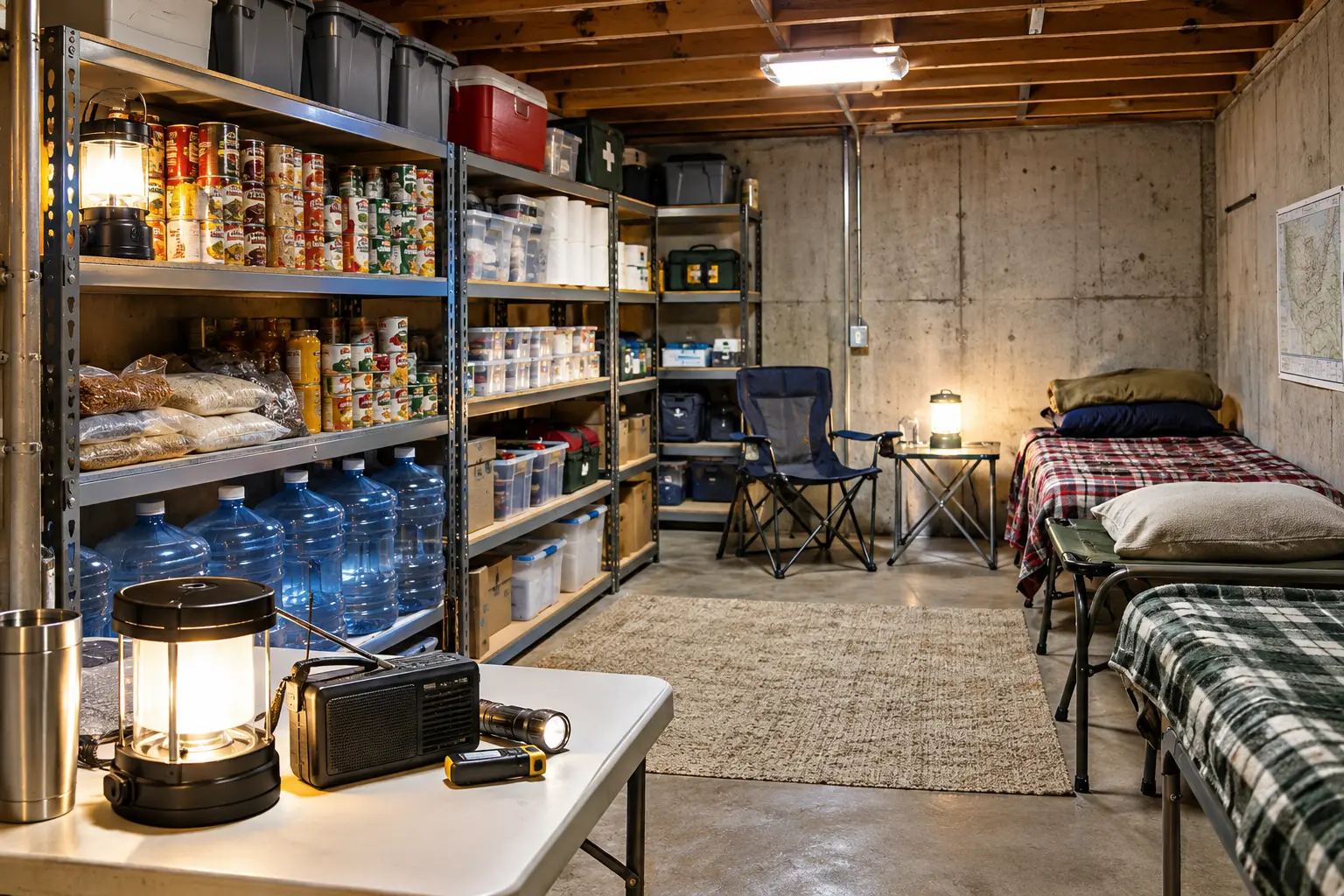
A basement can provide significant protection because the surrounding earth and concrete walls help shield you from radioactive material outside.
Identify an area of your basement that is:
- Away from windows and exterior openings.
- Surrounded by as much earth and concrete as possible.
- Accessible to emergency supplies.
- Large enough to accommodate your household.
- Structurally sound.
If You Live in a Single-Story Home Without a Basement
Many homes in Northern Nevada do not have basements. In this situation, identify a room as close to the center of your home as possible.
An interior bathroom, hallway, storage room or large closet may provide better protection than rooms along the outside walls.
You want to maximize the amount of building material between yourself and the outdoors.
A typical single-story home provides limited shielding compared with a substantial concrete building or underground shelter. Nevertheless, getting inside is generally much better than remaining outdoors.
If You Live in an Apartment or Work in a Large Building
Large brick and concrete buildings can provide substantial protection.
If a basement is unavailable, an interior area on a middle floor, away from exterior walls and the roof, may offer better protection.
Spend a few minutes identifying appropriate shelter locations at:
- Your workplace
- Your children's schools
- Your home
- Places you frequently visit
You may not be at home when an emergency occurs.
Knowing where to go ahead of time could make an enormous difference.
Using Your Emergency Supplies as Additional Shielding
During our nuclear preparedness class, Eric showed us how he had accumulated shelves of bottled water that could also serve as supplemental radiation shielding.
I found this particularly interesting because water is something we should already be storing.
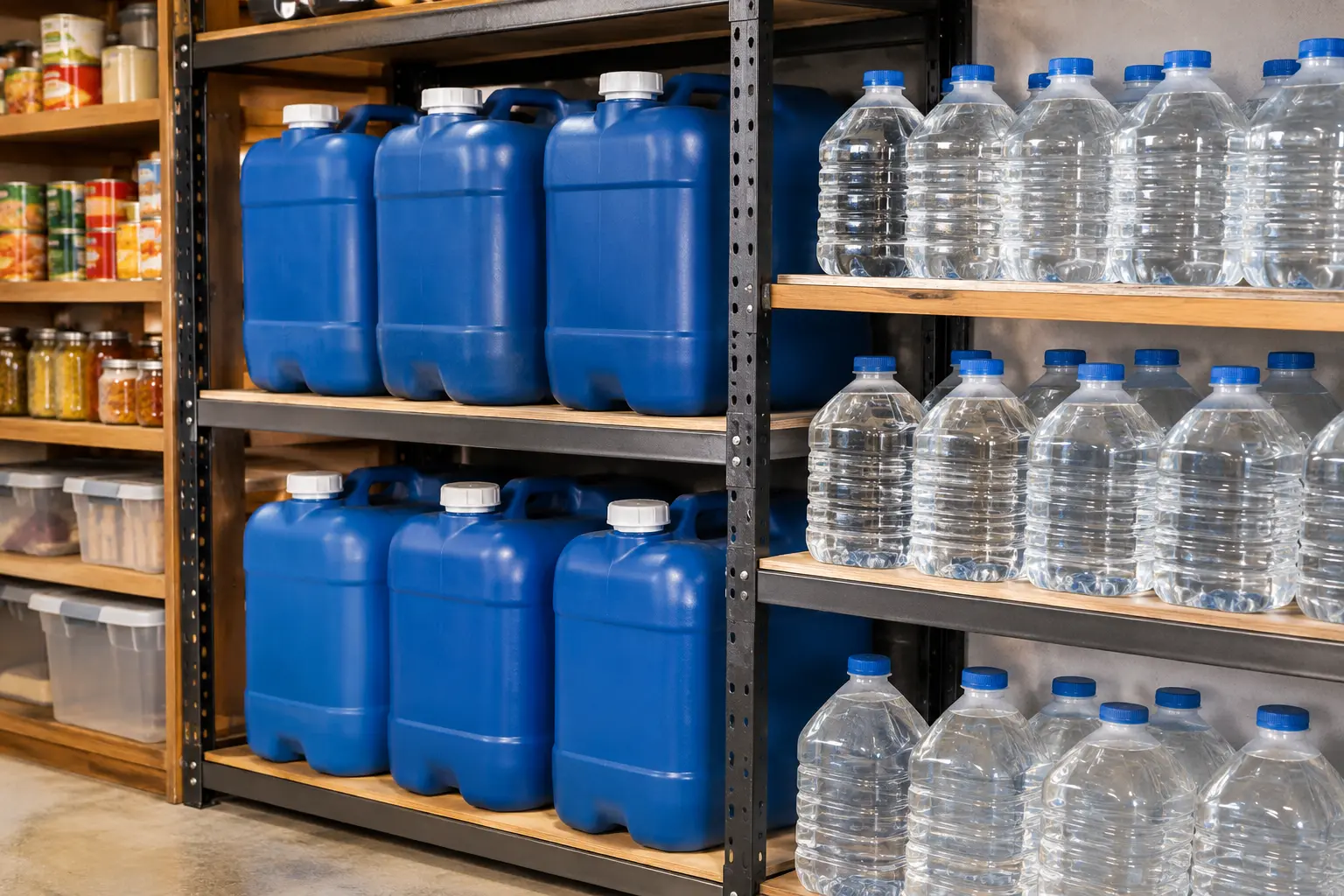
Water containers, books, food storage and other dense materials can potentially provide additional shielding when appropriately arranged.
However, the key word here is safely.
A single gallon of water weighs approximately 8.34 pounds. Fifty gallons weigh more than 417 pounds before including the containers.
Sandbags, bricks and concrete blocks can be considerably heavier.
Never place large amounts of weight above sleeping areas, overload shelving or create unstable stacks of heavy materials. Major shielding improvements must account for the structural capacity of your home.
Prepare your shelter ahead of time. Do not wait until a nuclear emergency occurs to begin moving heavy materials or working outside.
Keeping Radioactive Dust Outside Your Home
In addition to protecting yourself from penetrating radiation, you want to prevent radioactive particles from entering your living space.
Radioactive contamination can be carried into your home through:
- Open windows and doors.
- Ventilation systems.
- Evaporative coolers.
- Clothing and footwear.
- Pets.
- Objects brought inside.
Some inexpensive supplies can help reduce contamination.
Consider purchasing plastic sheeting, duct tape and weatherstripping before an emergency occurs.
During a radiation emergency, close exterior doors, windows and fireplace dampers. Where possible, turn off equipment that draws outdoor air into your home, including evaporative coolers.
Plastic sheeting is useful for temporarily covering damaged openings, but it does not provide meaningful protection against penetrating gamma radiation.
You should also avoid making an occupied shelter completely airtight. Your family needs breathable air, and any extended sheltering arrangement must account for safe ventilation and temperature.
What Should You Purchase Before a Nuclear Emergency?
Many of the supplies specifically useful during a radiation emergency are relatively inexpensive.
You do not have to purchase everything at once. Start with the essentials and gradually improve your preparedness.
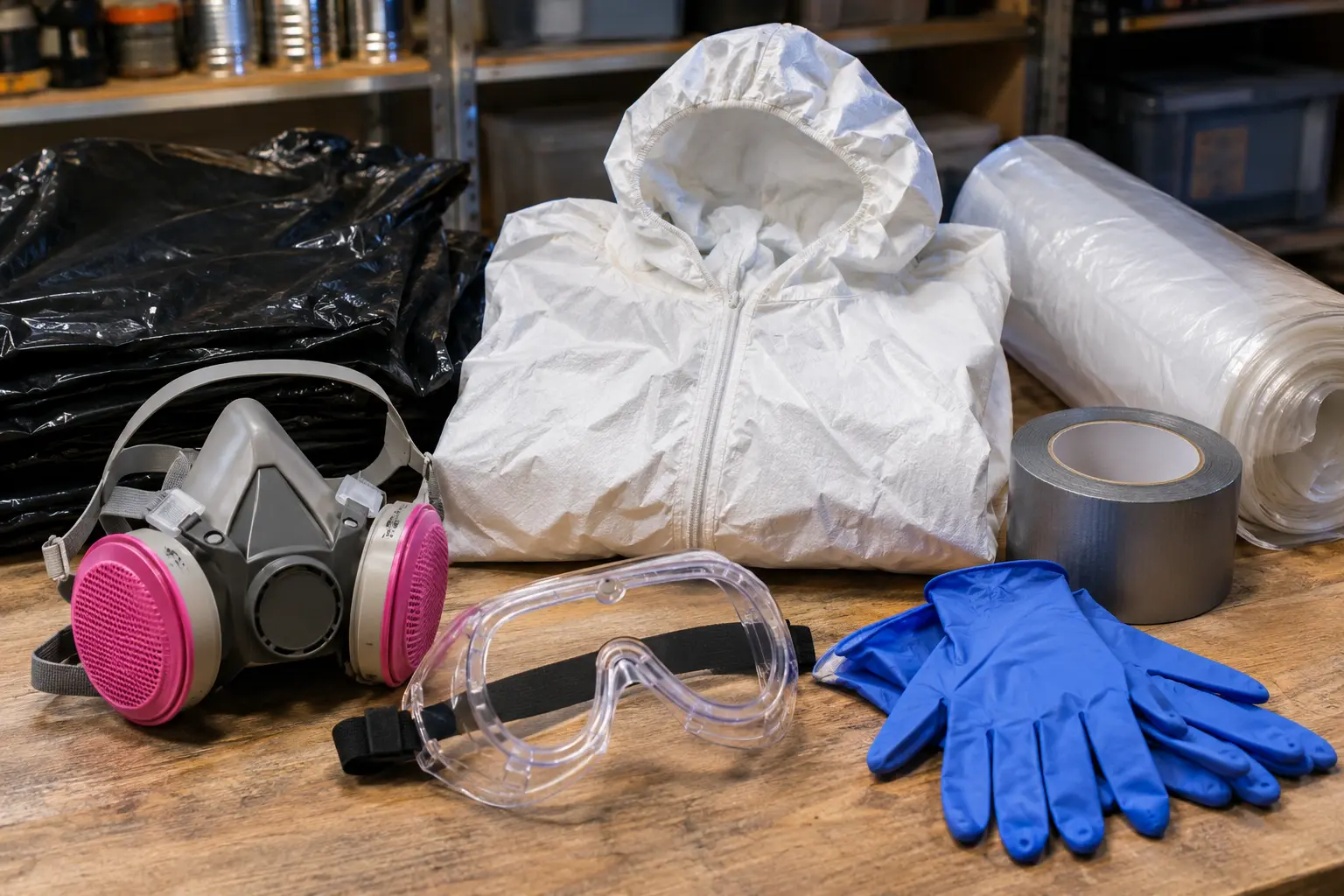
Particulate Respirators
Estimated cost: $15–$80
A properly fitted N95 or P100 respirator can reduce the inhalation of airborne radioactive particles.
Reusable respirators equipped with P100 particulate filters are another option.
It is extremely important to understand that these respirators do not protect you from penetrating gamma radiation. They also do not supply oxygen or automatically protect against hazardous gases.
Their purpose is to reduce the amount of particulate contamination entering your respiratory system.
They are not a substitute for shelter.
Protective Safety Goggles
Estimated cost: $8–$20
Properly fitted protective goggles can reduce the amount of contaminated dust entering your eyes.
Disposable Protective Coveralls
Estimated cost: $10–$25 each
Hooded disposable protective coveralls can help prevent radioactive particles from settling on your clothing and skin.
These garments are not radiation-proof suits. They provide contamination protection rather than meaningful gamma radiation shielding.
Disposable Gloves
Estimated cost: $10–$20 per box
Nitrile gloves are useful when handling potentially contaminated clothing, supplies or other objects.
Heavy-Duty Garbage Bags
Estimated cost: $10–$20
These are useful for isolating contaminated clothing, footwear, protective garments and cleaning materials.
Plastic Sheeting and Duct Tape
Estimated cost: $20–$40
These can help temporarily cover damaged windows and other openings through which contaminated dust might enter.
Battery-Operated Emergency Radio
Estimated cost: $25–$60
Your electricity, internet connection and cellular service may not be available following a major emergency.
A battery-operated AM/FM radio with weather-band capability provides another means of receiving emergency instructions, assuming broadcasting infrastructure remains operational.
Store extra batteries with your radio.
Decontamination Supplies
Estimated cost: $15–$30
Keep ordinary soap, shampoo, disposable cleaning cloths, towels and clean clothing available.
These simple supplies may be more valuable than many expensive pieces of specialized survival equipment.
Should You Purchase a Geiger Counter?
A radiation detector can be a useful addition to your emergency preparedness supplies, particularly if you understand its limitations and learn how to operate it before an emergency.
There are several types of radiation detection instruments.
| Instrument | Primary Purpose |
|---|---|
| Geiger counter | Detects certain types of ionizing radiation |
| Radiation survey meter | Measures radiation levels or dose rates |
| Personal dosimeter | Tracks accumulated radiation exposure |
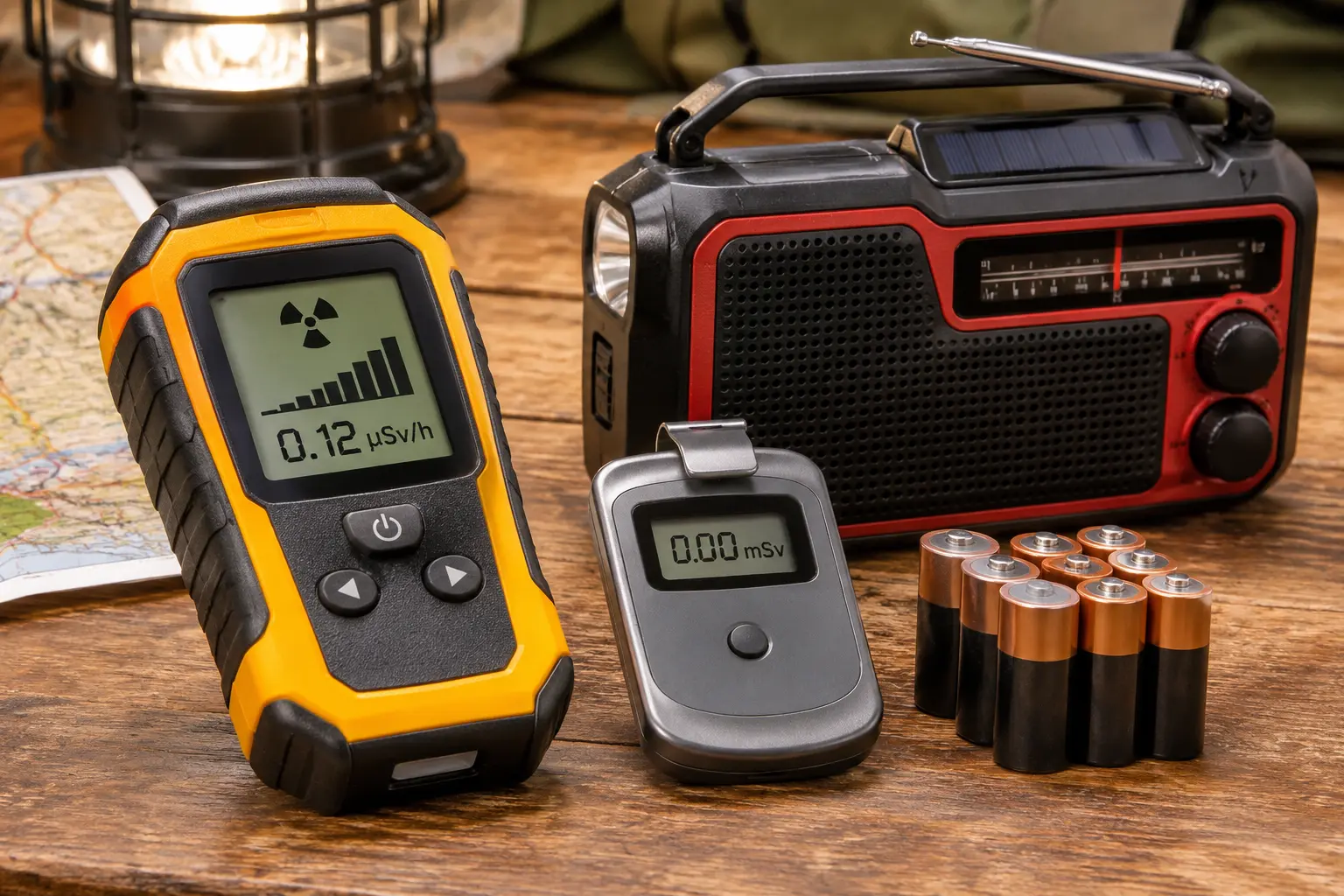
Not all inexpensive Geiger counters are suitable for measuring the potentially high radiation levels associated with nuclear fallout.
Some instruments have limited measurement ranges and can become saturated or provide misleading readings when exposed to radiation beyond their design limits.
If you purchase a radiation detector, look for:
- Clearly documented measurement ranges.
- Gamma radiation measurement capability.
- Calibration information.
- Over-range or overload warnings.
- Readily available batteries.
- Clear operating instructions.
Learn how to operate your instrument before an emergency.
Never use a consumer radiation detector as your sole basis for deciding that an area is safe to enter.
A radiation detector is an informational tool, not a protective device.
What About Potassium Iodide Tablets?
Potassium iodide, commonly referred to as KI, is frequently advertised as a nuclear emergency supplement.
However, its benefits are considerably more limited than many people realize.
Potassium iodide can help prevent the thyroid gland from absorbing radioactive iodine when administered appropriately.
It does not protect against:
- External gamma radiation.
- Radioactive cesium.
- Most other radioactive fallout contaminants.
- Radiation damage to other organs.
It is not a general-purpose radiation antidote.
The CDC does not recommend relying on potassium iodide for protection following a nuclear detonation. Leaving a protective shelter to obtain potassium iodide could expose you to far greater danger than remaining inside.
Ordinary iodine supplements and iodized salt are not substitutes.
Potassium iodide should only be taken when specifically directed by public health officials or a healthcare provider.
Establish a Decontamination Area in Your Home
One of the simplest and most valuable preparations you can make is establishing a location where potentially contaminated clothing can be removed before entering your main living area.
A laundry room, entryway or bathroom may be suitable.
According to the CDC, removing your outer layer of clothing can eliminate up to 90 percent of radioactive material on your body.
If you believe you have been exposed to radioactive fallout:
- Get inside a protective building promptly.
- Carefully remove your outer clothing without shaking it.
- Place contaminated clothing and footwear in a sealed plastic bag.
- Keep the bag away from people and pets.
- Wash your body with lukewarm water and soap.
- Wash your hair with shampoo, but do not use hair conditioner.
- Avoid aggressive scrubbing that could damage your skin.
- Put on clean clothing.
- Move into your designated protective shelter.
If a shower is unavailable, gently wash exposed skin using a clean, damp cloth.
Pay particular attention to your face, hands and hair.
Hair conditioner can cause radioactive particles to adhere to your hair, making them more difficult to remove.
You do not need specialized chemicals to perform basic personal decontamination. Ordinary soap, shampoo and water can be extremely helpful.
Food and Water May Become Your Greatest Concern
Imagine being told that going outside your home could expose you to dangerous levels of radiation.
How long could you remain inside without going to the grocery store, retrieving supplies from outside or relying on public utilities?
This is where ordinary emergency preparedness becomes especially important.
I encourage every household to work toward having at least two weeks of readily accessible food, drinking water, medications and sanitation supplies.
A 30-day reserve would provide even greater flexibility.
Store Food That Requires No Cooking
While wheat, rice, rolled oats and dried beans are excellent long-term food storage products, they often require water, fuel and preparation.
During the initial sheltering period, having food that requires no cooking could be particularly valuable.
Consider storing:
- Canned meats and fish.
- Canned beans.
- Canned fruits and vegetables.
- Peanut butter.
- Crackers.
- Protein and granola bars.
- Nuts and dried fruit.
- Shelf-stable milk.
- Ready-to-eat meals.
Remember to include a manual can opener.
Never operate outdoor camping stoves, charcoal grills or generators inside your home or shelter. Carbon monoxide poisoning could become a deadly secondary emergency.
Store Drinking Water Ahead of Time
Radioactive material may contaminate certain outdoor water sources.
Many people mistakenly assume that boiling water or passing it through an ordinary camping filter will make radioactive water safe to drink.
Boiling does not remove radioactive contamination, and ordinary water filters cannot be relied upon to remove all radioactive substances, particularly dissolved contaminants.
Stored drinking water is your preferred alternative until public water supplies have been declared safe.
For help determining how much food, water and other emergency supplies your family needs, use our free Family Emergency Preparedness Planner:
Open the Family Emergency Preparedness Planner
You can calculate requirements based on the number of people in your household, select your preparedness goals and print your personalized emergency plan.
Don't Forget Emergency Sanitation
What happens if electricity fails, municipal water becomes unavailable and your toilets no longer flush?
This is a consideration that many people overlook.
If you must remain inside for several days or longer, having an alternative method of disposing of human waste becomes particularly important.
A simple emergency sanitation kit might include a five-gallon bucket, toilet seat, heavy-duty liners, absorbent material, toilet paper and personal hygiene supplies.
Prepare these supplies before an emergency, and keep waste securely contained and separated from food and drinking water.
What Should You Do If a Nuclear Explosion Occurs?
There are three essential instructions that everyone in your family should understand.
GET INSIDE. STAY INSIDE. STAY TUNED.
If You See an Extremely Bright Flash
Do not approach a window to see what happened.
Take cover, protect your head and avoid looking toward the flash. Remain protected from blast effects and flying debris.
Get Inside
As soon as it is safe to move, enter the nearest suitable building.
Do not remain in your vehicle if you can promptly reach adequate shelter.
Do not delay sheltering to purchase supplies, retrieve possessions or attempt to drive across town.
Stay Inside
Move to the basement or the most protected interior portion of the building.
Remove potentially contaminated clothing and wash exposed skin.
Close exterior doors and windows, and reduce the intake of outdoor air.
Remain sheltered for at least 24 hours unless authorities instruct otherwise or your building becomes unsafe because of fire, structural damage or another immediate danger.
Stay Tuned
Listen to emergency broadcasts for instructions concerning radiation levels, evacuation routes, medical assistance and public safety.
Conditions can vary considerably between communities.
Do not assume that because a particular amount of time has passed, it is automatically safe to go outside.
What If Your Children Are at School?
One of the strongest instincts any parent has during an emergency is to immediately retrieve their children.
During a nuclear fallout emergency, however, traveling to a school could expose both you and your children to unnecessary radiation.
Schools and childcare facilities may have emergency sheltering procedures.
Find out what those procedures are before an emergency occurs. Discuss them with your children and establish a family communication plan.
Your family members may be safer remaining in their respective shelters until authorities determine that travel is safe.
Knowing this ahead of time could prevent a dangerous decision made out of fear.
Nuclear Fallout Preparedness Checklist
The following checklist supplements our general Family Emergency Preparedness Planner.
Print this list and begin checking off the things you already have. Gradually obtain the supplies you are missing.
Nuclear Fallout Preparedness Checklist
Shelter Preparation
Personal Contamination Protection
Decontamination Supplies
Communications and Monitoring
Extended Sheltering
Family Preparedness
For a more complete household preparedness plan, visit our Family Emergency Preparedness Planner.
Prepare Without Fear
I have spent many years encouraging people to prepare for emergencies.
During those years, I have seen numerous predictions of impending disasters come and go. Some warnings have been legitimate, while others have produced unnecessary fear.
I do not believe we should spend our lives worrying about what might happen tomorrow.
But I do believe we have a responsibility to do what we reasonably can today to protect ourselves and our families.
Preparing for nuclear fallout does not mean you expect a nuclear war. It simply means you recognize that knowledge and preparation can provide protection against circumstances beyond your control.
Most of the supplies discussed in this article would also be useful during wildfires, hazardous material incidents, earthquakes, winter storms and extended power outages.
Your preparations will not be wasted.
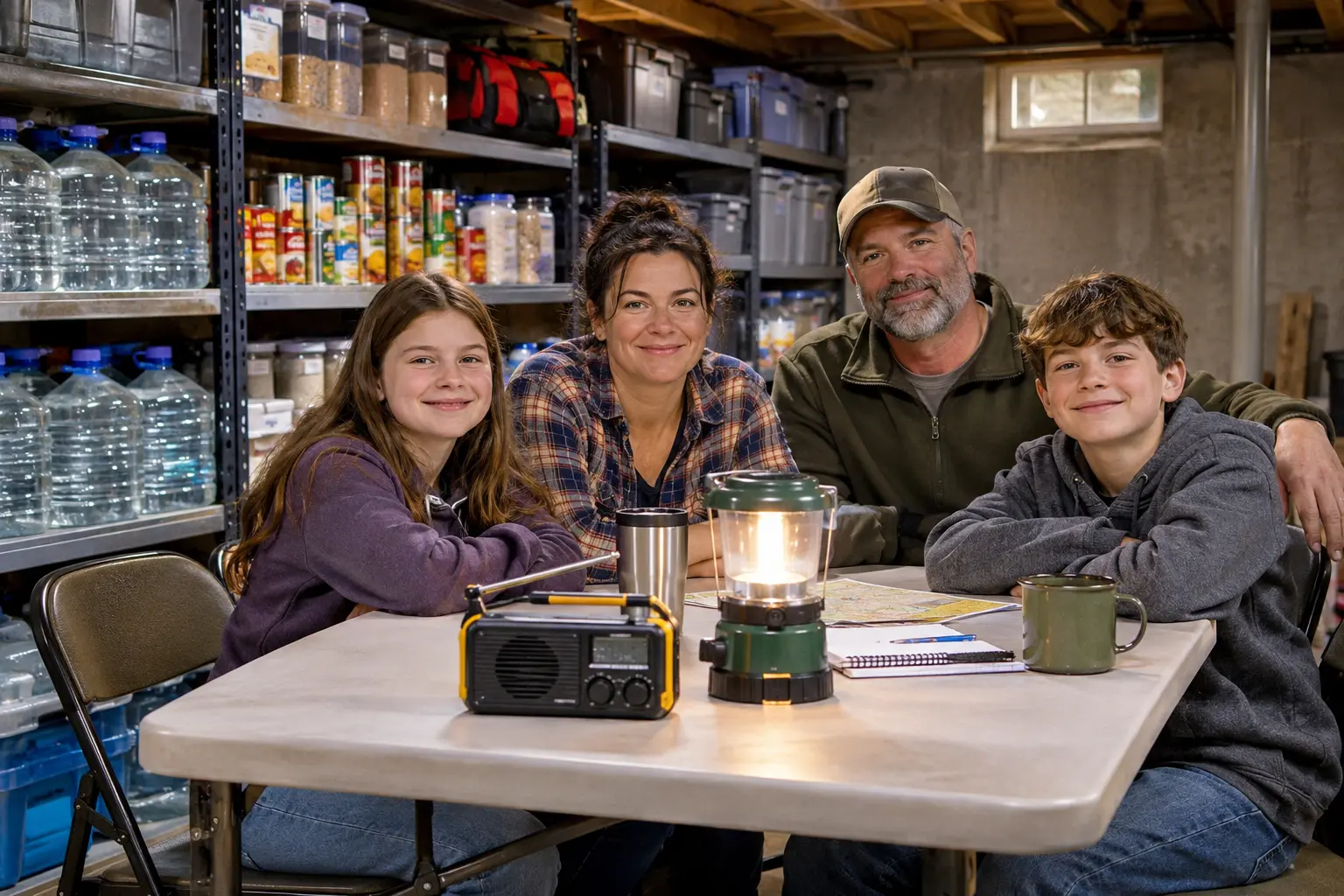
Start with what you already have. Identify the safest location in your home. Purchase a few inexpensive supplies. Increase your food and water storage. Discuss your plans with your family.
You do not have to accomplish everything in a single day.
Perhaps the greatest lesson I took away from that nuclear preparedness class was that we are not necessarily as helpless as we think we are.
There are things we can do.
There are preparations we can make.
And there is considerable peace of mind that comes from knowing we have done what we reasonably can to protect those we love.
Prepare wisely. Prepare gradually. Prepare without fear.
References and Additional Resources
- FEMA — Nuclear Explosion Preparedness
- CDC — Radiation Emergencies
- CDC — What to Do During a Radiation Emergency
- CDC — Personal Decontamination
- CDC — Potassium Iodide
- CDC — Food, Drinking Water and Medicine Safety
- Eric Won, retired U.S. Navy submarine officer, Surviving a Nuclear Event, emergency preparedness class presentation, 2022.
- Emergency Prepper — Family Emergency Preparedness Planner
Keep going
- Use the free Family Emergency Preparedness Planner to calculate food, water and supply needs for your household.
- Use the free Long-Term Food Storage Calculator to plan staples for extended sheltering.
- My Water Storage page covers storing and rotating safe drinking water indoors.
- My Emergency Sanitation guide explains how to handle toilets and waste when utilities are out.
- My 90-Day Preparedness guide shows how to build a steady household reserve without panic.