

Prepare
Prepare for 90 Days—Not Because You're Afraid, but Because You're Wise
The best time to prepare for an emergency is long before someone announces that one may be coming.
By Kelly Smith · November 12, 2026
Another Warning. Another Countdown. Another Reason to Worry?
Recently, people around the world have been hearing renewed calls to prepare for emergencies.
Governments have encouraged households to keep emergency supplies. News reports have discussed possible disruptions. Social media has circulated warnings about blackouts, war, economic instability, and other disasters.
Some of these warnings come from legitimate emergency management agencies. Others are speculation, exaggerated headlines, or predictions that cannot be substantiated.
In late October and early November 2026, several countries and European institutions issued or renewed preparedness guidance. Much of that guidance emphasized having at least 72 hours of essential supplies—not a prediction that a worldwide disaster would occur in 90 days.
Nevertheless, these announcements have understandably caught people's attention.
And perhaps they should.
But there's a better way to respond than becoming frightened.
What if you were already prepared?
What if your family already had enough food for three months?
What if you had a practical water plan, emergency cooking equipment, and essential household supplies?
What if the next frightening headline didn't send you rushing to the grocery store because you already had what you needed?
That is the kind of preparedness we should be working toward.
Not panic.
Not predictions.
Not a countdown to catastrophe.
Just the quiet confidence of knowing you've made reasonable preparations to care for yourself and your family.
1. We've Heard Warnings Before
For decades, people have been warned about coming disasters.
Some warnings have been accurate. Others have been exaggerated. Many predictions have simply failed to materialize.
We've heard predictions about economic collapse, devastating earthquakes, widespread power failures, pandemics, wars, and countless other emergencies.
Sometimes the predicted date comes and goes without incident.
And that creates a problem.
When people are repeatedly told that something terrible will happen by a particular date, and nothing happens, they begin dismissing future warnings.
They may even conclude that emergency preparedness itself is unnecessary.
But that's the wrong lesson.
The failure of a particular prediction does not mean emergencies will never happen.
A family that prepares for a possible disaster and never experiences it hasn't necessarily wasted its effort.
If they've stored foods they regularly eat, maintained useful supplies, and learned practical skills, their preparations still have value.
The mistake is not preparing.
The mistake is allowing fear and unsupported predictions to determine when, why, and how we prepare.
2. Ninety Days Is a Goal, Not a Prediction
Let's establish something important.
This article is not predicting a disaster in 90 days.
It isn't suggesting that governments know something they're hiding.
It isn't telling you to buy everything immediately.
The goal is to build and maintain a 90-day supply of food and other essential household necessities, regardless of what the news is reporting.
If nothing unusual happens over the next three months, that's wonderful.
Your supplies are still there.
You'll continue using and replenishing them.
And when the next warning comes, you won't have to start over.
Think of preparedness like maintaining insurance, keeping a spare tire in your vehicle, or having a fire extinguisher in your kitchen.
You don't purchase a fire extinguisher because you're convinced your kitchen will catch fire next Tuesday.
You purchase it because fires are possible, and preparation makes sense.
Emergency food storage should be approached the same way.
3. Why Three Months?
Government emergency supply recommendations often begin with 72 hours.
That is an important starting point.
Three days of food and water can make a tremendous difference during a short-term emergency.
But some disasters last much longer.
A major earthquake could disrupt transportation and utilities.
A severe winter storm could isolate communities.
A regional power outage could interrupt grocery deliveries and refrigeration.
A widespread economic disruption could affect employment and household finances.
And sometimes the emergency is entirely personal.
A job loss, unexpected medical expense, or temporary loss of income can make having several weeks of groceries already available enormously helpful.
Three months of food provides a meaningful cushion against many different circumstances.
It is not a guarantee of survival in every possible disaster, but it gives families more options and more time to make decisions.
Think of Preparedness in Stages
| Goal | What it accomplishes |
|---|---|
| 3 days | Immediate emergency supplies |
| 7 days | A full week of household essentials |
| 14 days | Greater independence during service disruptions |
| 30 days | A substantial household food reserve |
| 60 days | More flexibility during prolonged difficulties |
| 90 days | A practical three-month food supply |
| 1 year | A longer-term goal for households with the means and space |
You do not have to reach 90 days immediately.
Every step represents progress.
4. The Most Important Rule: Store What You Already Eat
This may be the single most practical piece of advice in the entire article.
Don't build an emergency food supply around foods your family never eats.
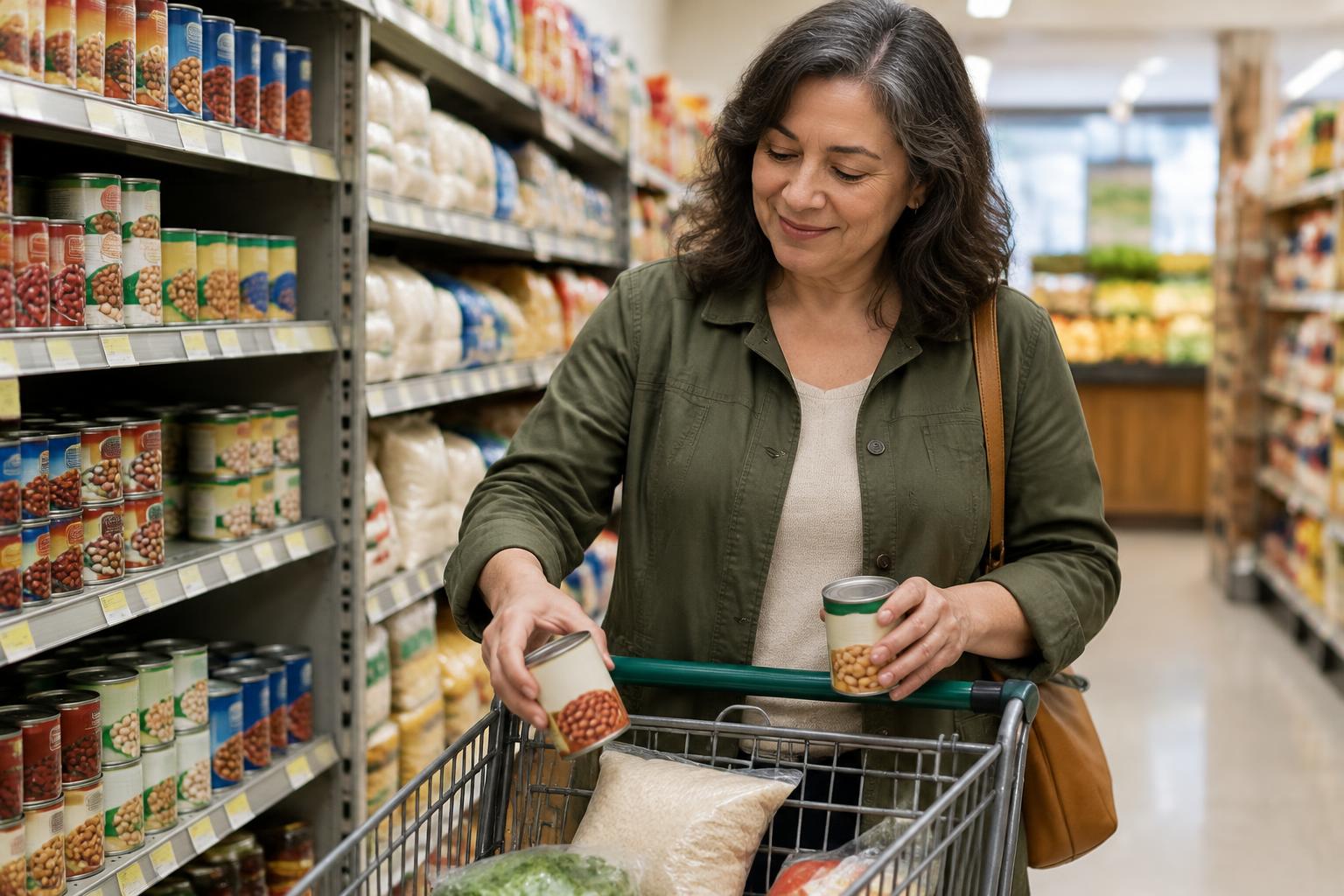
If your family regularly eats pasta, rice, oatmeal, beans, soup, peanut butter, and canned vegetables, those foods are an excellent place to begin.
Buy extra quantities of the foods you already use.
Then rotate them into your normal meals.
For example, suppose your household uses four cans of chicken every month.
Instead of keeping only four cans, gradually build up to twelve.
When you use a can, replace it during your next grocery trip.
The same approach works for pasta, rice, canned fruit, beans, soup, cooking oil, and many other foods.
This is often called a working pantry or rotating pantry.
It has several advantages:
- Your family already knows how to prepare the food.
- You know whether everyone likes it.
- You are less likely to waste money on unfamiliar products.
- You can use supplies before they deteriorate.
- You can gradually increase your reserve without making a massive purchase.
The goal is not to fill a basement with food and forget about it for 20 years.
The goal is to maintain a pantry that supports everyday life while providing a reserve for emergencies.
5. You Don't Need to Buy Three Months of Food Tomorrow
For many families, purchasing 90 days of groceries all at once would be financially impossible.
That's understandable.
Food is expensive.
Housing is expensive.
Transportation, utilities, insurance, and medical expenses consume a substantial portion of household income.
Emergency preparedness should not require families to take on debt or neglect current necessities.
Instead, build your supply gradually.
The Extra-One Method
Whenever you buy a regularly used shelf-stable product, purchase one extra if your budget allows.
Buying two cans of soup?
Purchase three.
Buying one package of pasta?
Purchase two.
Buying peanut butter?
Add one extra jar.
Over time, these small purchases accumulate.
The Five-Dollar Method
If your budget allows, set aside an additional $5 each week for emergency food.
That is approximately $260 over a year.
Ten dollars per week becomes approximately $520 annually.
These amounts won't purchase an entire three-month supply for most families, but they can build a meaningful reserve.
The Sale Method
Pay attention to grocery sales.
When foods you regularly eat are discounted, consider purchasing a few extra.
But don't purchase something merely because it is inexpensive.
Food your family refuses to eat is not a bargain.
Don't Sacrifice Today's Needs for Tomorrow's Possibilities
If you're struggling to afford groceries today, prioritize feeding your household now.
Begin with whatever small reserve is realistically possible.
A few extra meals are better than none.
Preparedness should increase your family's security, not create additional financial hardship.
6. What Does a 90-Day Food Supply Actually Look Like?
It doesn't have to be complicated.
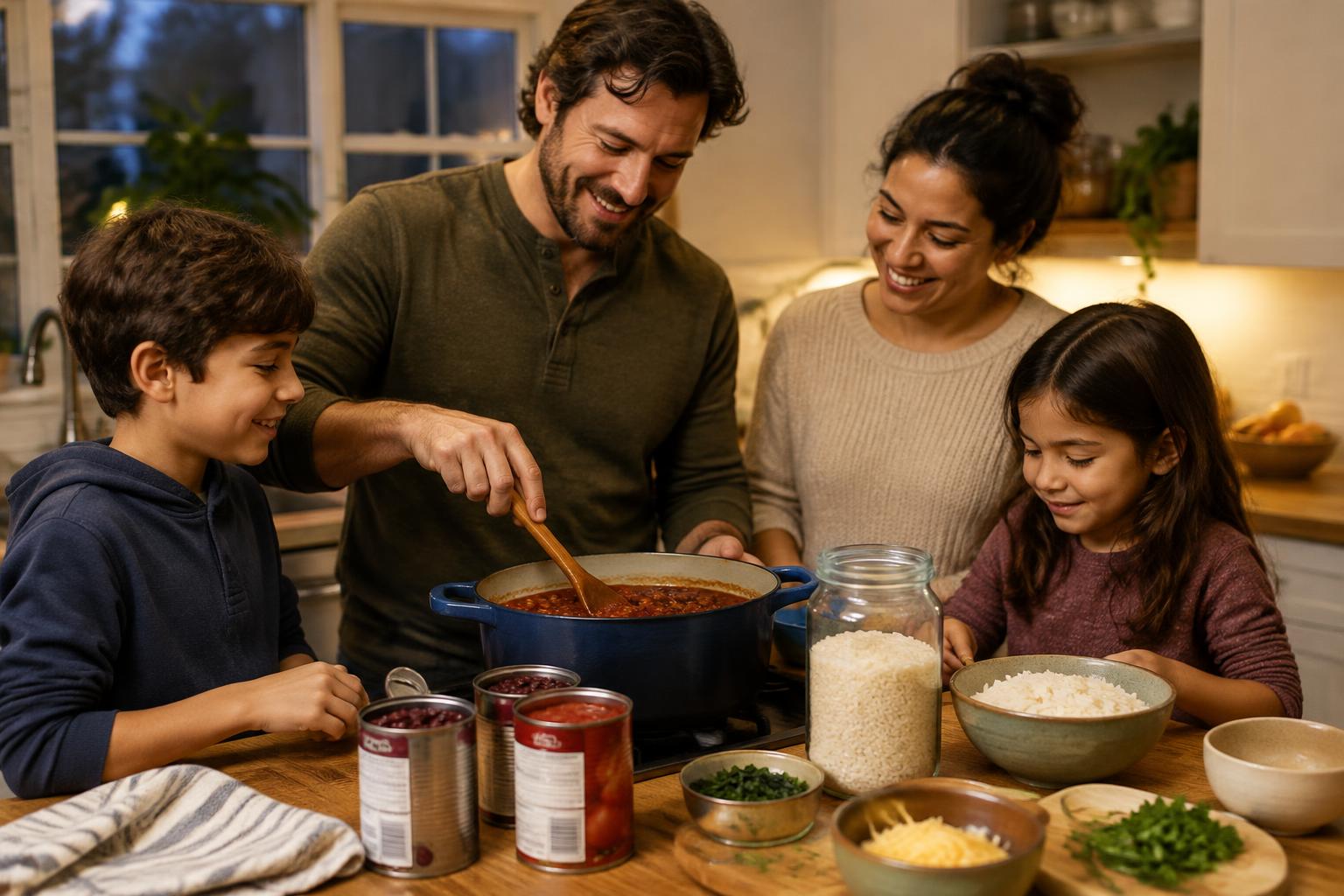
Start by writing down the meals your family eats regularly.
Then identify which ingredients can be stored safely without refrigeration.
For example:
| Meal | Shelf-stable ingredients |
|---|---|
| Oatmeal breakfast | Oats, powdered milk, raisins, cinnamon |
| Bean burritos | Dried or canned beans, flour, seasonings |
| Chicken and rice | Rice, canned chicken, bouillon |
| Spaghetti | Pasta, canned sauce, canned meat |
| Chili | Beans, tomatoes, chili seasoning |
| Pancakes | Flour, baking powder, powdered milk |
| Tuna sandwiches | Canned tuna, shelf-stable bread ingredients |
| Vegetable soup | Canned vegetables, bouillon, rice or pasta |
| Lentil soup | Lentils, dried vegetables, seasonings |
| Wheat cereal | Wheat berries, powdered milk, cinnamon |
Build a list of perhaps 10–15 meals your family enjoys.
Then determine how often you would prepare each meal during a three-month period.
This is much more practical than buying random quantities of food and hoping they will make complete meals.
Remember Calories and Nutrition
A 90-day supply must provide more than 90 days of small snacks.
It needs enough food energy for everyone in the household, along with protein, fats, vitamins, and minerals.
Requirements differ by age, activity, health, and other circumstances.
Use the Emergency Prepper food storage calculator to help estimate quantities, then adjust the plan to your household's actual needs.
7. The Biggest Challenge: Water
Food storage is relatively easy compared with water storage.
Water is heavy.
It takes considerable space.
And people need it every single day.
The CDC recommends storing at least one gallon of water per person per day for emergency use, with a three-day minimum and two weeks if possible.
That amount is a basic planning guideline, not a guarantee that every household's needs will be met. Hot climates, illness, pets, and other circumstances can increase requirements.
What Would 90 Days of Water Require?
At one gallon per person per day:
| Household size | 14 days | 90 days |
|---|---|---|
| 1 person | 14 gallons | 90 gallons |
| 2 people | 28 gallons | 180 gallons |
| 4 people | 56 gallons | 360 gallons |
| 6 people | 84 gallons | 540 gallons |
A gallon of water weighs approximately 8.34 pounds.
For a family of four, 360 gallons would weigh approximately 3,000 pounds, excluding the containers.
That is a tremendous amount of water.
Most families cannot realistically store that much, especially in an apartment.
And that's why a 90-day preparedness plan should not be interpreted as requiring every household to store 90 days of water in containers.
A More Practical Water Strategy
First: Store at least three days of safe drinking water.
Second: Work toward two weeks if you have the space and resources.
Third: Learn how to safely collect, filter, disinfect, and store additional water from sources that may be available during an emergency.
Fourth: Identify realistic backup sources before you need them.
Fifth: Have a plan for what to do if those sources are unavailable or contaminated.
Water filters are not all alike. Many portable filters do not reliably remove viruses, dissolved chemicals, fuel contamination, or salt.
Boiling can kill many pathogens but does not make chemically contaminated water safe.
No water treatment method can guarantee a usable water supply if there is no accessible source.
The goal is to combine stored water with a realistic plan for obtaining additional safe water.
8. What If You Live in an Apartment?
People who live in apartments face real challenges.
They may have limited closets, no garage, no basement, and very little extra floor space.
But that doesn't mean they cannot prepare.
Use the Space You Already Have
Consider:
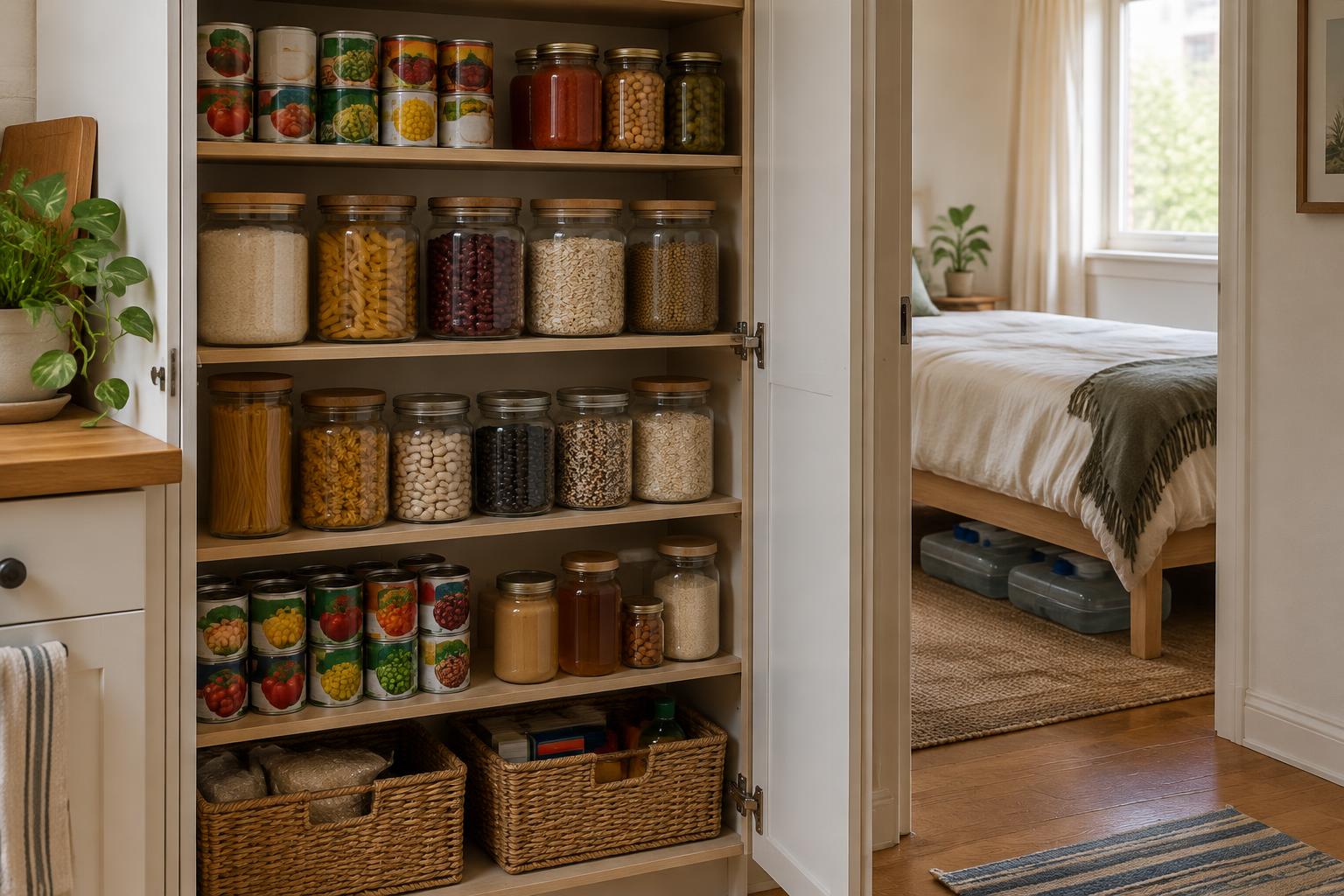
- Under-bed storage containers
- The upper shelves of closets
- Kitchen cabinets
- A pantry shelf
- Space beneath sturdy furniture
- Compact shelving secured against tipping
Avoid blocking exits, ventilation, electrical panels, or access to essential equipment.
Do not overload shelves or floors with heavy water containers.
Prioritize Compact Foods
Rice, oats, pasta, lentils, powdered milk, canned meats, and peanut butter can provide substantial nutrition in relatively small spaces.
Use foods that require little or no cooking when possible.
Make Water Storage Manageable
Several smaller water containers may be easier to store and move than one enormous barrel.
Keep heavy containers low and on surfaces that can safely support their weight.
Even a three-day water supply is a meaningful accomplishment.
Work With Your Circumstances
A household with a large home and garage may be able to store more than someone living in a small apartment.
That doesn't make one family more responsible than another.
Preparedness is about doing what you reasonably can with the resources available.
9. Don't Forget Cooking Fuel
Many people store rice, wheat, and dried beans without considering how much heat is required to cook them.
During an extended power outage, this can become a serious problem.
Some stored foods require considerable cooking time.
Others can be eaten directly from the package.
A good emergency food plan should include both.
Consider storing:
- Canned beans that are already cooked
- Canned chicken, tuna, and other meats
- Ready-to-eat foods
- Quick-cooking lentils
- Instant cereals
- Foods that can be prepared with minimal fuel
If you use an emergency stove, follow the manufacturer's safety instructions.
Never operate charcoal grills, outdoor camp stoves, or fuel-burning generators inside a home or enclosed garage.
Carbon monoxide poisoning can be fatal.
Read our companion articles about emergency cooking fuels and low-fuel cooking methods.
10. Food Is Only Part of a 90-Day Plan
A family may have enough food for three months and still be poorly prepared.
Think about the everyday necessities that would become difficult to obtain during a prolonged disruption.
Household Essentials
- Toilet paper
- Soap
- Toothpaste
- Laundry detergent
- Dishwashing supplies
- Trash bags
- Feminine hygiene products
- Diapers, if needed
- Pet food
- Cleaning and sanitation supplies
Medical Needs
- Prescription medications, where advance supplies are available
- First-aid materials
- Necessary medical equipment
- Backup power for essential devices
- Copies of important medical information
Practical Equipment
- Flashlights
- Batteries
- Portable chargers
- Battery-powered or hand-crank radio
- Manual can opener
- Safe emergency cooking equipment
- Emergency toilet supplies
- Water containers and appropriate treatment equipment
You don't need to buy everything at once.
Make a list, identify what you already have, and begin filling the most important gaps.
11. Preparedness Is Also About Skills
You can store hundreds of pounds of wheat, but that won't help much if you don't know how to prepare it.
You can own a water filter, but it won't be useful if you don't understand what it can and cannot remove.
You can purchase a generator, but it may become dangerous if you don't know how to operate it safely.
Preparedness requires more than possessions.
It requires knowledge and practice.
Learn to cook meals from your stored foods.
Practice using your emergency stove outdoors.
Learn how to purify water appropriately.
Develop a plan for sanitation if toilets stop working.
Know how to communicate with family members during an outage.
These skills can be developed gradually, and many cost little or nothing.
12. A Simple 12-Month Plan to Build a 90-Day Supply
If you are starting with very little, here's one reasonable approach.
| Month | Main objective |
|---|---|
| 1 | Inventory your pantry and establish three days of food and water |
| 2 | Expand to seven days of food |
| 3 | Build a 14-day food supply |
| 4 | Add basic sanitation and hygiene supplies |
| 5 | Build toward 30 days of food |
| 6 | Review emergency cooking and fuel |
| 7 | Expand to 45 days of food |
| 8 | Improve your water storage and treatment plan |
| 9 | Expand to 60 days of food |
| 10 | Add household essentials and address gaps |
| 11 | Expand toward 75 days of food |
| 12 | Reach toward 90 days, test recipes, and establish rotation |
This is a suggested progression, not a deadline.
If it takes two years or longer, that's fine.
If your circumstances change, adjust the plan.
The important thing is consistent progress.
My 90-Day Preparedness Progress
A full week covered. Many families never get this far.
- Additional food needed
- 332 person-days
- Your water covers
- About 3 days at 1 gallon per person per day
- Water milestones
- 3 days: 12 gal · 7 days: 28 gal · 14 days: 56 gal
- Estimated food budget (your estimate)
- $1,660
- Weeks to reach your food goal
- 67 weeks
Food-days are planning estimates. Make sure they're backed by enough calories and nutrition for what your household actually eats. The water numbers use a basic one gallon per person per day and don't cover every hygiene, sanitation, medical or hot-weather need. A full 90 days of stored water isn't practical for most homes, so aim for 3 to 14 days and have a way to purify more. The cost figure uses your own estimate, not current store prices.
13. What If the Warning Turns Out to Be Wrong?
Suppose another widely circulated warning predicts a major disaster.
People become concerned.
Some rush to stores.
Others purchase expensive survival supplies.
Then the predicted date passes.
Nothing happens.
Was preparation a waste of time?
Not if you approached it correctly.
If you've built a rotating pantry, you still have groceries.
If you've learned emergency cooking skills, you still have those skills.
If you've stored water and developed a family plan, you're still better prepared for the next storm, earthquake, or power outage.
A disaster does not have to occur for preparedness to be worthwhile.
That's the fundamental difference between preparing from fear and preparing from wisdom.
Fear often demands immediate action because something terrible is supposedly just around the corner.
Wisdom makes steady progress because uncertainty is a normal part of life.
14. Don't Let Fear Make Your Decisions
Fear can motivate people to take action.
But it can also cause them to make expensive and unnecessary mistakes.
People may spend money they cannot afford.
They may purchase equipment they don't understand.
They may stockpile food their families won't eat.
They may become preoccupied with predictions and neglect ordinary responsibilities.
That is not the goal of emergency preparedness.
The purpose of preparation is to increase stability and reduce vulnerability.
A sensible plan should help you feel more confident, not constantly anxious.
You can acknowledge that disasters are possible without living as though catastrophe is guaranteed tomorrow.
15. A Word About Faith and Preparedness
For many people, including those who study the Bible and other books of scripture, preparedness has a spiritual dimension.
Scripture contains numerous accounts of famine, war, earthquakes, pestilence, and other difficult circumstances.
It also contains examples of people who prepared wisely.
Joseph in Egypt stored food during years of abundance to help people survive the years of famine that followed.
That account illustrates an enduring principle: preparation during good times can provide protection during difficult times.
But we should be careful about turning every contemporary warning into a declaration that a specific prophetic event is about to happen.
People have made such predictions for generations.
We can take scriptural warnings seriously without claiming to know the exact date or sequence of future events.
Faith and practical preparation need not conflict.
And preparedness is equally valuable for people who approach it from a purely practical perspective.
We do not need to know precisely what the future holds to make wise preparations today.
16. Prepared Families Can Help Other People
One benefit of preparedness is often overlooked.
When a family has its basic needs reasonably covered, it may be better positioned to help neighbors, relatives, and friends.
A prepared household may be able to share a meal, provide information, check on an older neighbor, or help someone who has been caught off guard.
Not everyone has the money, physical ability, or space to maintain three months of supplies.
Communities become more resilient when people cooperate rather than compete.
Preparedness should encourage generosity, not isolation.
17. Make Preparedness a Normal Part of Life
The best emergency plan is one you can maintain.
You don't have to spend every weekend thinking about disasters.
You don't have to follow every alarming headline.
You don't have to constantly calculate whether a prediction will come true.
Instead, develop a few simple habits.
Buy a little extra when you can.
Use the oldest suitable pantry items first.
Replace what you consume.
Review your supplies periodically.
Learn a new practical skill occasionally.
Make sure your family knows the plan.
And then go enjoy your life.
Emergency preparedness should support ordinary living, not take it over.
Final Thoughts: Be Prepared, Then Be at Peace
The next major disaster warning may come tomorrow.
Or next month.
Or next year.
It may be based on a legitimate threat, or it may be another prediction that never materializes.
But imagine how different your reaction could be if your family already had a three-month food supply, an emergency water plan, and the basic equipment and knowledge needed to manage a disruption.
Instead of panicking, you could calmly review your supplies.
Instead of rushing to the grocery store, you could continue your normal routine.
Instead of wondering what you should have done months earlier, you could be grateful for the small steps you've already taken.
That's the real goal.
Not to predict every disaster.
Not to live in fear.
Not to accumulate supplies endlessly.
But to become a little more independent, a little more resilient, and a little better prepared each month.
Prepare for 90 days—not because you're convinced something terrible will happen in 90 days, but because you want your family to be prepared whenever difficulties come.
And if nothing happens?
Wonderful.
Keep living your life.
Keep rotating your food.
Keep enjoying your family.
And keep being prepared.
Trusted sources
Keep going
- Use the free Long-Term Food Storage Calculator to estimate how much food your family needs.
- Use the free Family Emergency Planner to put your whole plan on paper.
- My Water Storage page shows how to store and rotate safe drinking water.
- Emergency Cooking Fuels: Will Your Supply Last 14 Days—or 90?
- Cooking Without Constant Heat
- Dried Beans for Emergency Food Storage
- Beyond Bread: 20 Practical Ways to Use Stored Wheat During an Emergency
- Rolled Oats: The Unsung Hero of Long-Term Food Storage
- Emergency Sanitation: What to Do When Your Toilets Stop Working
- Why "A Million Calories" Is a Prepper Mistake
- Financial Preparedness: Build on Rock
- Winter Storms and Power Outages, two of the disruptions a 90-day supply helps you ride out