
Dried Beans for Emergency Food Storage: How to Cook Them Safely and Make 20 Delicious Meals
By Kelly Smith ·
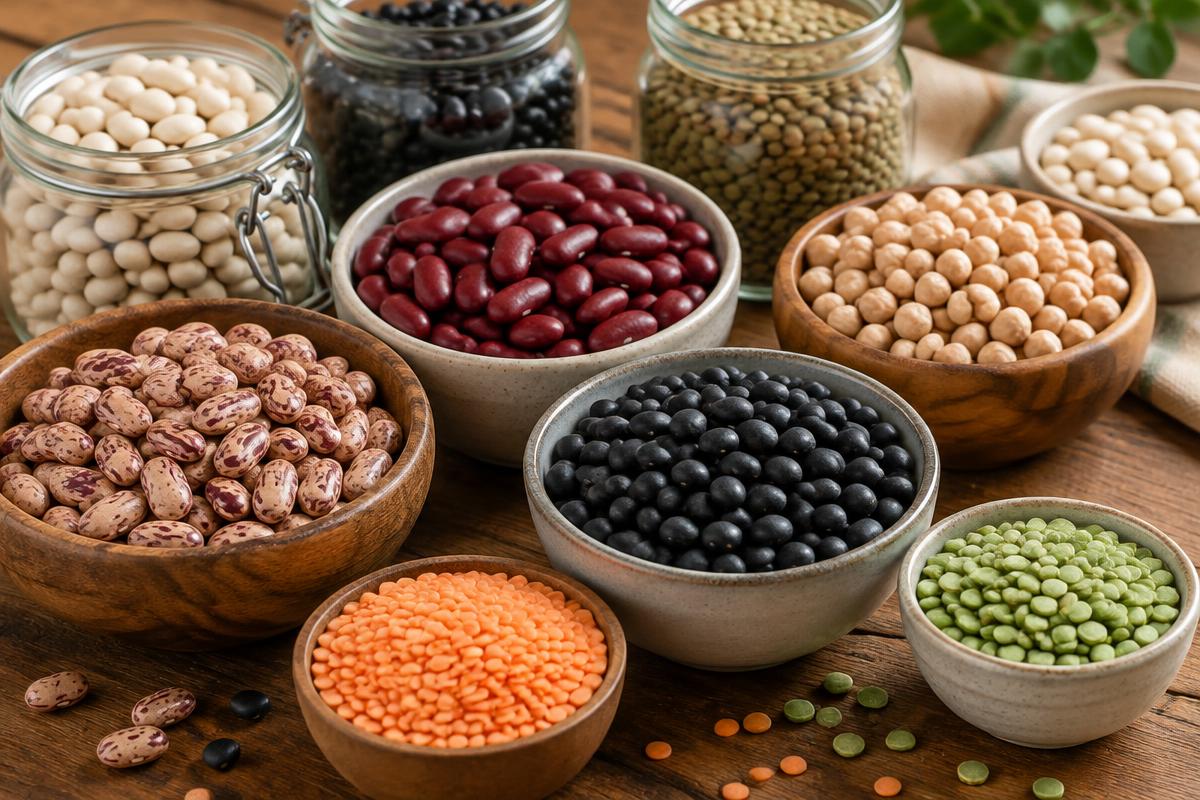
Pinto beans, kidney beans, Great Northern beans, black beans, and lentils are among the most economical emergency foods. Here's how to prepare them safely, save cooking fuel, and turn them into satisfying family meals.
Dried beans are one of the best investments you can make in long-term emergency food storage.
They're inexpensive, nutritious, easy to store, and remarkably versatile. Combined with rice, wheat, corn, or other grains, they can provide the foundation for hundreds of different meals.
Properly packaged and stored in a cool, dry environment, dried beans may remain usable for 25–30 years under ideal conditions.
But there's a problem many families overlook.
Having 100 pounds of dried beans in your emergency pantry doesn't mean you're prepared to eat them.
You also need water, cooking fuel, suitable equipment, seasonings, and the knowledge to prepare them safely.
Some beans even contain naturally occurring substances that can make you seriously ill if they're not cooked correctly.
This guide explains how to prepare beans during an emergency, conserve precious fuel, and turn ordinary beans into meals your family will actually enjoy.
1. Which Beans Should You Store?
Not all beans are alike. Some cook faster, some have stronger flavors, and others are particularly useful for soups, chili, or mashed bean dishes.
| Bean variety | Best emergency uses |
|---|---|
| Pinto | Refried beans, burritos, soups, chili |
| Great Northern | Chicken and bean soup, stews, creamy dishes |
| Navy | Baked beans, thick soups, bean spreads |
| Red kidney | Chili, rice dishes, hearty stews |
| Black | Rice bowls, tacos, soups, bean burgers |
| Chickpeas (garbanzo) | Hummus, curries, soups, salads |
| Lima or butter beans | Soups, vegetable stews, creamy sides |
| Black-eyed peas | Rice dishes, soups, vegetable meals |
| Lentils | Fast-cooking soups, curries, meat substitutes |
| Split peas | Thick soups and porridge |
My recommendation: Don't store just one variety.
A combination of pinto beans, Great Northern beans, black beans, and lentils gives you much more flexibility.
Lentils are particularly valuable because most varieties cook relatively quickly and don't require overnight soaking.
2. Warning: Some Dried Beans Can Make You Sick
This is probably the most important information in this article.
Beans naturally contain compounds called lectins. One of these, phytohaemagglutinin (PHA), occurs in particularly high concentrations in raw red kidney beans.
Improperly cooked kidney beans can cause severe food poisoning.
Symptoms may include:
- Intense nausea
- Repeated vomiting
- Abdominal pain
- Diarrhea
Symptoms can begin within approximately one to three hours after eating improperly prepared kidney beans.
Even a small quantity may cause illness.
How to Prepare Kidney Beans Safely
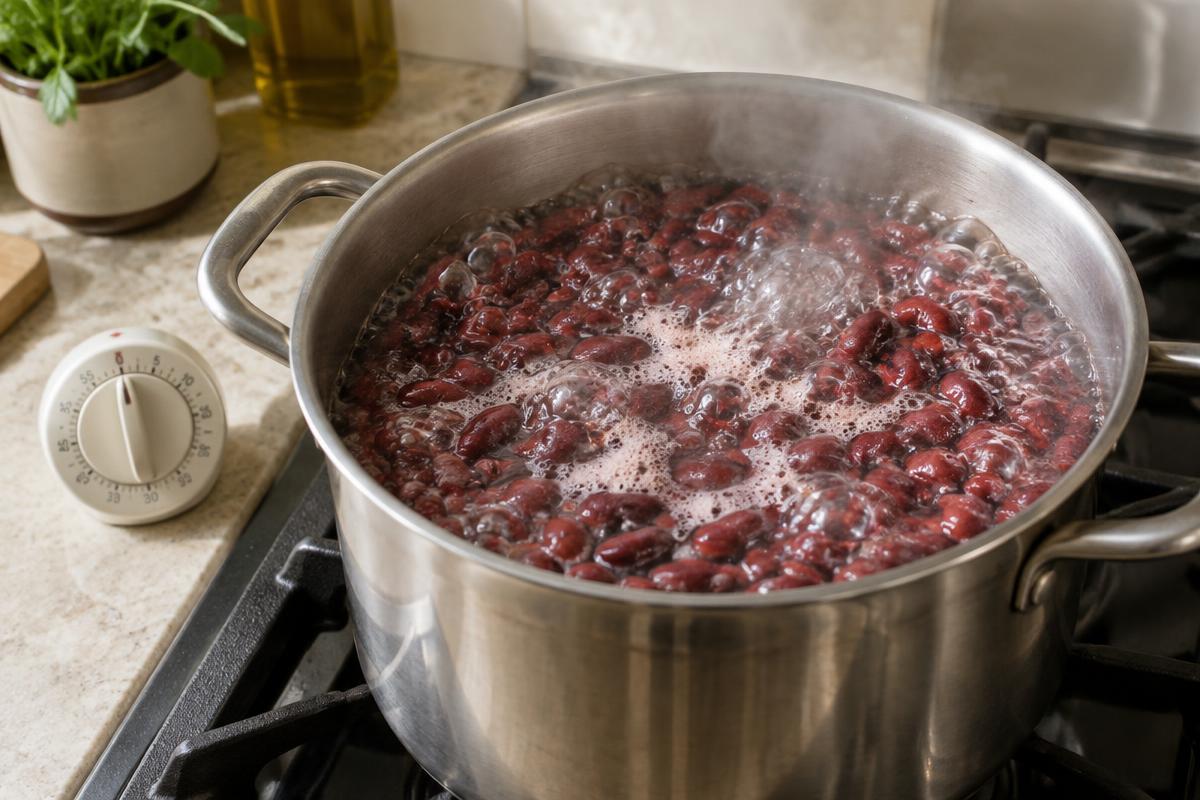
The FDA recommends adequate boiling to destroy the toxin.
For a conservative emergency cooking method:
- Sort through the dried kidney beans and remove stones or debris.
- Rinse thoroughly.
- Soak the beans for at least five hours, preferably overnight in the refrigerator.
- Discard the soaking water.
- Add fresh water to a cooking pot.
- Bring the beans to a vigorous, rolling boil.
- Continue boiling for at least 30 minutes.
- Continue cooking until the beans are completely tender.
Do not eat raw, soaked, or partially cooked kidney beans.
Never Depend on a Slow Cooker Alone
Some slow cookers operate at temperatures too low to reliably destroy the kidney bean toxin.
The same concern applies to homemade insulated cooking boxes and thermal cookers.
These devices can be excellent fuel-saving tools, but they should not replace the initial vigorous boiling required for dried kidney beans.
White kidney beans, including cannellini beans, also require careful cooking.
For emergency preparedness, the simplest rule is:
Thoroughly boil dried kidney beans before using them in any low-temperature cooking method.
Commercially canned kidney beans have already been cooked and can be eaten without additional cooking.
3. Three Ways to Prepare Dried Beans Before Cooking
Soaking helps beans absorb water and can shorten cooking time.
Method A: Overnight Soaking
Place one pound of beans in a large container with approximately 10 cups of water.
Cover and refrigerate for eight hours or overnight.
Drain, rinse, and cook in fresh water.
During a power outage, don't leave beans soaking overnight in a warm room. Use a properly chilled cooler or choose a hot-soak method instead.
Method B: Quick Soaking
Place one pound of beans in a pot with approximately six cups of water.
Bring to a boil and boil for two to three minutes.
Remove from the heat, cover, and let stand for approximately one hour.
Drain, rinse, and proceed with cooking.
This method is useful when you forgot to soak beans the night before.
Method C: Hot Soaking
Bring one pound of beans and approximately 10 cups of water to a boil.
Boil for two to three minutes, remove from the heat, and let stand for up to four hours.
Drain, rinse, and cook in fresh water.
This method can help reduce cooking time and some of the compounds responsible for intestinal gas.
Important: Soaking does not replace cooking. Beans must still be heated thoroughly until safe and tender.
4. How Long Do Different Beans Take to Cook?
Cooking times vary depending on bean variety, age, water hardness, elevation, and cooking method.
The following are approximate stovetop times after soaking.
| Bean | Approximate cooking time |
|---|---|
| Great Northern | 45–90 minutes |
| Black beans | 60–90 minutes |
| Pinto beans | 90–120 minutes |
| Red kidney | 90–120 minutes |
| Navy beans | 90–120 minutes |
| Chickpeas | 90–180 minutes |
| Lentils | 15–35 minutes, generally no soaking |
These are estimates, not guaranteed cooking times.
Older beans may require considerably longer.
At higher elevations, water boils at lower temperatures, which can increase cooking time.
Pressure Cooking Can Save Time and Fuel
A pressure cooker can be one of the most useful tools for preparing dried beans.
Pressure cooking raises the boiling temperature of water, allowing beans to cook more quickly.
A properly operated pressure cooker can reduce cooking time substantially compared with conventional simmering.
However, pressure cookers require careful handling.
Beans expand and foam during cooking. Never fill a pressure cooker beyond the manufacturer's recommended limit for beans, commonly one-half full.
Use tested pressure-cooking instructions for the specific variety, particularly kidney beans.
An electric pressure cooker requires electricity. A stovetop pressure cooker may be operated on a compatible emergency stove, provided the stove can maintain the required pressure safely.
5. How to Cook Beans With Less Fuel
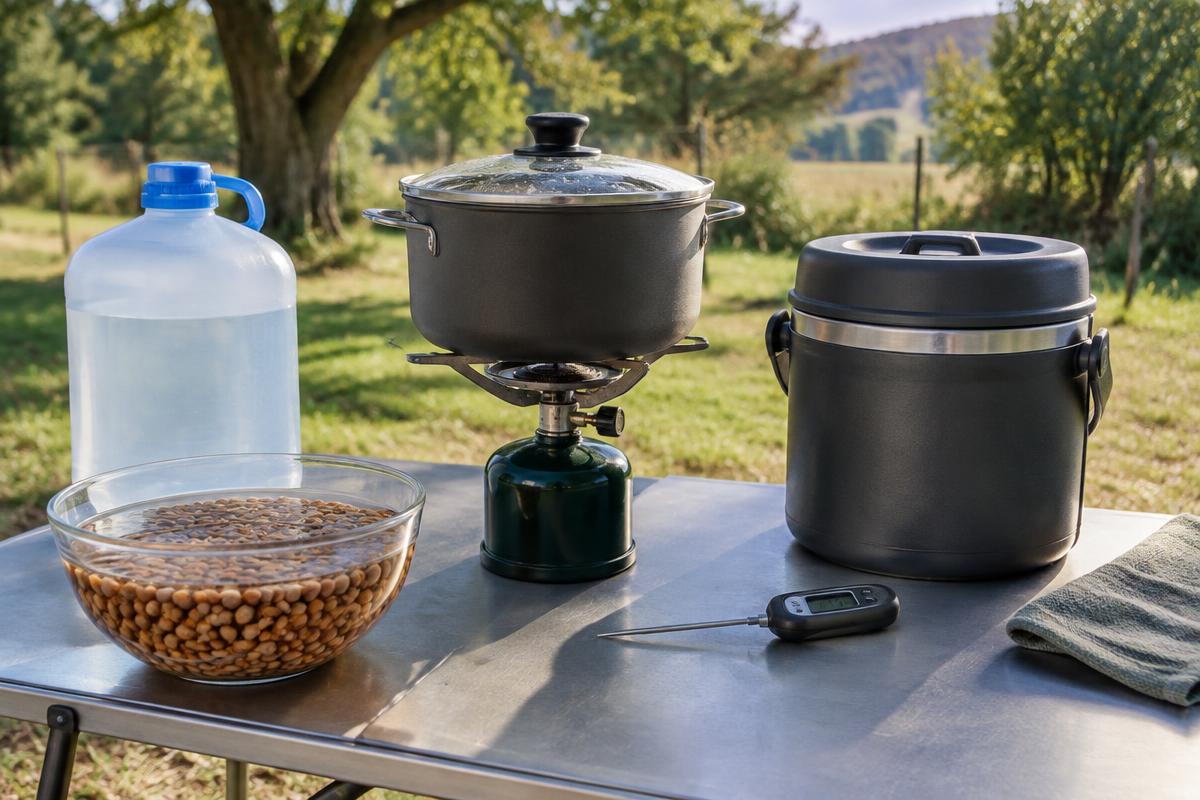
For more on stretching your fuel, see Cooking Without Constant Heat and use the propane planner in Emergency Cooking Fuels to see how much fuel your family may need.
During an extended power outage, cooking fuel becomes a valuable resource.
Here are several ways to conserve it.
Soak beans first. Proper soaking can reduce the time required for cooking.
Use a pressure cooker. A compatible stovetop pressure cooker can be highly useful when electricity is unavailable.
Cook larger batches when refrigeration is available. Preparing several meals' worth at once can reduce total fuel consumption.
Use a thermal cooker carefully. Some beans can finish cooking using retained heat after adequate initial boiling, but use tested recipes and verify doneness and safe temperatures.
Choose quick-cooking legumes. Lentils and split peas generally require less cooking than large dried beans.
Use canned beans when fuel is limited. They are already cooked and can be eaten cold if necessary.
Add acidic ingredients after beans soften. Tomatoes, vinegar, and similar ingredients can slow the softening of dried beans.
A Warning About Thermal Cooking
A thermal cooker or insulated pot gradually loses heat.
Don't assume that beans left in an insulated container overnight will remain safe.
Cooked beans are perishable and should be served promptly, held at a safe hot temperature, or refrigerated within the appropriate food safety limits.
For additional information, read our companion article, Cooking Without Constant Heat: How to Save Fuel During an Emergency.
20 Easy Emergency Meals Using Beans
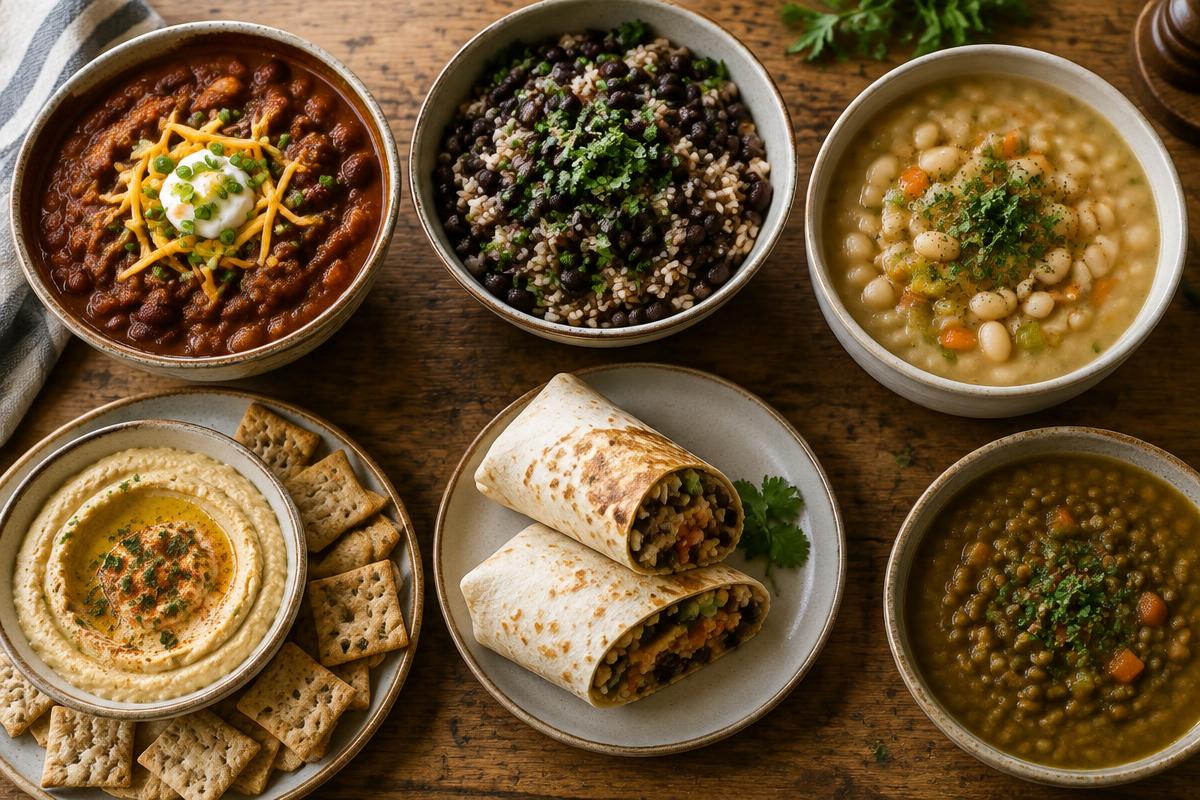
The following meal ideas use ingredients that can be stored in a pantry.
All recipes calling for cooked beans assume the beans have already been thoroughly and safely cooked, or that commercially canned beans are being used.
Most recipes make approximately two to four servings, depending on portion size. Adjust the quantities for your family.
6. Pinto Bean Meals
Recipe 1: Cowboy Beans With SPAM
Ingredients:
- 2 cups cooked pinto beans
- ½ can SPAM, diced
- ½ cup canned tomatoes
- 1 teaspoon chili powder
- Dried onion, to taste
Instructions: Brown the diced SPAM in a skillet. Add beans, tomatoes, and seasonings. Simmer until thoroughly heated.
Serve with tortillas, crackers, or cornbread.
Emergency advantage: SPAM provides additional calories, fat, protein, and flavor without requiring refrigeration before opening.
Recipe 2: Easy Refried Beans
Ingredients:
- 2 cups cooked pinto beans
- 1–2 tablespoons cooking oil
- Garlic powder
- Onion powder
- Salt and pepper
- Water or bean cooking liquid
Instructions: Heat the oil in a skillet. Add beans and seasonings. Mash with a fork or potato masher, adding small amounts of liquid until creamy. Heat thoroughly.
Serve in tortillas or alongside rice.
Recipe 3: Pinto Bean and Canned Chicken Burritos
Ingredients:
- 2 cups cooked pinto beans
- 1 can chicken, drained
- 1 teaspoon taco seasoning
- Shelf-stable tortillas
- Optional salsa
Instructions: Combine beans, chicken, and seasoning in a pan. Heat thoroughly and spoon into tortillas.
Recipe 4: Emergency Bean Chili
Ingredients:
- 3 cups cooked pinto or kidney beans
- 1 can diced tomatoes
- 1 small can tomato sauce
- Chili powder
- Cumin
- Dried onion
- Optional canned beef or SPAM
Instructions: Combine ingredients in a pot and simmer until thoroughly heated and flavors are blended.
Use already-cooked kidney beans, never raw or partially cooked ones.
7. Great Northern and Navy Bean Meals
Recipe 5: White Bean and Chicken Soup
Ingredients:
- 2 cups cooked Great Northern beans
- 1 can chicken
- 3 cups water
- Chicken bouillon
- Dried carrots or vegetables
- Garlic and onion powder
Instructions: Combine the ingredients, bring to a boil, and simmer until the dehydrated vegetables are tender.
Recipe 6: Creamy White Bean Mash
Ingredients:
- 2 cups cooked Great Northern beans
- 1 tablespoon olive oil
- Garlic powder
- Salt
- Small amount of water
Instructions: Mash the beans with oil and seasonings. Add water until smooth and heat thoroughly.
Serve as a side dish or spread on crackers.
Recipe 7: Navy Bean and Canned Ham Soup
Ingredients:
- 2 cups cooked navy beans
- 1 can shelf-stable ham
- 3 cups water
- Dried onion
- Chicken bouillon
- Black pepper
Instructions: Combine ingredients and simmer until hot. Mash a small portion of the beans to thicken the broth.
Recipe 8: White Beans With Sardines
Ingredients:
- 2 cups cooked Great Northern beans
- 1 can sardines in olive oil
- Lemon juice from a shelf-stable bottle or packet
- Garlic powder
- Black pepper
Instructions: Warm the beans, add the sardines and their oil, and season with lemon and pepper.
This is a simple Mediterranean-style meal providing protein and additional fat.
8. Black Bean Meals
Recipe 9: Black Beans and Rice
Ingredients:
- 2 cups cooked black beans
- 2 cups cooked rice
- Cumin
- Garlic powder
- Salt
- Optional canned tomatoes
Instructions: Heat the beans with seasonings and serve over freshly cooked rice.
Food safety: Rice must be cooked and handled properly. Do not leave cooked rice sitting at room temperature for hours.
Recipe 10: Black Bean Taco Filling
Ingredients:
- 2 cups cooked black beans
- 1 tablespoon oil
- Taco seasoning
- Tortillas
- Optional canned corn
Instructions: Mash half the beans and combine with the remaining beans, oil, and seasoning. Heat thoroughly and serve in tortillas.
Recipe 11: Black Bean and Corn Skillet
Ingredients:
- 2 cups cooked black beans
- 1 can corn
- ½ can diced tomatoes
- Chili powder
- Optional canned chicken
Instructions: Combine ingredients in a skillet and heat thoroughly.
Serve alone or with rice.
Recipe 12: Black Bean Patties
Ingredients:
- 2 cups cooked black beans
- ½ cup quick oats
- 1 tablespoon flour
- Onion powder
- Garlic powder
- Oil for frying
- Small amount of water, if needed
Instructions: Mash the beans, mix with oats, flour, and seasonings, and form small patties. Allow the mixture to rest briefly so the oats absorb moisture.
Cook in a lightly oiled skillet until the patties are firm and heated through.
9. Kidney Bean Meals
Recipe 13: Red Beans and Rice With SPAM
Ingredients:
- 2 cups fully cooked kidney beans
- ½ can SPAM
- 2 cups cooked rice
- Cajun seasoning
- Dried onion
- Garlic powder
Instructions: Brown the diced SPAM. Add kidney beans, a little water, and seasonings. Simmer briefly and serve over rice.
Recipe 14: Kidney Bean and Beef Stew
Ingredients:
- 2 cups fully cooked kidney beans
- 1 can beef stew
- ½ cup water, if needed
- Garlic or chili seasoning
Instructions: Combine the cooked kidney beans with canned stew. Heat thoroughly, adding water if necessary.
This stretches one can of stew into several servings.
Recipe 15: Three-Bean Emergency Chili
Ingredients:
- 1 cup cooked kidney beans
- 1 cup cooked pinto beans
- 1 cup cooked black beans
- 1 can tomatoes
- Chili powder
- Cumin
- Optional canned beef
Instructions: Combine all ingredients and simmer until thoroughly heated.
This recipe works especially well with commercially canned beans when cooking fuel is limited.
10. Chickpea, Lentil, and Split Pea Meals
Recipe 16: Emergency Chickpea Curry
Ingredients:
- 2 cups cooked chickpeas
- 1 can coconut milk
- 1 tablespoon curry powder
- Garlic powder
- Salt
- Optional canned tomatoes
Instructions: Combine the ingredients and simmer until thoroughly heated. Serve with rice or flatbread.
Recipe 17: Simple Hummus
Ingredients:
- 2 cups cooked chickpeas
- 2 tablespoons olive oil
- Lemon juice
- Garlic powder
- Salt
- Water as needed
Instructions: Mash or blend the chickpeas with oil and seasonings until smooth. Add water to adjust consistency.
Serve promptly with crackers or tortillas.
Recipe 18: Lentil and Canned Chicken Soup
Ingredients:
- 1 cup dry lentils
- 1 can chicken
- 4 cups water or broth
- Dried carrots
- Onion powder
- Garlic powder
Instructions: Rinse the lentils. Combine with water, vegetables, and seasonings. Simmer until lentils are completely tender, usually about 20–35 minutes depending on the variety. Add the canned chicken toward the end and heat thoroughly.
Lentils are among the best emergency foods because they cook relatively quickly.
Recipe 19: Split Pea and Ham Soup
Ingredients:
- 1 cup dry split peas
- 4 cups water
- 1 can shelf-stable ham
- Dried onion
- Garlic powder
- Black pepper
Instructions: Rinse the split peas. Simmer in water until completely tender, adding more water if needed. Stir in the ham and seasonings and heat thoroughly.
Recipe 20: Emergency Bean and Vegetable Soup
Ingredients:
- 2 cups cooked beans of any suitable variety
- 1 can mixed vegetables
- 3 cups water
- Chicken or vegetable bouillon
- Dried herbs
- Optional canned chicken, beef, or fish
Instructions: Combine all ingredients, bring to a boil, and simmer briefly until heated through.
This is one of the easiest ways to use whatever ingredients are available in your emergency pantry.
11. What Else Should You Store With Your Beans?
Beans become much more enjoyable when you have a variety of seasonings and complementary foods.
A good emergency pantry should include:
Protein and Flavor Additions
- Canned chicken
- Canned beef
- Canned ham
- SPAM or similar shelf-stable luncheon meat
- Sardines
- Canned tuna or salmon
- Canned chili
- Canned stew
- Chicken and beef bouillon
Vegetables and Sauces
- Canned tomatoes
- Tomato sauce
- Canned corn
- Canned carrots
- Dried onions
- Dehydrated vegetables
- Salsa
- Coconut milk
Seasonings
- Salt and black pepper
- Garlic powder
- Onion powder
- Chili powder
- Cumin
- Paprika
- Curry powder
- Italian seasoning
- Cajun seasoning
- Dried parsley
- Hot sauce
Other Useful Foods
- White rice
- Instant rice
- Tortillas
- Cornmeal
- Instant mashed potatoes
- Cooking oil
- Shelf-stable crackers
- Quick oats
These ingredients can turn plain beans into dozens of different meals without requiring fresh meat or refrigerated vegetables.
Remember that canned meats and vegetables have their own storage lives. Rotate them according to manufacturer guidance and inspect packaging before use.
12. How Much Dried Beans Should Your Family Store?
A useful planning estimate is approximately 2 cups of cooked beans from 1 cup of dried beans, although actual yields vary by variety.
A pound of dry beans generally produces several cups of cooked beans.
For example, a family that consumes one pound of dry beans every two days would need approximately:
| Preparedness period | Dried beans |
|---|---|
| 14 days | 7 pounds |
| 30 days | 15 pounds |
| 90 days | 45 pounds |
These are illustrative consumption amounts, not complete nutritional recommendations.
Your actual needs depend on family size, calorie requirements, food preferences, and the other foods in your storage plan.
Use the Emergency Prepper Long-Term Food Storage Calculator to determine a more complete food supply.
13. Why You Should Also Store Canned Beans
Dried beans are excellent for long-term storage, but canned beans have one enormous advantage during emergencies.
They're already cooked.
You can open a can of beans and eat them without using propane, charcoal, wood, or electricity.
That makes canned beans particularly valuable during the first days of a disaster.
A balanced emergency pantry might include:
- Dried beans for long-term storage
- Canned beans for immediate use
- Lentils for relatively quick cooking
- A variety of canned meats and vegetables
- Seasonings that make repetitive meals more enjoyable
If your emergency cooking fuel becomes scarce, canned beans can help you conserve it.
14. Food Safety After Cooking
Once beans are cooked, they become perishable.
Do not leave a large pot of cooked beans sitting on the stove overnight.
Refrigerate leftovers promptly in shallow containers, generally within two hours, or one hour when the surrounding temperature exceeds 90°F.
Keep refrigerated leftovers at 40°F or below and use within approximately three to four days.
If refrigeration is unavailable, prepare smaller quantities that can be eaten promptly.
A sealed pot, insulated cooler, or thermal cooker does not automatically keep food safe indefinitely.
Never rely on reheating to rescue food that has been improperly stored.
15. Practice Cooking Beans Before an Emergency
If you have 50 or 100 pounds of beans stored away, but you've never cooked them, now is the time to start.
Try one new bean recipe every week.
Practice preparing dried beans using your emergency stove.
Measure how much fuel you consume.
Experiment with a stovetop pressure cooker if you have one.
Learn which beans your family enjoys most.
Keep printed copies of your favorite recipes with your emergency food supplies.
Most importantly, discover how much water and fuel your family actually needs to prepare these foods.
Final Thoughts: Beans Are Only as Useful as Your Ability to Prepare Them
Dried beans deserve a prominent place in every serious emergency food storage plan.
They're affordable, nutritious, versatile, and capable of remaining usable for many years when stored properly.
But storing beans is only the beginning.
You must also know how to cook them safely, conserve fuel, and combine them with other shelf-stable ingredients to make satisfying meals.
A family with dried beans, rice, canned meats, vegetables, seasonings, and a reliable cooking system has far more meal options than a family relying on plain beans alone.
Don't just store beans. Learn to turn them into meals your family will look forward to eating—even during difficult times.
To figure out how many pounds of beans and other staples your family should store, try my free Long-Term Food Storage Calculator. It needs no account and saves none of your information. You'll find more articles like this one on the Long-Term Food Tips page.
A Closing Thought
The prophet Daniel and his friends asked to eat simple pulse, which many Bible readers understand as beans and other seeds, instead of the king's rich food. After ten days, they looked healthier than everyone else at the table (Daniel 1:12–15). I love that story, because it reminds me that humble food, received with gratitude, can carry us further than we expect.
A bag of beans won't impress anyone. But learning to cook it well, and sharing it with family and neighbors when times are hard, is part of what I believe it means to be prepared in body and spirit. The Lord has always seemed to work through small and simple things.
Research References
U.S. Food and Drug Administration — Bad Bug Book: Phytohaemagglutinin
https://www.fda.gov/files/food/published/Bad-Bug-Book-2nd-Edition-%28PDF%29.pdfUniversity of Nebraska–Lincoln Extension — How to Cook Dry Beans From Scratch
https://food.unl.edu/article/how-cook-dry-beans-scratch/Colorado State University Extension — Cooking Dry Beans
https://extension.colostate.edu/resource/cooking-dry-beans/North Dakota State University Extension — Pressure Cook Dry Beans to Save Money and Time
https://www.ndsu.edu/agriculture/sites/default/files/2024-08/fn1939.pdfUniversity of Georgia Extension — Emergency Preparedness: Long-Term Food Storage
https://secure.caes.uga.edu/extension/publications/files/pdf/C%201310_1.PDFUtah State University Extension — Storing Dry Beans
https://extension.usu.edu/preserve-the-harvest/dev/storing-dry-beans-1
Related articles
Long-Term Food Tips
Cooking Without Constant Heat: How to Save Fuel During an Emergency
Bring the pot to a boil, turn off the stove, and let stored heat finish the job. Here's how retained-heat cooking can stretch your emergency fuel.
Read “Cooking Without Constant Heat: How to Save Fuel During an Emergency”Long-Term Food Tips
Emergency Cooking Fuels: Will Your Supply Last 14 Days—or 90?
How long will your propane really last? Compare emergency cooking fuels, learn essential safety rules, and calculate what your family needs for 14 to 90 days.
Read “Emergency Cooking Fuels: Will Your Supply Last 14 Days—or 90?”Spiritual Preparation
The Thirty-Year-Old Beans I Almost Threw Away
I almost threw away a case of thirty-year-old beans. Here's why my book on Bible prophecy has a whole chapter on food storage, water, and getting out of debt.
Read “The Thirty-Year-Old Beans I Almost Threw Away”