
Emergency Cooking Fuels: Will Your Supply Last 14 Days—or 90?
By Kelly Smith ·
Food storage is only useful if you can safely prepare it when the power is out.
A lot of families, mine included at one point, have months of rice, wheat and beans on the shelf and only a few hours of cooking fuel to go with them. Dry beans and whole grains need a lot of heat. If the power is out for weeks, that gap between food and fuel becomes the real problem.
The good news is that you don't have to solve it all at once. Plan for 14 days first, then 30, then 90. Meals that need no cooking, and fuel-saving thermal methods, can cut the amount of fuel you need dramatically.
What happens when the power goes out?
If you cook with electricity or induction, your stove is done until the power comes back, unless you have a backup power system big enough to run it. Most don't.
If you cook with natural gas or propane, it depends on your range. Some surface burners can be lit by hand with a match during an outage, but only when the manufacturer's manual says so. Many ovens and most modern electronic controls will not work at all without power. Check your manual now, while you can still look it up.
A few rules that never change:
- Never bypass or tamper with a stove's safety mechanisms.
- Never use a gas oven or range to heat your home.
- If you smell gas, leave the house right away and call your gas utility or 911 from a safe place outside.
Know your fuels
| Fuel | Best use | Strength | Major safety issue |
|---|---|---|---|
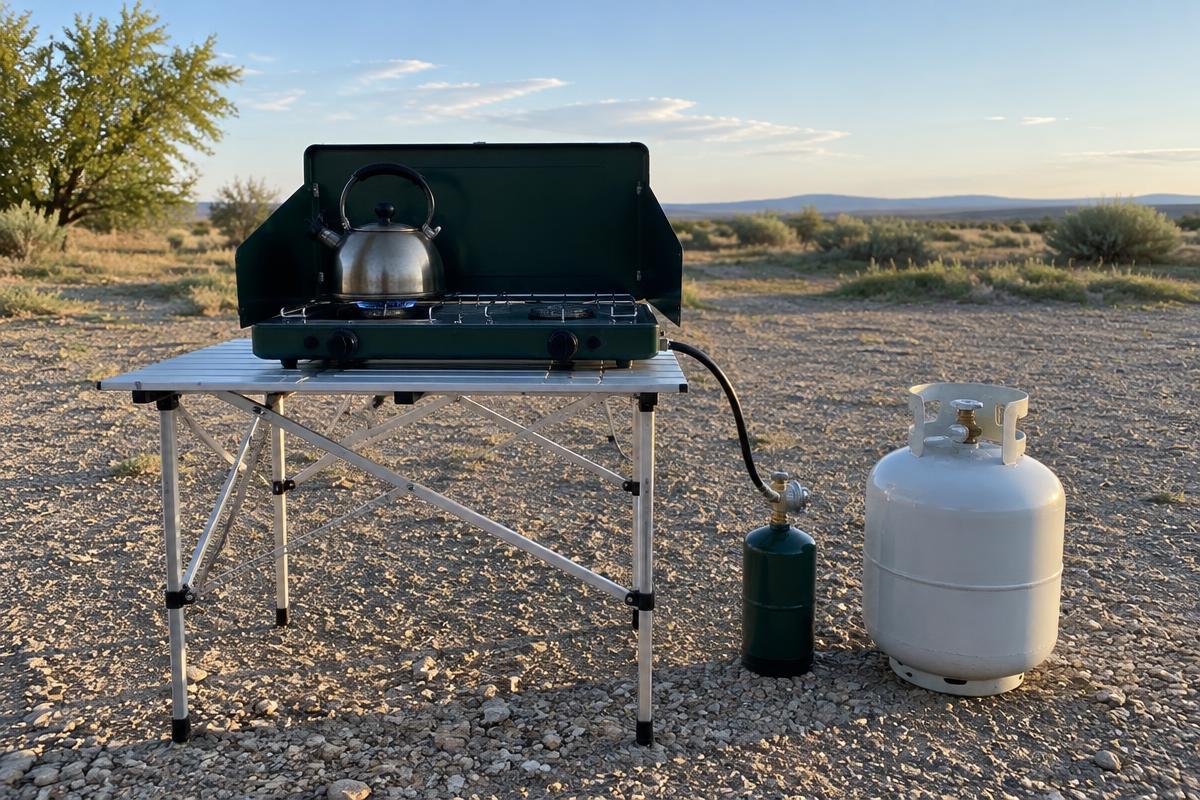
| Propane | Outdoor-rated camp stoves and grills | High heat; the fuel stores for a long time | Carbon monoxide and fire risk; store cylinders outdoors |
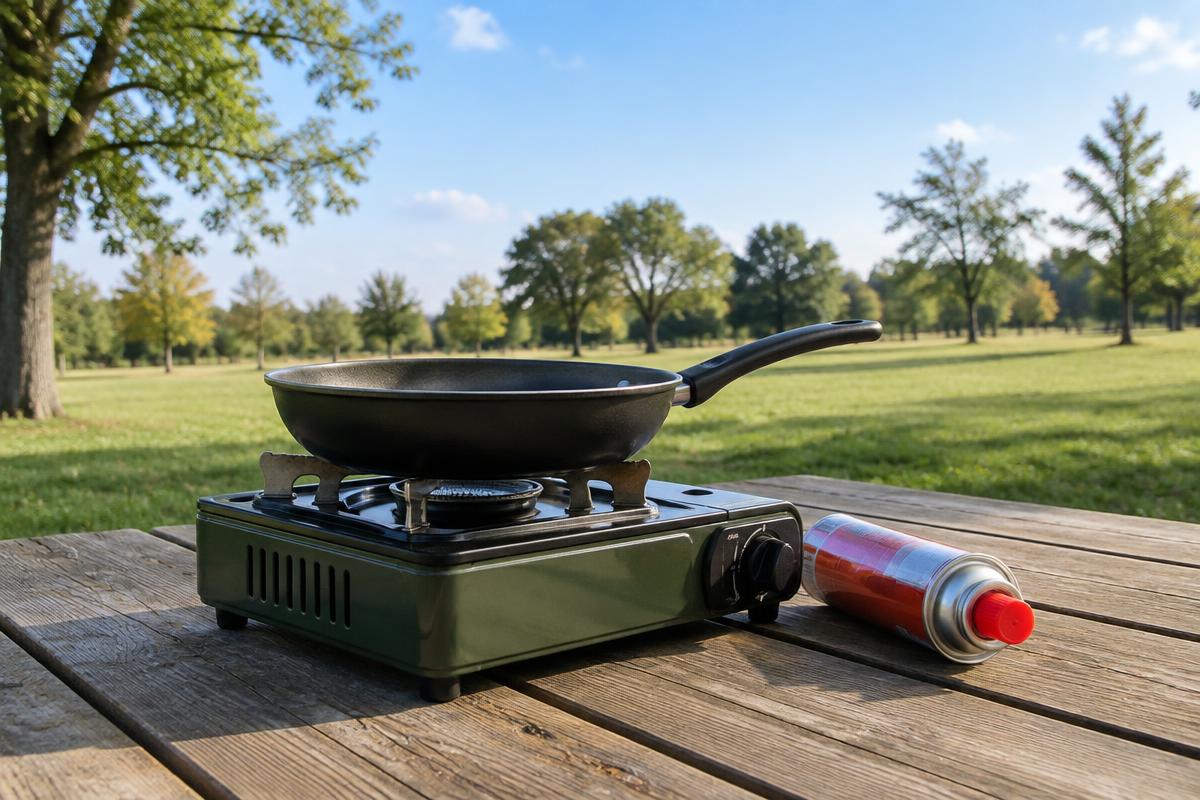
| Butane | Compact cassette stoves | Very portable | Carbon monoxide; canisters can overheat; weak in cold weather |
| Charcoal | Outdoor grill or Dutch oven | Good for batch cooking | Deadly carbon monoxide. Never use in a home, garage, tent, enclosed porch or any enclosed or partly enclosed space |
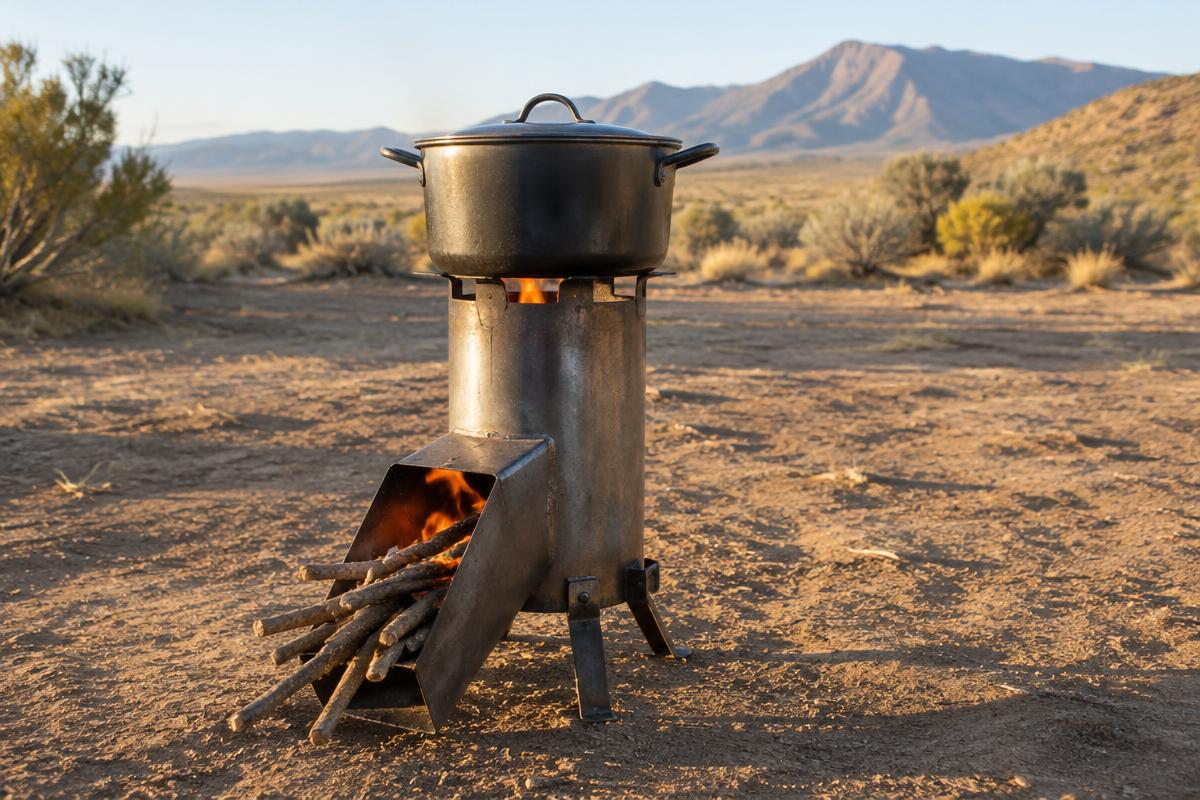
| Wood | Outdoor rocket stove, or a properly installed and vented indoor wood cookstove | Can be replenished | Smoke, carbon monoxide and wildfire restrictions. Outdoor wood stoves stay outdoors |
| Alcohol | Manufacturer-approved outdoor alcohol stove | Compact and light | Nearly invisible flame and spills; never refuel while hot or lit |
| White gas / liquid fuel | Compatible outdoor camp stove | Works well in cold weather | Highly flammable fuel; priming hazards |
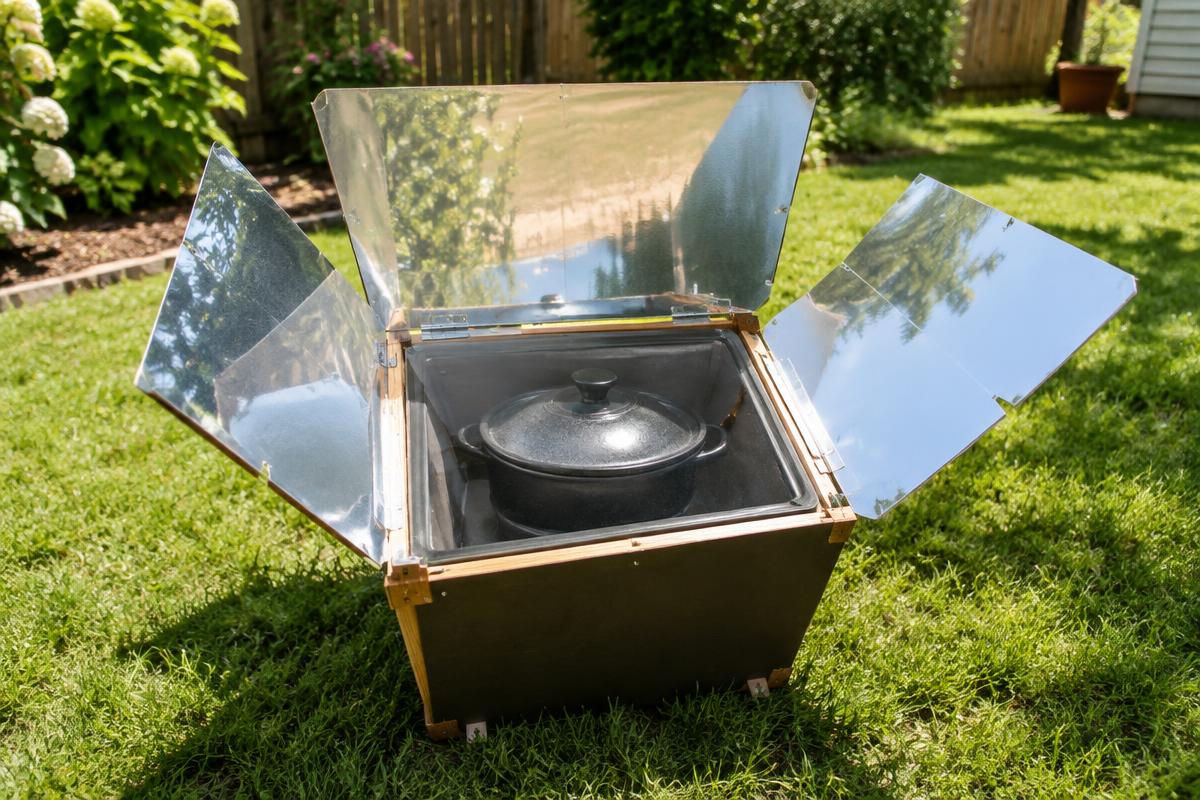
| Solar | Solar box or panel cooker | No purchased fuel while cooking | Needs sun and daylight; monitor food temperature |
| Battery / solar electric | Induction cooker, kettle or electric pressure cooker with a correctly rated inverter and battery | No indoor combustion | Uses a lot of watt-hours and power |
A word about butane: portable butane camp stoves are not automatically safe to use indoors. Follow the appliance's listing and instructions. For camping models, my recommendation is simple: use them outside.
How long does propane really last?
Here's the math, and it's simpler than it looks. One pound of propane holds about 21,600 BTU of energy. A burner rated at 10,000 BTU per hour, running on full, uses about 1 pound in 2.16 hours.
A truly full 20-pound tank holds about 432,000 BTU. That's roughly 43.2 hours of run time for a single 10,000 BTU burner on high. Run two of those burners at the same time and you use fuel twice as fast.
Two cautions. First, exchange tanks often don't hold a full 20 pounds, so check the net weight printed on the label. Second, these are theoretical numbers at full rated output, not measured field run times. Wind, cold and altitude all change real results.
Use the planner below to see what your family might need.
Emergency Propane Planner
Free, no account, and nothing you enter is saved or sent anywhere.
With 2 or 3 burners, this means every burner is running during those minutes.
Propane before reserve
41.7 lb
With reserve
52.1 lb
Cylinders (20 lb fill)
3
Or 1-lb cylinders
53
Assumes 1 lb of propane ≈ 21,600 BTU and every burner running at full rated output for the minutes you chose. It does not include water purification, heat lost to wind and cold, other appliances, or food safety contingencies. This is a planning estimate, not a guarantee. Measure your own stove's real use. Store propane cylinders upright outdoors, never inside a home or attached garage.
Example: one 10,000 BTU burner at full output, no reserve
| Minutes per day | 14 days | 30 days | 90 days |
|---|---|---|---|
| 30 | 3.2 lb | 6.9 lb | 20.8 lb |
| 60 | 6.5 lb | 13.9 lb | 41.7 lb |
| 120 | 13.0 lb | 27.8 lb | 83.3 lb |
Reduce fuel demand
Every minute your burner isn't running is fuel you still have tomorrow. Here's what helps most:
- Match the pot size to the amount of food.
- Always use a lid.
- Choose instant or precooked foods for some meals.
- Soak suitable foods, like dry beans, safely before cooking.
- Heat water in batches only if you can use all of it safely right away.
- Use tested retained-heat or thermos cooking methods.
- Don't overcook, and don't use more water than the recipe needs.
- Measure how much fuel you actually use.
One thing that surprises people: a heavy cast-iron pot doesn't automatically save fuel. All that iron takes energy to heat up before your food does. It holds heat well afterward, which helps with retained-heat cooking, but it isn't free.
To learn how to bring food to a boil and let insulation finish the cooking, read Cooking Without Constant Heat, then try the recipes in 7 Practical Ways to Cook Emergency Meals Using Very Little Fuel.
A 14-day plan that scales to 90 days
- Take inventory of your stoves and the fuels each one can safely use.
- Plan no-cook meals for some of the days.
- Write a sample two-week menu.
- Cook a few of those meals now and record the actual burner-on minutes and flame settings.
- Use the planner above to calculate what you need.
- Add a reasonable reserve.
- Check how much fuel you can store safely, outdoors and in approved locations.
- Expand to 30 days, then 90. Remember that longer plans lean more on dry grains and beans, which take more cooking than canned or instant foods.
Count the energy needed to treat drinking water separately. Boiling water for safety can use a lot of fuel, so plan for it as its own line item. My water storage guide has more on storing and treating water.
Non-negotiable safety rules
- Never use a portable camp stove, charcoal grill, outdoor wood burner or generator inside a home, garage, tent, or enclosed or partly enclosed porch. Carbon monoxide has no smell and can kill.
- Don't assume a porch or deck is safe. Manufacturer clearances, nearby combustible materials, roofs and overhangs, ventilation and local fire rules all matter.
- Keep generators at least 20 feet from windows, doors and vents, as the CDC recommends.
- Install battery-powered or battery-backup carbon monoxide alarms.
- Store propane cylinders upright, outdoors, in an approved, ventilated area. Never store them inside your home or an attached garage.
- Never use an outdoor combustion appliance to heat indoor space.
- Follow local fire restrictions, especially during wildfire season.
- Handle cooked rice and other perishable foods with safe time and temperature practices. Retained-heat cooking isn't permission to leave food lukewarm for hours. See The Hidden Danger of Cooked Rice for why.
Emergency cooking checklist
- A compatible cooking appliance
- A safe outdoor cooking location
- Fuel for 14 days
- A 30-day and 90-day goal
- A backup cooking method
- Matches and a lighter
- A food thermometer
- Carbon monoxide alarms
- A fire extinguisher
- No-cook food
- A written fuel inventory
- A practice session
- Your local fire restrictions
Final thoughts
Don't just store food for an emergency. Make sure you have the means to prepare it.
To plan how much food your family needs, try the free Food Storage Calculator, and put your cooking plan on paper with the Family Emergency Planner. Neither needs an account or saves your information. You can find more articles like this one on the Long-Term Food Tips page.
A Closing Thought
In the parable of the ten virgins, five took extra oil for their lamps and five did not. When the bridegroom came at midnight, the ones without oil had to go looking for it, and they missed the wedding (Matthew 25:1–13). I've always noticed that the wise ones didn't have fancier lamps. They just thought ahead about fuel.
I believe that parable is about our spiritual readiness first, the kind of oil no one can lend us at the last minute. But the practical lesson fits too. A pantry full of beans without a way to cook them is like a lamp without oil. Preparing both, quietly and ahead of time, is how we stay calm when midnight comes.
References
- Centers for Disease Control and Prevention — What to Do to Protect Yourself During a Power Outage: https://www.cdc.gov/natural-disasters/response/what-to-do-protect-yourself-during-a-power-outage.html
- U.S. Consumer Product Safety Commission — Carbon Monoxide Fact Sheet: https://www.cpsc.gov/safety-education/safety-guides/carbon-monoxide/carbon-monoxide-fact-sheet
- U.S. Environmental Protection Agency — Power Outages and Indoor Air Quality: https://www.epa.gov/emergencies-iaq/power-outages-and-indoor-air-quality-iaq
- FoodSafety.gov — Food Safety in a Disaster or Emergency: https://www.foodsafety.gov/keep-food-safe/food-safety-in-disaster-or-emergency
- National Fire Protection Association — Grilling Safety: https://www.nfpa.org/education-and-research/home-fire-safety/grilling
Stove-specific advice, such as whether a burner can be lit by hand or used indoors, comes from your appliance manufacturer. Always follow your own manual.
Related articles
Long-Term Food Tips
Cooking Without Constant Heat: How to Save Fuel During an Emergency
Bring the pot to a boil, turn off the stove, and let stored heat finish the job. Here's how retained-heat cooking can stretch your emergency fuel.
Read “Cooking Without Constant Heat: How to Save Fuel During an Emergency”Long-Term Food Tips
The Hidden Danger of Cooked Rice: What Every Family Should Know
Rice can last decades in storage, but cooked rice can turn dangerous fast. Here's how to keep your family safe, especially when the power is out.
Read “The Hidden Danger of Cooked Rice: What Every Family Should Know”Fuel, Heat, Cooking & Light
Propane, Butane, White Gas, and Wood: Comparing Emergency Fuels
Every emergency fuel has strengths and weaknesses. Here's how propane, butane, white gas, wood, and gasoline compare, and why you should never count on just one.
Read “Propane, Butane, White Gas, and Wood: Comparing Emergency Fuels”