
7 Practical Ways to Cook Emergency Meals Using Very Little Fuel
By Kelly Smith ·
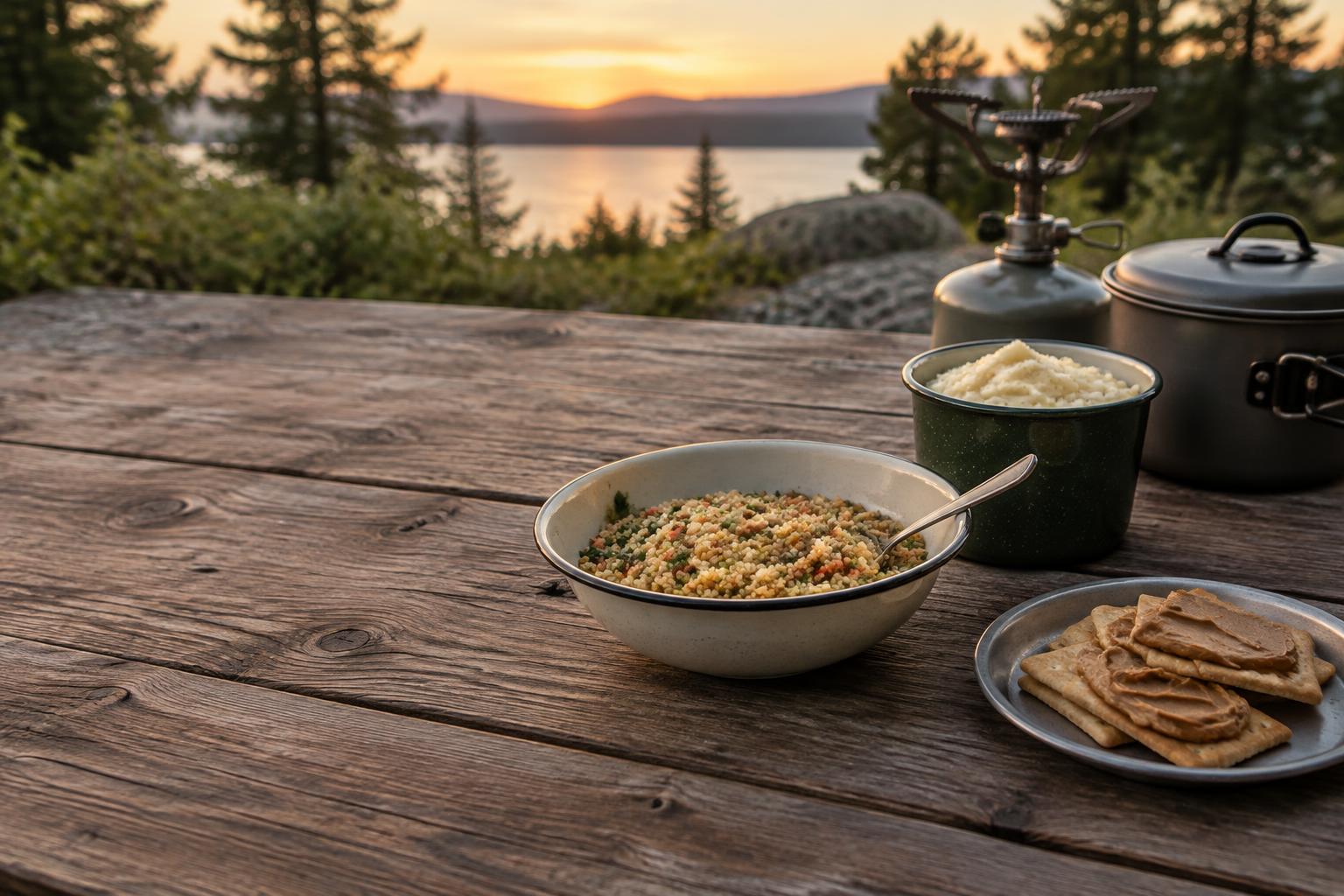
Simple methods for preparing food with a thermos, thermal cooker, insulated pot, or no cooking fuel at all.
When an emergency interrupts your electricity or natural gas supply, every minute of cooking fuel becomes valuable.
Fortunately, many common emergency foods don't require continuous heating. Some need only boiling water, while others can be prepared without any cooking fuel.
Here are seven practical methods to try before an emergency.
If you'd like to build your own insulated cooker, I've written a step-by-step guide: How to Build and Test a Homemade Insulated Cooker. And to see how much longer your propane could last, try the free Emergency Cooking Fuel Calculator.
1. Instant Oatmeal in a Thermos
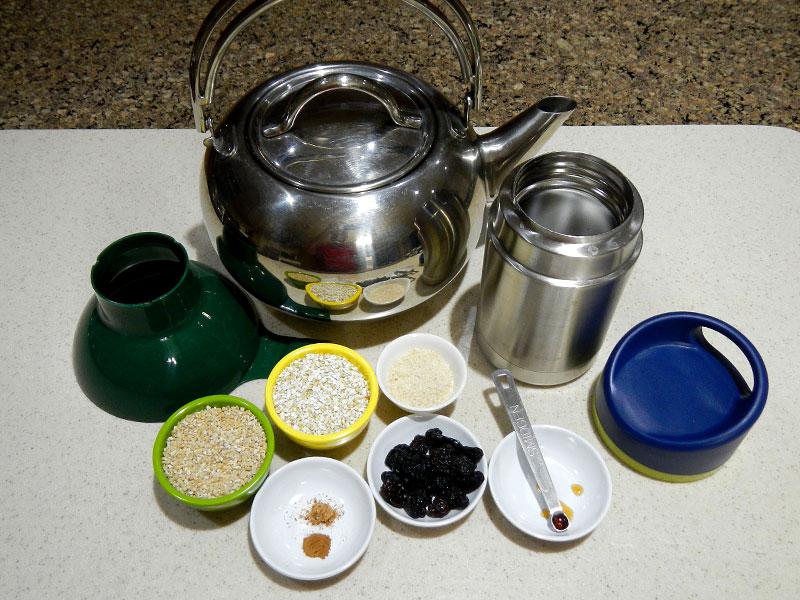
Photo: ScrapDeli, "Thermos Porridge"
Equipment: Wide-mouth vacuum-insulated food jar.
Ingredients:
- ½ cup instant oatmeal
- ¾–1 cup boiling water, or the amount specified on the package
- Cinnamon, sugar, or dried fruit, if desired
Instructions:
- Preheat your thermos with boiling water for several minutes.
- Empty the thermos.
- Add the instant oatmeal.
- Add the recommended quantity of freshly boiled water.
- Stir, close the lid, and allow the oatmeal to hydrate according to the package instructions.
- Eat promptly once prepared.
Fuel-saving advantage: Only enough fuel to boil the water is required. There's no need to maintain a simmer.
2. Couscous Using the Covered-Pot Method
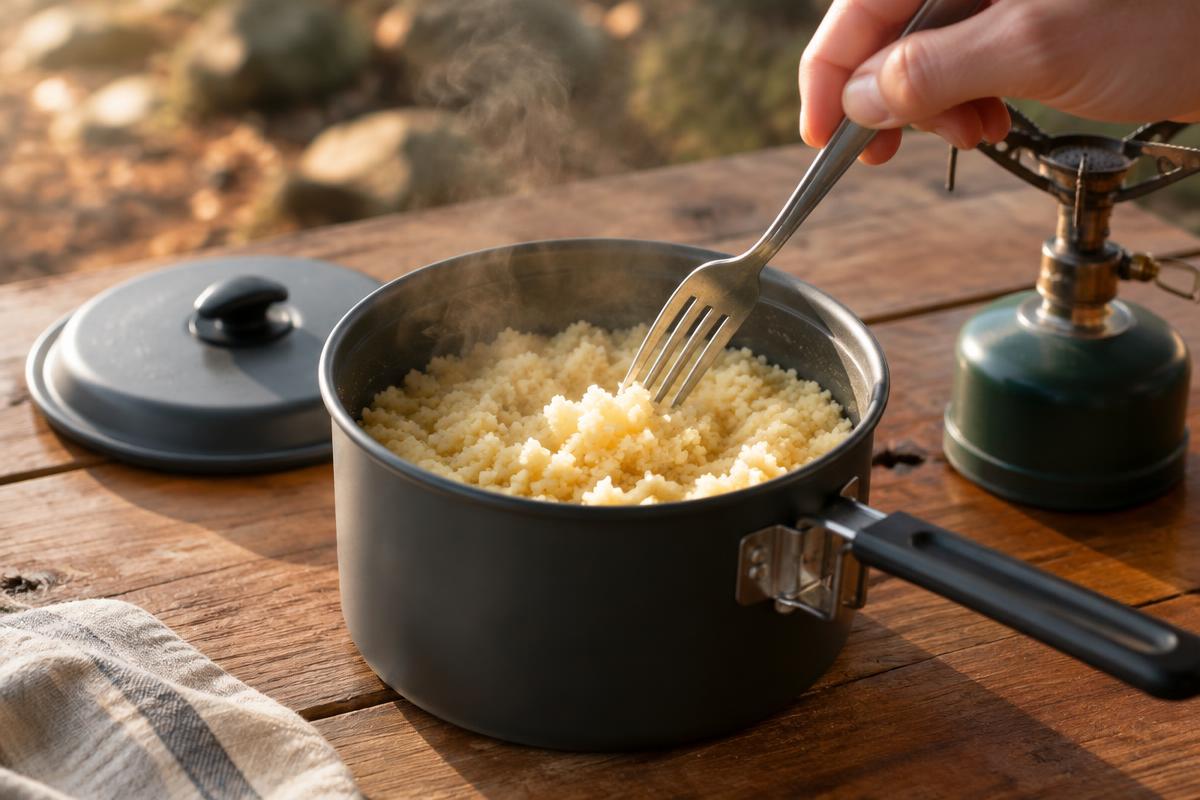
Equipment: Small cooking pot with a tight-fitting lid.
Ingredients:
- 1 cup instant couscous
- Water according to package instructions
- Salt or seasoning
Instructions:
- Bring the measured water to a boil.
- Remove the pot from the heat.
- Stir in the couscous.
- Cover tightly.
- Allow it to stand for approximately five minutes, or according to package instructions.
- Fluff with a fork and serve.
Fuel-saving advantage: The burner is turned off before the couscous finishes hydrating.
3. Instant Mashed Potatoes Without Simmering
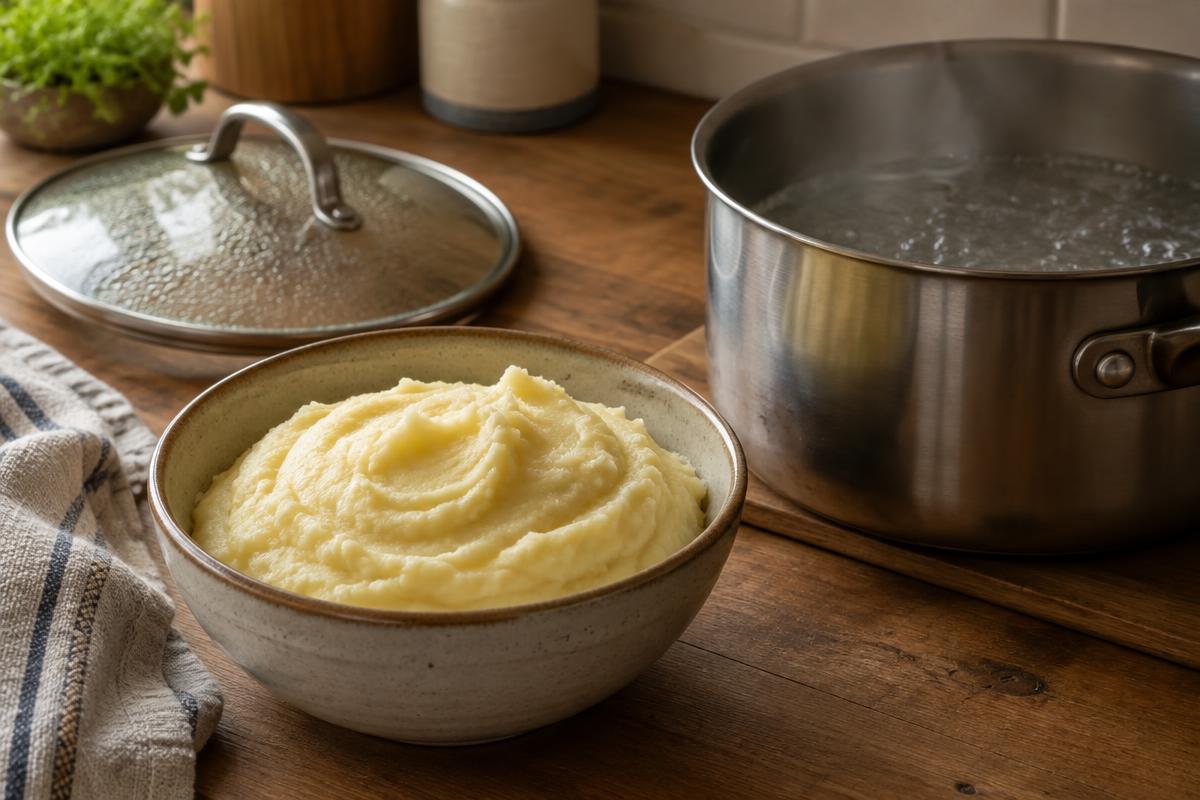
Equipment: Pot or heat-safe bowl with a lid.
Ingredients:
- Instant potato flakes
- Water and other ingredients specified on the package
- Seasonings
Instructions:
- Heat the required water.
- Remove from the burner.
- Stir in the potato flakes and other ingredients.
- Cover briefly, if directed.
- Stir and serve.
Fuel-saving advantage: Instant potatoes are already processed and require rehydration rather than prolonged cooking.
This makes them an excellent addition to emergency food storage.
4. Freeze-Dried Emergency Meals
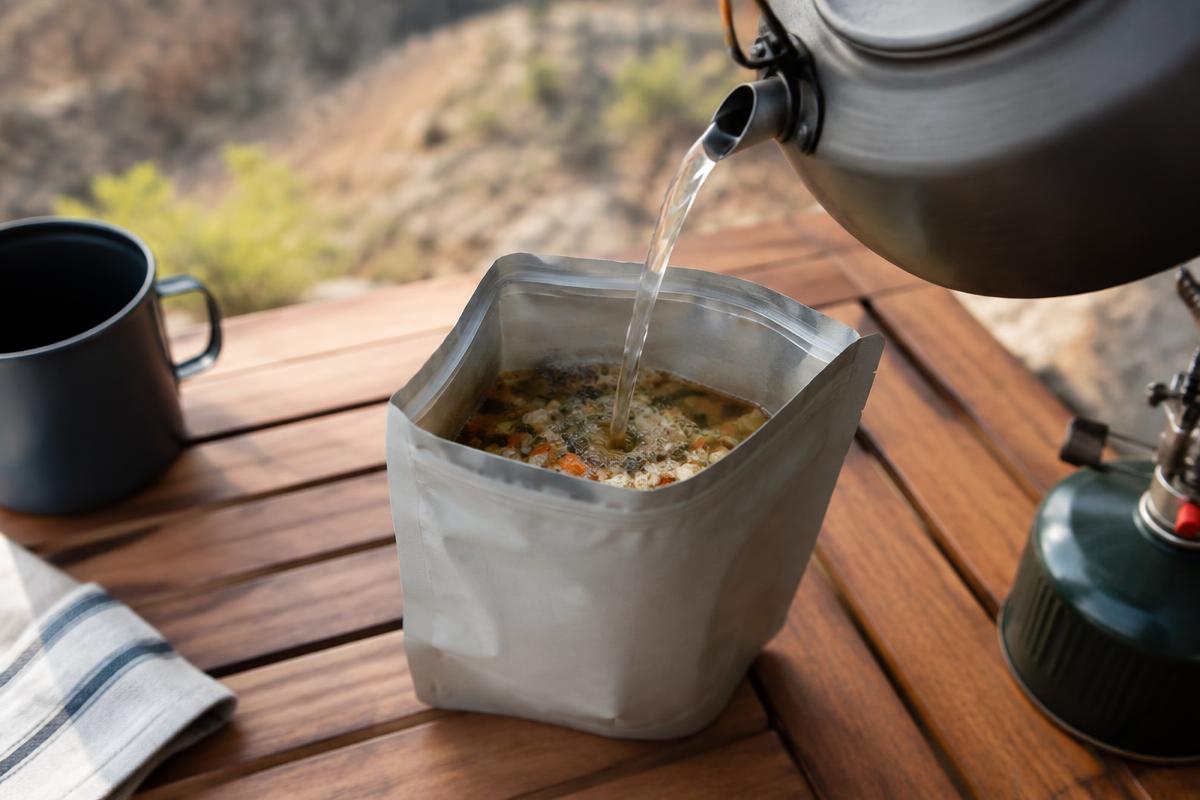
Equipment: Cooking pot or approved heat-safe food pouch.
Many commercial freeze-dried meals are designed to be prepared by adding hot water.
Instructions:
- Read the package instructions carefully.
- Heat the required amount of clean water.
- Add the water to the meal using the manufacturer's approved method.
- Seal or cover for the specified time.
- Stir and serve when properly prepared.
Some freeze-dried products can be rehydrated using cold water, but only when the manufacturer indicates that the food is suitable for that preparation.
Fuel-saving advantage: Little or no active cooking time is required.
5. White Rice in a Commercial Thermal Cooker
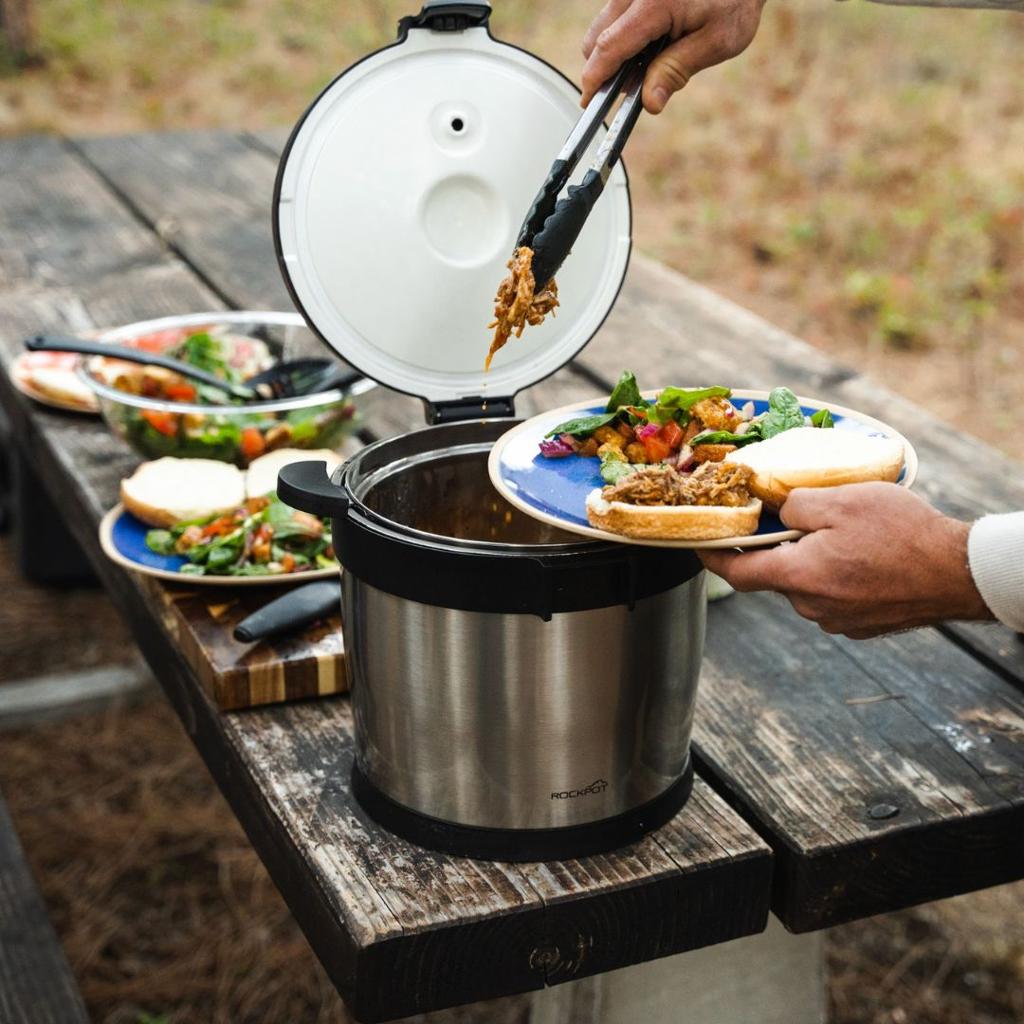
Photo: RockPot 7QT bundle
Equipment: A thermal cooker with an inner cooking pot and insulated outer container.
White rice can be a good candidate for retained-heat cooking, but it requires careful temperature management.
Instructions:
- Measure rice and water according to a tested recipe specifically intended for your thermal cooker.
- Bring the mixture to a boil in the inner cooking pot.
- Continue heating for the time required by the tested recipe.
- Transfer the covered pot immediately into the insulated outer cooker.
- Allow the rice to finish cooking for the specified time.
- Check doneness and temperature, and serve promptly.
If the rice is undercooked, return it to the stove and finish cooking it promptly, provided it has remained within safe time-and-temperature limits.
Do not allow rice to sit inside a slowly cooling thermal cooker for hours after cooking is complete.
Fuel-saving advantage: The insulated cooker replaces some of the time that rice would otherwise spend simmering on the stove.
6. Soup Using a Homemade Insulated Cooker
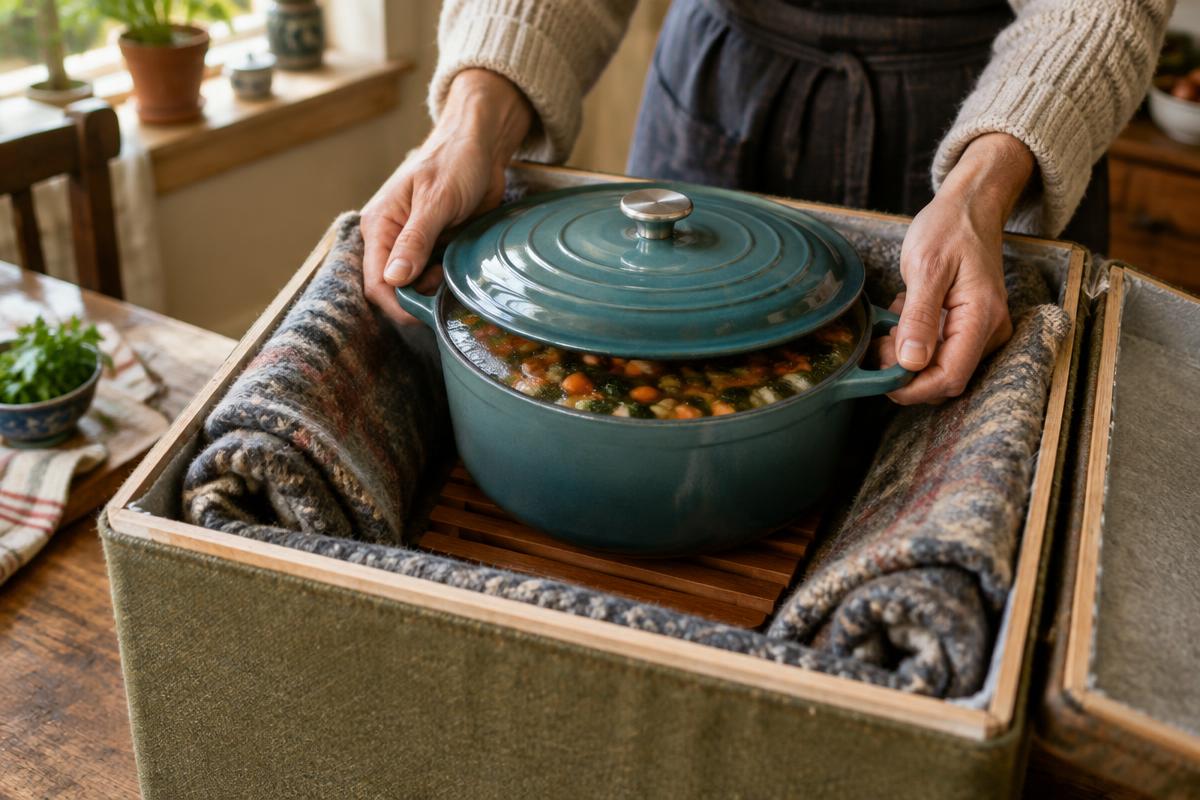
Equipment: Lidded stainless steel pot and a properly constructed heat-retention enclosure.
For your first attempt, use a simple soup made from already-cooked ingredients, such as canned beans, canned vegetables, broth, and seasonings.
Instructions:
- Combine the ingredients in a cooking pot.
- Bring the soup to a thorough boil, stirring as needed.
- Transfer the covered pot into a safely constructed insulated cooker.
- Allow the retained heat to finish blending the flavors for a short period.
- Check the temperature before serving.
Because the ingredients are already cooked, you're primarily heating the soup and combining flavors rather than relying on insulation to cook raw foods.
Keep hot-held soup at or above 140°F. If it cools below that temperature, apply the standard food safety time limits and reheat appropriately when still safe.
Fuel-saving advantage: You avoid prolonged simmering while achieving a hot, satisfying meal.
7. Fuel-Free Emergency Meals
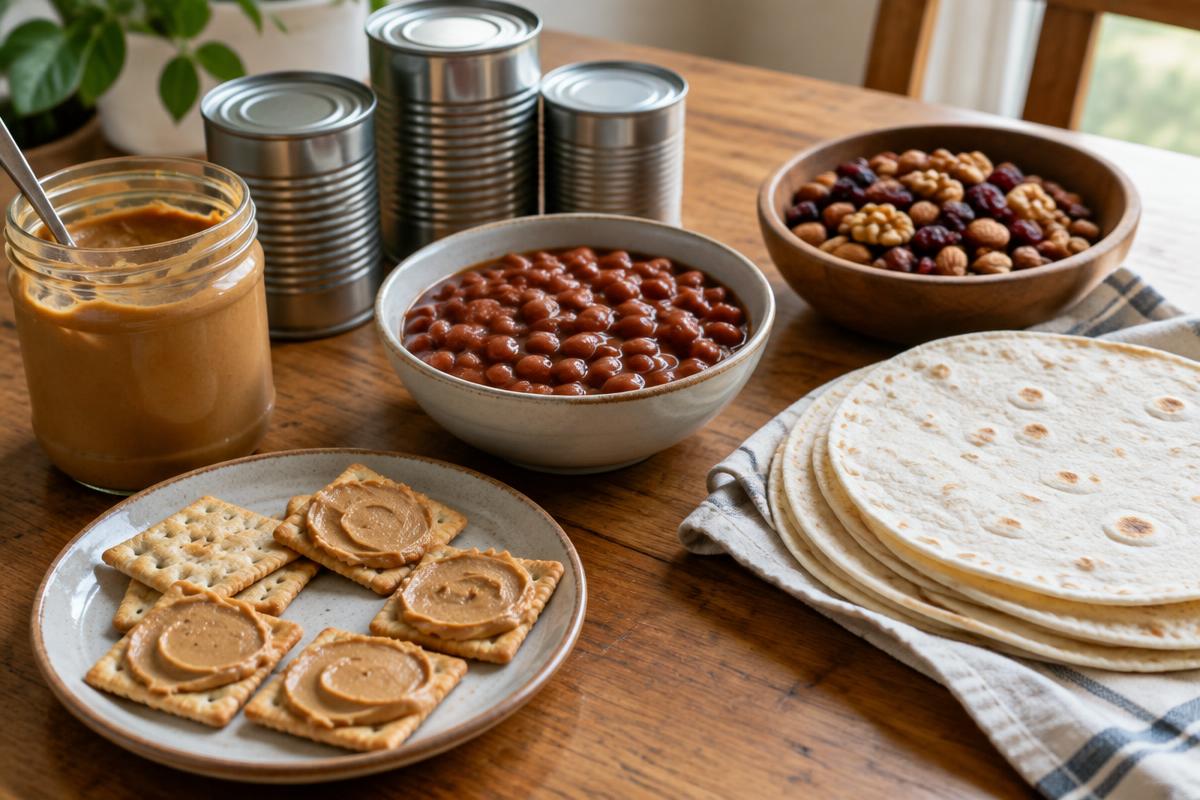
Not every emergency meal needs to be hot.
Some of the most fuel-efficient meals require no stove whatsoever.
Examples include:
- Peanut butter sandwiches or crackers
- Canned tuna or chicken with crackers
- Ready-to-eat canned beans
- Nuts, dried fruit, and shelf-stable snack foods
- Shelf-stable tortillas with canned foods
- Ready-to-eat cereals
- Commercial meal bars
- Shelf-stable foods specifically designed to be eaten without cooking
Use clean utensils and follow package instructions. Refrigerate perishable leftovers after opening when required.
Fuel-saving advantage: Zero cooking fuel.
These foods are especially valuable during the first 72 hours of an emergency, when you may be dealing with damaged utilities, limited water, and other immediate priorities.
How to Decide Which Method to Use
| Emergency situation | Recommended approach |
|---|---|
| Electricity is out, but propane is available | Thermos or thermal cooking |
| Propane supply is limited | Covered-pot and retained-heat cooking |
| No safe cooking location | Ready-to-eat foods |
| No refrigeration | Small, freshly prepared meals |
| Family needs several servings | Commercial thermal cooker |
| Only one person needs a meal | Wide-mouth thermos |
| Fuel is completely exhausted | Ready-to-eat, no-cook foods |
Practice Before You Need These Skills
Try preparing one low-fuel meal each week.
Measure the amount of fuel or burner time used, record the results, and compare them with your usual cooking methods.
You may discover that some meals require only a fraction of the fuel you normally use.
Other meals may not be suitable for retained-heat cooking at all.
The goal is to identify reliable, safe methods before your family depends on them.
Preparedness is not just about storing enough food and fuel. It's about knowing how to make those supplies last.
To figure out how much food your family should have on hand, try my free Food Storage Calculator, and use the Family Emergency Planner to write down your cooking plan. Both are free, need no account, and don't save any of your information.
A Closing Thought
When the children of Israel were in the wilderness, they gathered manna each morning, just enough for the day (Exodus 16:4). I've always found that a humbling picture. They couldn't stockpile it, so they had to trust, one day at a time.
Simple meals made with a little hot water and a lot of patience have a way of teaching the same lesson. A bowl of oatmeal from a thermos isn't fancy, but eaten with a grateful heart around a table with the people you love, it can be enough. I've found that the more I practice being content with simple things, the less any hard time can take from me.
Food Safety Reminder
Thermal cookers are not automatically safe substitutes for conventional cooking.
Use tested recipes, verify safe cooking temperatures, and never assume that food remaining warm for hours is safe.
Particular care is required with rice, dried beans, meat, poultry, and other foods that can become hazardous when undercooked or improperly stored.
For more information, read our companion article, Cooking Without Constant Heat: How to Save Fuel During an Emergency.
References
USDA Food Safety and Inspection Service, FDA Bad Bug Book, EPA retained-heat cooker guidance, and manufacturer instructions for thermal cooking equipment.
Related articles
Long-Term Food Tips
Cooking Without Constant Heat: How to Save Fuel During an Emergency
Bring the pot to a boil, turn off the stove, and let stored heat finish the job. Here's how retained-heat cooking can stretch your emergency fuel.
Read “Cooking Without Constant Heat: How to Save Fuel During an Emergency”Long-Term Food Tips
The Hidden Danger of Cooked Rice: What Every Family Should Know
Rice can last decades in storage, but cooked rice can turn dangerous fast. Here's how to keep your family safe, especially when the power is out.
Read “The Hidden Danger of Cooked Rice: What Every Family Should Know”Long-Term Food Tips
How to Build and Test a Homemade Insulated Cooker
A step-by-step guide to building a homemade insulated cooker from a cooler or wooden box, plus how to test it with a thermometer before you need it.
Read “How to Build and Test a Homemade Insulated Cooker”