
Rolled Oats: The Unsung Hero of Long-Term Food Storage
By Kelly Smith ·
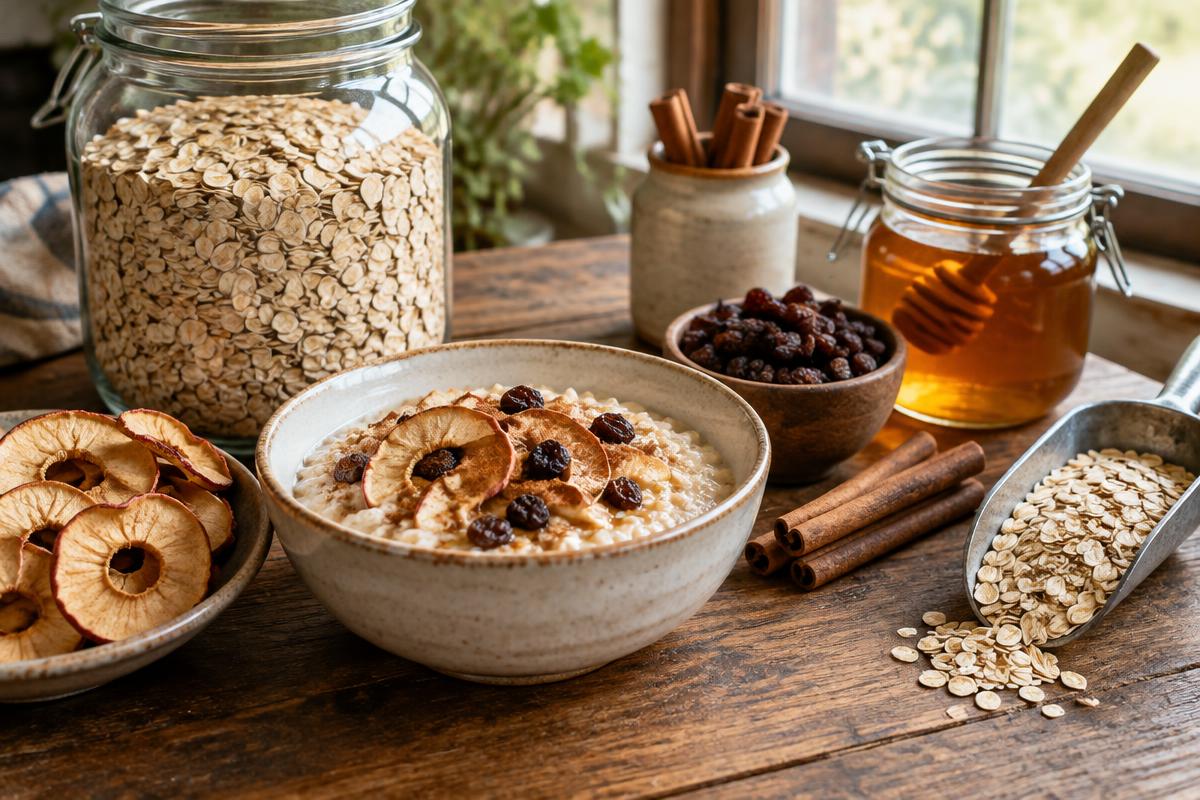
Inexpensive, nutritious, versatile, and remarkably easy to prepare, rolled oats may be one of the most overlooked foods in your emergency pantry.
The Emergency Food You Probably Already Have
When people think about long-term emergency food storage, they often picture large buckets of wheat, rice, dried beans, and powdered milk.
Those are all valuable foods.
But there's another food that deserves a prominent place on your storage shelves.
Rolled oats.
They're inexpensive, widely available, easy to prepare, and can be used in far more meals than most people realize.
You can make oatmeal, of course.
But you can also make pancakes, flatbreads, cookies, muffins, granola, savory porridge, soups, meatless patties, and even simple oat-based drinks.
And unlike many other stored grains, rolled oats require relatively little cooking fuel.
During an extended power outage, that advantage could become extremely important.
If your family is preparing for 30, 60, or 90 days without reliable access to grocery stores, rolled oats should be one of the foods you seriously consider.
Let's explore why.
1. What Exactly Are Rolled Oats?
Rolled oats are made from whole oat kernels, called oat groats.
The groats are typically steamed and then passed through rollers, flattening them into the familiar flakes sold in grocery stores.
This processing helps them cook much faster than intact oat groats.
There are several types of oats worth understanding.
| Type | Description | Typical cooking time |
|---|---|---|
| Whole oat groats | Intact oat kernels | 45–60 minutes or longer |
| Steel-cut oats | Groats cut into small pieces | 20–30 minutes |
| Old-fashioned rolled oats | Steamed and flattened flakes | Approximately 5 minutes |
| Quick oats | Thinner or smaller rolled flakes | Approximately 1–3 minutes |
| Instant oats | More extensively processed, often precooked | Usually prepared with hot water |
Cooking times vary by brand and preparation method.
For emergency preparedness, old-fashioned rolled oats offer an excellent combination of versatility, nutrition, and short cooking time.
Quick oats are also useful, especially when fuel conservation is important.
2. Why Rolled Oats Are So Valuable During Emergencies
They Require Very Little Cooking Fuel
Compare rolled oats with whole wheat berries or dried beans.
Wheat berries may require an hour or longer of simmering.
Dried beans can require considerably more time.
Old-fashioned rolled oats generally cook in about five minutes once the water is hot.
That can make a substantial difference when you're depending on stored propane or another limited fuel source.
They're Easy to Prepare
You don't need a grain mill.
You don't need to knead dough.
You don't need an oven.
For basic oatmeal, you need only oats, water, and a pot.
They're Versatile
Oats work in sweet and savory dishes.
They can be eaten as a breakfast cereal, added to soup, used to stretch canned meat, or turned into baked goods.
They Provide Useful Nutrition
Rolled oats contain complex carbohydrates, fiber, protein, and minerals.
A typical half-cup serving of dry old-fashioned oats, approximately 40 grams, provides roughly:
- 150 calories
- 5 grams of protein
- 27 grams of carbohydrates
- 4 grams of fiber
- 3 grams of fat
Actual amounts vary by product.
Oats also contain beta-glucan, a soluble fiber associated with beneficial effects on blood cholesterol when consumed as part of an appropriate diet.
However, oats alone are not a complete emergency diet. They should be combined with other foods that supply sufficient calories, protein, essential fats, and micronutrients.
They're Easy to Rotate
Unlike unfamiliar survival foods, oats can become part of ordinary family meals.
That means you can use your stored oats regularly and replace them as needed.
The best food storage system is one that you actually use.
3. Rolled Oats vs. Wheat and Rice
Each grain has advantages.
| Feature | Rolled oats | Whole wheat berries | White rice |
|---|---|---|---|
| Preparation | Very easy | Often requires longer cooking or milling | Easy |
| Cooking time | Short | Relatively long when cooked whole | Moderate |
| Fiber | Relatively high | High | Relatively low |
| Natural fat content | Higher | Lower | Very low |
| Versatility | Cereal, baking, savory dishes | Bread, cereal, soups | Main dishes, sides |
| Long-term storage | Depends heavily on packaging and conditions | Excellent when properly stored | Excellent when properly stored |
| Emergency fuel use | Generally low | Higher when cooked whole | Moderate |
These foods complement one another.
You don't need to choose only one.
A balanced emergency pantry can include all three.
4. How Long Will Rolled Oats Last?
Rolled oats can remain useful for years when properly packaged and stored under suitable conditions.
However, storage life varies.
Oats contain more natural fat than many other grains. Over time, those fats can oxidize and cause rancid flavors.
Moisture, oxygen, heat, pests, and packaging all affect quality.
Commercial shelf-life dates and specialized long-term storage estimates are not interchangeable.
Some emergency food suppliers offer rolled oats packaged for extended storage, but their claims depend on the product and storage conditions.
Do not assume that every five-gallon bucket of rolled oats will remain edible for 25 or 30 years.
For everyday emergency preparedness, a rotating supply is an excellent approach.
Use your oldest suitable oats first and replenish them with new purchases.
Discard oats showing mold, insect infestation, unusual odors, or signs of deterioration.
We will cover detailed grain storage and packaging methods in a separate article.
Part One: Basic Oat Preparation
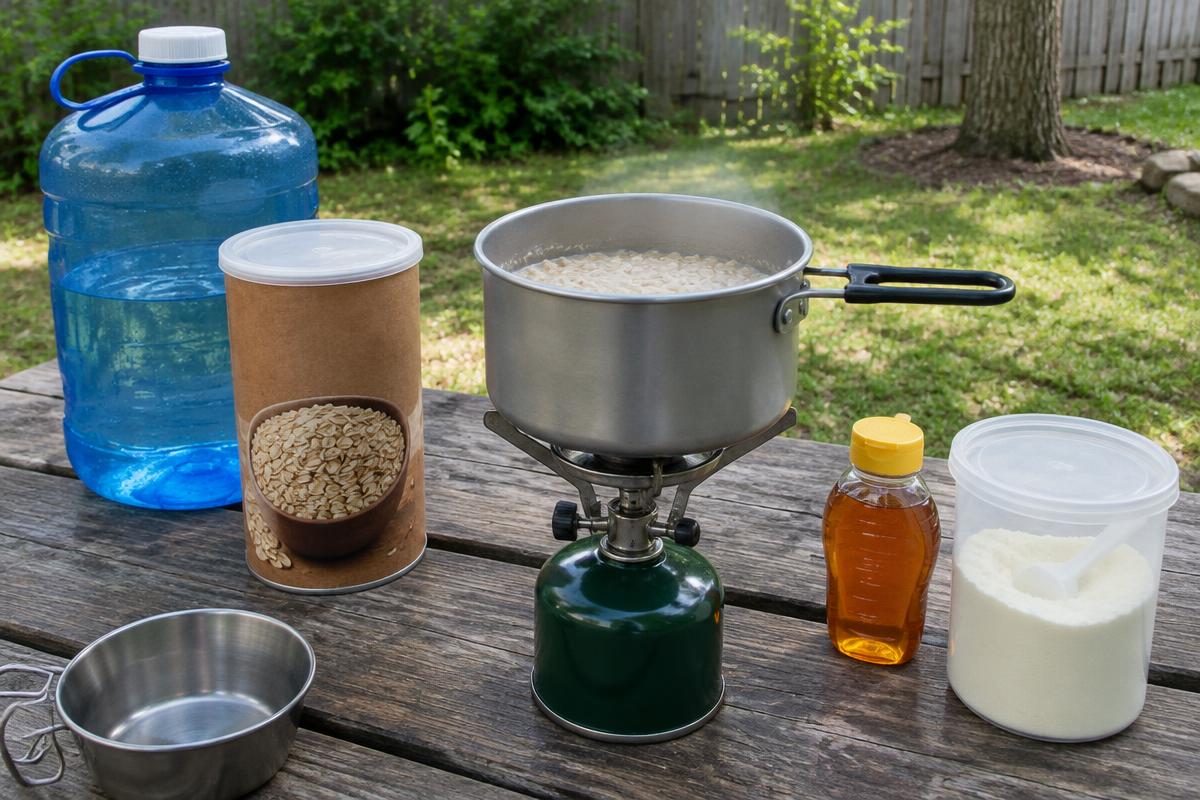
5. The Simplest Meal: Hot Oatmeal
This is where everyone should begin.
Basic Recipe
Ingredients:
- ½ cup old-fashioned rolled oats
- 1 cup water
- Pinch of salt, optional
Instructions:
- Bring water to a boil.
- Add oats and salt.
- Reduce heat.
- Simmer approximately five minutes, stirring occasionally.
- Remove from heat and serve.
For a thicker cereal, use slightly less water.
For thinner oatmeal, add more.
This simple meal can be prepared with a very small amount of cooking fuel.
Emergency Fuel-Saving Tip
Bring the water to a boil, add the oats, cover the pot, and turn off the heat.
Allow the oats to absorb the hot water for several minutes.
This may work well for many brands of rolled oats, although texture and preparation time vary.
Use safe water and serve promptly.
6. Recipe 1: Apple-Cinnamon Oatmeal
Ingredients:
- ½ cup rolled oats
- 1 cup water
- ¼ cup dried apples
- Cinnamon
- Honey or brown sugar
Instructions:
Combine the oats, water, and dried apples.
Simmer until the oats are tender and the apples have softened.
Add cinnamon and sweetener.
This is an excellent breakfast using entirely shelf-stable ingredients.
7. Recipe 2: Peanut Butter Oatmeal
Ingredients:
- ½ cup rolled oats
- 1 cup water
- 1–2 tablespoons peanut butter
- Honey, optional
- Cinnamon, optional
Instructions:
Prepare oatmeal normally.
Stir in peanut butter while the cereal is still hot.
Add honey or cinnamon if desired.
Peanut butter adds calories, fat, and protein, making the meal more substantial.
8. Recipe 3: Raisin and Powdered Milk Oatmeal
Ingredients:
- ½ cup rolled oats
- 1 cup water
- 2 tablespoons powdered milk
- 2 tablespoons raisins
- Cinnamon
Instructions:
Cook oats and raisins in water.
Remove from heat and stir in powdered milk until completely mixed.
Add cinnamon.
This is a practical way to use powdered milk from emergency storage.
9. Recipe 4: Chocolate Oatmeal
Ingredients:
- ½ cup rolled oats
- 1 cup water
- 1 tablespoon cocoa powder
- 1 tablespoon sugar
- 1 tablespoon powdered milk, optional
Instructions:
Combine ingredients in a saucepan.
Cook until the oats are tender.
Adjust sweetness to taste.
This can be particularly appealing to children who might otherwise become tired of plain oatmeal.
Part Two: Oat Meals That Require Little or No Cooking
One of the greatest advantages of rolled oats is that they can be used without prolonged cooking.
This is especially useful during a power outage.
10. Recipe 5: Refrigerated Overnight Oats
Ingredients:
- ½ cup rolled oats
- ½ cup prepared powdered milk or shelf-stable milk
- 1 tablespoon peanut butter
- 1 tablespoon raisins
- Cinnamon
Instructions:
Combine all ingredients in a clean container.
Cover and refrigerate at 40°F or below overnight.
Stir before eating.
Important food safety warning: Overnight oats containing milk must be refrigerated. Do not leave them soaking overnight at room temperature during a power outage.
If refrigeration is unavailable, prepare a small portion shortly before eating using safe water and consume it promptly rather than holding it for hours.
11. Recipe 6: Quick No-Cook Oat Bowl
Ingredients:
- ½ cup rolled oats
- ½ cup safe drinking water
- 1 tablespoon peanut butter
- 1 tablespoon honey
- Raisins, optional
Instructions:
Combine ingredients in a bowl.
Allow the oats to soften for approximately 10–20 minutes.
Stir and eat promptly.
Commercially processed rolled oats are generally steamed during manufacturing and are commonly used in uncooked preparations. However, use a product intended for human consumption and follow its label directions.
Do not store the hydrated mixture at room temperature for extended periods.
12. Recipe 7: Emergency Oat and Peanut Butter Bites
Ingredients:
- 1 cup rolled oats
- ½ cup peanut butter
- ¼ cup honey
- ¼ cup raisins, optional
Instructions:
Mix all ingredients until combined.
Form into small balls.
Eat immediately.
These are convenient, calorie-dense snacks that require no stove.
Because the mixture contains moist ingredients, prepare only what will be eaten promptly if refrigeration is unavailable. Refrigerate leftovers.
13. Recipe 8: Simple Homemade Oat Drink
Ingredients:
- ½ cup rolled oats
- 2 cups safe drinking water
- Pinch of salt
- Sugar or honey, optional
Instructions:
Blend the oats with water for approximately 20–30 seconds.
Strain through a clean fine-mesh strainer or cloth if desired.
Sweeten lightly.
Serve immediately.
This creates a basic oat beverage, although it is not nutritionally equivalent to dairy milk or fortified commercial oat milk.
Use clean equipment and do not store the homemade drink unrefrigerated.
Emergency consideration: This recipe requires a blender or another suitable mixing method, so it may be impractical during a power outage.
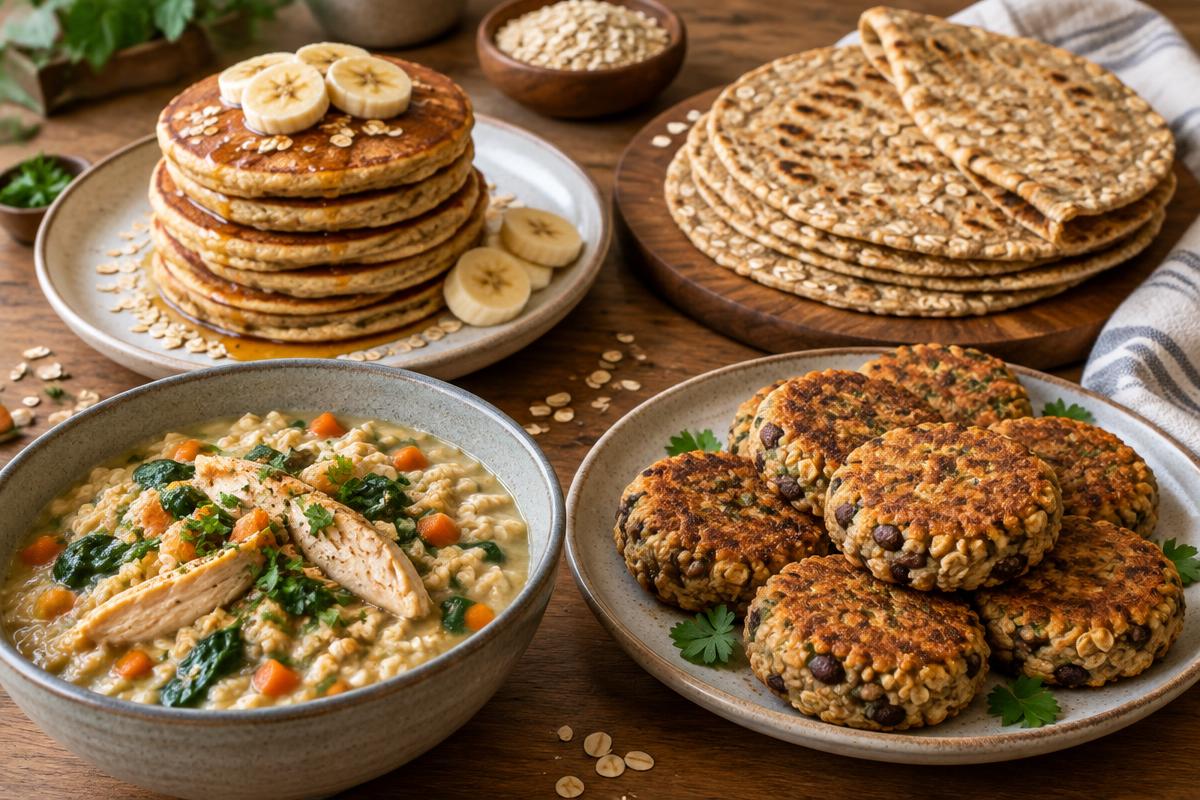
Part Three: Oat-Based Breads, Pancakes, and Flatbreads
Rolled oats can be incorporated into many familiar foods.
Some recipes use oats whole.
Others use oat flour, which can be made by finely processing rolled oats.
Oat flour does not contain the gluten needed to produce the same structure as wheat bread, so recipes may have a denser texture.
14. Recipe 9: Simple Oat Pancakes
Ingredients:
- 1 cup rolled oats, ground into flour
- 1 teaspoon baking powder
- 1 tablespoon sugar
- ¾ cup water or prepared powdered milk
- 1 tablespoon cooking oil
Instructions:
Mix ingredients into a thick batter.
Let rest for five minutes.
Cook small pancakes in a lightly oiled skillet over medium heat until set and cooked through on both sides.
These are naturally denser than conventional wheat pancakes.
15. Recipe 10: Oat and Wheat Pancakes
Ingredients:
- ½ cup rolled oats
- ½ cup whole-wheat flour
- 1 teaspoon baking powder
- 1 tablespoon sugar
- ¾ cup water or prepared powdered milk
- 1 tablespoon oil
Instructions:
Combine dry ingredients.
Add liquid and oil.
Stir until mixed.
Cook small pancakes on a skillet until thoroughly cooked.
This is an excellent way to use stored wheat flour and rolled oats together.
16. Recipe 11: Two-Ingredient Oat Flatbread
Ingredients:
- 1 cup finely ground rolled oats
- Approximately ½–¾ cup water
- Optional pinch of salt
Instructions:
Mix the oat flour with enough water to form a thick, spreadable batter.
Allow it to rest for 10 minutes.
Spread a thin portion onto a lightly oiled nonstick skillet.
Cook gently until the first side is set, then carefully turn and cook the other side.
Because oats lack gluten, these flatbreads are more delicate than wheat tortillas.
They work well with peanut butter, canned chicken, or bean fillings.
17. Recipe 12: Oat and Wheat Skillet Bread
Ingredients:
- 1 cup whole-wheat flour
- ½ cup rolled oats
- 1 teaspoon baking powder
- ½ teaspoon salt
- Approximately ¾ cup water
- 1 tablespoon oil
Instructions:
Combine ingredients into a soft dough.
Rest for 10 minutes.
Divide into small portions and flatten.
Cook in a lightly oiled skillet over medium-low heat until browned and cooked through.
Serve with soup or beans.
18. Recipe 13: Emergency Oat Biscuits
Ingredients:
- 1 cup whole-wheat flour
- ½ cup rolled oats
- 2 teaspoons baking powder
- ¼ teaspoon salt
- 3 tablespoons shortening or suitable solid fat
- Approximately ½ cup water or prepared powdered milk
Instructions:
Combine dry ingredients.
Cut in shortening.
Add liquid gradually until a soft dough forms.
Shape into small biscuits.
Bake at approximately 400°F for 12–18 minutes or until cooked through.
These biscuits are useful alongside canned stew or soup.
Part Four: Savory Oat Meals
Many people think oats belong only in sweet breakfast foods.
But oats can also be used much like rice, breadcrumbs, or other grains.
Savory oatmeal can be surprisingly satisfying.
19. Recipe 14: Chicken and Savory Oats
Ingredients:
- ½ cup rolled oats
- 1 cup water or chicken broth
- ½ can chicken
- Garlic powder
- Black pepper
Instructions:
Bring the broth to a boil.
Add oats and cook until tender.
Stir in canned chicken and seasonings.
Heat thoroughly.
This produces a thick, savory porridge similar to a simple rice dish.
20. Recipe 15: Oat and Vegetable Soup
Ingredients:
- ½ cup rolled oats
- 3 cups water or broth
- 1 can mixed vegetables
- Dried onion
- Garlic powder
- Salt and pepper
Instructions:
Combine water, vegetables, and seasonings.
Bring to a boil.
Add oats and simmer approximately five minutes.
The oats naturally thicken the soup.
This is a useful way to turn a small amount of canned vegetables into a more filling meal.
21. Recipe 16: Oat and SPAM Breakfast Skillet
Ingredients:
- 1 cup cooked oatmeal, prepared thick
- ½ can SPAM, diced
- 1 tablespoon oil
- Dried onion
- Black pepper
Instructions:
Brown the diced SPAM in a skillet.
Add the thick cooked oats and seasonings.
Stir until heated through and lightly browned.
This creates a savory breakfast that provides additional calories and protein.
22. Recipe 17: Oat and Bean Patties
Ingredients:
- 1 cup cooked pinto or black beans
- ½ cup rolled oats
- 1 tablespoon flour
- Garlic powder
- Onion powder
- Small amount of water, if needed
Instructions:
Mash the cooked beans.
Mix with oats, flour, and seasonings.
Allow the mixture to rest for 10 minutes.
Form small patties.
Cook in a lightly oiled skillet until firm and heated through.
Serve with tortillas or alongside vegetables.
23. Recipe 18: Stretching Canned Meat With Oats
Ingredients:
- 1 can canned beef or chicken
- ½ cup rolled oats
- ½ cup water or broth, approximately
- Onion powder
- Garlic powder
Instructions:
Combine the canned meat, oats, water, and seasonings in a saucepan.
Cook over medium heat until the oats are tender and the mixture thickens.
Serve over rice, potatoes, or flatbread.
This is an easy way to stretch a limited supply of canned meat into additional servings.
Part Five: Oat Snacks and Desserts
Emergency meals don't have to be boring.
A few familiar treats can improve morale, especially when families are dealing with prolonged disruptions.
24. Recipe 19: Simple Oatmeal Cookies
Ingredients:
- 1 cup rolled oats
- ½ cup whole-wheat flour
- ¼ cup sugar
- ¼ cup oil
- ¼ cup water, approximately
- ½ teaspoon baking powder
- Cinnamon, optional
Instructions:
Combine ingredients into a thick dough.
Add a little water if necessary.
Drop spoonfuls onto a lightly greased baking sheet.
Flatten slightly.
Bake at 350°F for approximately 12–16 minutes, until set and lightly browned.
Cool before serving.
These cookies will be less rich and more rustic than traditional oatmeal cookies.
25. Recipe 20: Emergency Oat Crumble
Ingredients:
- 1 can sliced peaches or apples, drained
- ¾ cup rolled oats
- 2 tablespoons sugar
- 2 tablespoons oil or melted shortening
- Cinnamon
Instructions:
Place drained fruit in a small baking dish.
Combine oats, sugar, oil, and cinnamon.
Sprinkle over the fruit.
Bake at 350°F for approximately 20–25 minutes, until hot and lightly browned.
This provides a simple dessert using shelf-stable ingredients.
Part Six: Oats and Emergency Fuel Conservation
26. Why Oats Are Especially Useful When Fuel Is Limited
Suppose your electricity is out for two weeks.
You have a propane camping stove for outdoor use.
You also have dried beans, whole wheat berries, rice, and rolled oats.
Which food can you prepare most quickly?
In most cases, rolled oats.
Old-fashioned oats can be ready in approximately five minutes after the water boils.
Quick oats require even less time.
And some preparations can be made without conventional cooking.
That makes oats an excellent food to keep available for the first days of a disaster.
Practical Low-Fuel Options
| Preparation | Cooking requirement |
|---|---|
| Quick oats with hot water | Very little additional heat |
| Old-fashioned oatmeal | Approximately five minutes simmering |
| Covered-pot oatmeal | Brief heating plus covered resting |
| Refrigerated overnight oats | No cooking, but requires refrigeration |
| Quick no-cook oat bowl | No cooking; prepare and eat promptly |
| Oat flatbread | Brief skillet cooking |
| Savory oat soup | Short simmer |
| Oatmeal cookies | Requires an oven or suitable baking equipment |
Important: The absence of cooking does not automatically mean a food is safe to store at room temperature after adding water.
Moist prepared foods should be eaten promptly or refrigerated.
27. How Much Rolled Oats Should You Store?
Let's use a simple example.
Suppose one person eats one-half cup of dry rolled oats each morning.
That's approximately 40 grams, or 1.4 ounces.
For 90 days:
40 grams × 90 days = 3,600 grams.
That equals approximately 7.9 pounds of dry oats per person.
For a family of four:
7.9 pounds × 4 = approximately 31.7 pounds.
This provides one modest oatmeal serving per person each day for 90 days.
It does not provide a complete day's calories.
Example 90-Day Oat Supply
| Household size | ½ cup dry oats per person daily for 90 days |
|---|---|
| 1 person | About 8 pounds |
| 2 people | About 16 pounds |
| 4 people | About 32 pounds |
| 6 people | About 48 pounds |
| 8 people | About 64 pounds |
These estimates assume approximately 40 grams per half-cup serving. Actual weights vary by product and how the oats are measured.
If your family eats oats only three or four times a week, you can reduce these quantities.
If you regularly use oats for baking, soups, or other meals, you may want more.
The goal is to store what your family will realistically use.
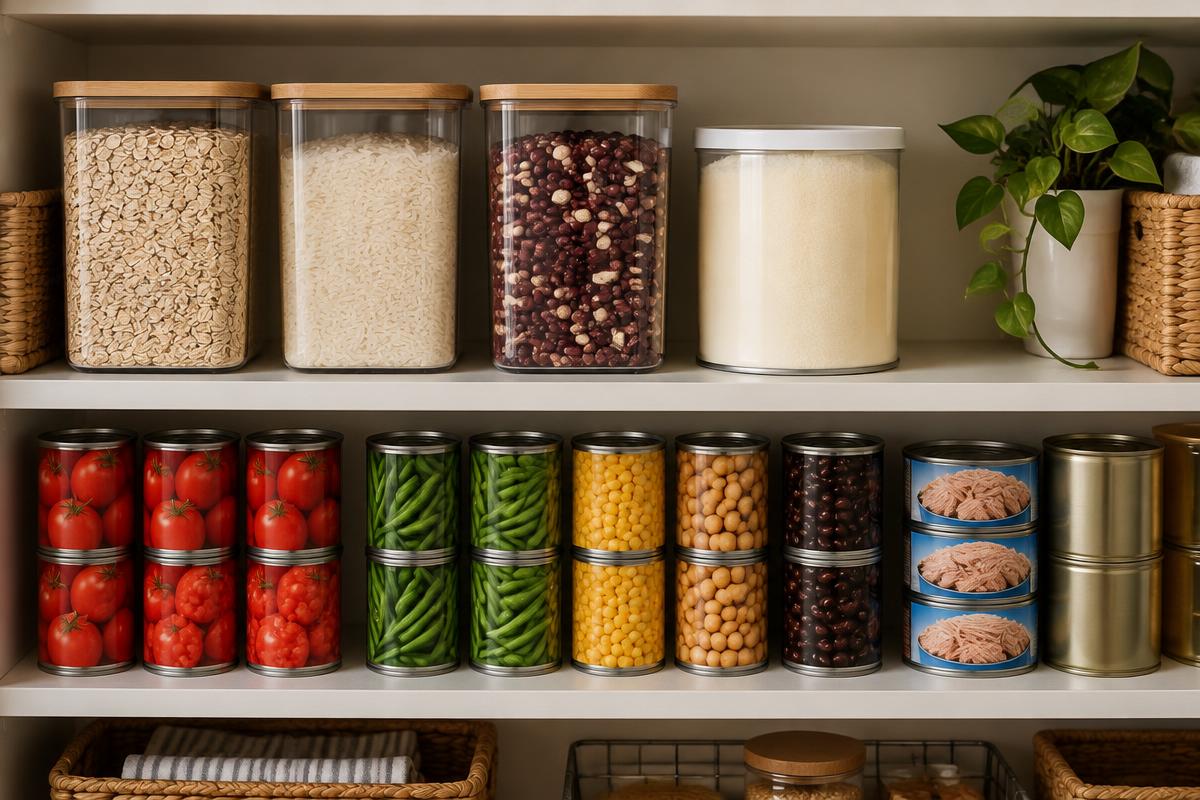
28. What Should You Store Alongside Rolled Oats?
Oats are much more versatile when paired with other shelf-stable ingredients.
Breakfast Additions
- Powdered milk
- Honey
- Brown sugar
- Cinnamon
- Raisins
- Dried apples
- Dried cranberries
- Peanut butter
- Cocoa powder
Baking Ingredients
- Whole-wheat flour
- Baking powder
- Baking soda
- Salt
- Sugar
- Cooking oil
- Shortening
- Yeast, for recipes that need it
Savory Ingredients
- Canned chicken
- Canned beef
- SPAM
- Canned vegetables
- Canned beans
- Chicken bouillon
- Garlic powder
- Onion powder
- Black pepper
A relatively small selection of these ingredients allows you to prepare many different meals.
29. A Note About Gluten and Food Allergies
Oats are naturally distinct from wheat, barley, and rye.
However, ordinary commercial oats may be contaminated with gluten-containing grains during growing, transport, or processing.
People with celiac disease should use appropriately labeled gluten-free oats when oats are suitable for their individual diet.
Some people with celiac disease also react to oat proteins even when the oats are uncontaminated.
Anyone with an oat allergy must avoid oats.
Do not assume that all oatmeal products are gluten-free.
30. A Simple Four-Week Oat Challenge
If your family has stored oats but rarely uses them, try this.
Week 1: Prepare oatmeal with dried fruit and powdered milk.
Week 2: Make oat pancakes or skillet flatbread.
Week 3: Prepare a savory oat and chicken dish.
Week 4: Try oat and bean patties or homemade oatmeal cookies.
At the end of the month, ask your family which recipes they liked.
Keep those recipes with your emergency supplies.
The goal is to become familiar with preparing oats before you need to depend on them.
31. Food Safety During an Emergency
Keep these precautions in mind:
- Use safe drinking water for all oat preparations.
- Follow package directions, particularly for products intended to be cooked.
- Refrigerate overnight oats and other moist oat mixtures that are being held for later use.
- Do not leave oatmeal or other cooked grain dishes at room temperature for hours.
- Refrigerate leftovers promptly, generally within two hours, or within one hour when temperatures exceed 90°F.
- Keep refrigerated foods at 40°F or below.
- Use clean utensils and containers.
- Discard oats that show mold, pest contamination, or signs of rancidity.
- Never assume that reheating makes improperly stored food safe.
- Use fuel-burning emergency stoves only in locations approved by the manufacturer; outdoor camping stoves must not be operated inside homes or enclosed spaces.
Final Thoughts: Don't Overlook the Humble Oat
Rolled oats may not be the most exciting food in your emergency pantry.
They don't attract the same attention as freeze-dried meals, elaborate survival kits, or large containers of long-term grains.
But they're remarkably useful.
They're inexpensive.
They're easy to prepare.
They require relatively little cooking fuel.
They work in both sweet and savory meals.
And they can become part of your family's everyday diet.
If you're building a 90-day emergency food supply, consider including enough oats for regular breakfasts and a variety of additional meals.
Then begin using them.
Make oatmeal.
Try pancakes.
Prepare savory oat dishes.
Bake some cookies.
Experiment with ingredients already in your pantry.
Because emergency preparedness isn't just about having food stored away.
It's about knowing how to turn that food into meals your family will actually enjoy.
And when the next emergency warning comes, you'll have one more reason to feel prepared rather than afraid.
Rolled Oats Supply Calculator
Rolled Oats Supply Calculator
Free, no account, and nothing you enter is saved or sent anywhere.
- Total servings needed
- 360
- Rolled oats needed
- 34.9 lb (buy 35 lb)
- 2-pound packages
- 18
- 5-pound packages
- 7
- Dry oat volume
- about 198 cups
Assumes about 20 g per ¼ cup, 40 g per ½ cup and 80 g per 1 cup of dry rolled oats, and 453.592 g per pound. Purchase amount is rounded up to the next whole pound. Actual weights vary by brand.
Oats are only one part of a balanced food supply. This amount is not a complete food supply and does not cover a full day's calories or nutrition.
Printable Pantry Checklist: What to Store With Oats
Ingredients to Store With Oats
Check what you already have. Your choices stay on this page and clear when you leave.
0 of 21 on hand
Keep Going
- Use the free Long-Term Food Storage Calculator to plan the rest of your family's supply. It's free, needs no sign-up and stores nothing about you.
- Cooking Without Constant Heat: How to Save Fuel During an Emergency
- Emergency Cooking Fuels: Will Your Supply Last 14 Days—or 90?
- Dried Beans for Emergency Food Storage
- Beyond Bread: 20 Practical Ways to Use Stored Wheat During an Emergency
- Prepare for 90 Days—Not Because You're Afraid, but Because You're Wise
A Closing Thought on Simple Food
There's something humbling about a bowl of plain oatmeal. It isn't impressive, and no one brags about it, but it shows up morning after morning and does its job. I've come to think a lot of faithful living is like that: small, ordinary things done day after day, like prayer, scripture and kindness to the people at our own table.
"Better is little with the fear of the Lord than great treasure and trouble therewith" (Proverbs 15:16). A shelf of oats won't save anyone by itself. But a family that has learned to be grateful for simple meals, and to share them, is already prepared for hard times in the way that matters most.
Research References
USDA FoodData Central — Oat Nutritional Information
https://fdc.nal.usda.gov/USDA MyPlate — Grains
https://www.myplate.gov/eat-healthy/grainsFDA — Oat Beta-Glucan and Heart Health Claims
https://www.ecfr.gov/current/title-21/chapter-I/subchapter-B/part-101/subpart-E/section-101.81CDC — Food Safety During Power Outages
https://www.cdc.gov/food-safety/foods/keep-food-safe-after-emergency.htmlFoodSafety.gov — Safe Food Handling
https://www.foodsafety.gov/Celiac Disease Foundation — Oats and Gluten
https://celiac.org/gluten-free-living/what-is-gluten/sources-of-gluten/Utah State University Extension — Food Storage and Preservation
https://extension.usu.edu/preserve-the-harvest/
Related articles
Long-Term Food Tips
Beyond Bread: 20 Practical Ways to Use Stored Wheat During an Emergency
Have buckets of wheat you've never used? Discover 20 practical ways to turn hard red and hard white wheat into cereals, soups, breads, tortillas, sprouts, and delicious emergency meals.
Read “Beyond Bread: 20 Practical Ways to Use Stored Wheat During an Emergency”Long-Term Food Tips
Dried Beans for Emergency Food Storage: How to Cook Them Safely and Make 20 Delicious Meals
Learn how to safely cook pinto, kidney, and other dried beans, conserve emergency cooking fuel, and prepare 20 delicious meals using shelf-stable ingredients.
Read “Dried Beans for Emergency Food Storage: How to Cook Them Safely and Make 20 Delicious Meals”Long-Term Food Tips
Cooking Without Constant Heat: How to Save Fuel During an Emergency
Bring the pot to a boil, turn off the stove, and let stored heat finish the job. Here's how retained-heat cooking can stretch your emergency fuel.
Read “Cooking Without Constant Heat: How to Save Fuel During an Emergency”